

1 Pound – Egypt
Non-circulating coins
Commemoration: Corrective Revolution
Egypt

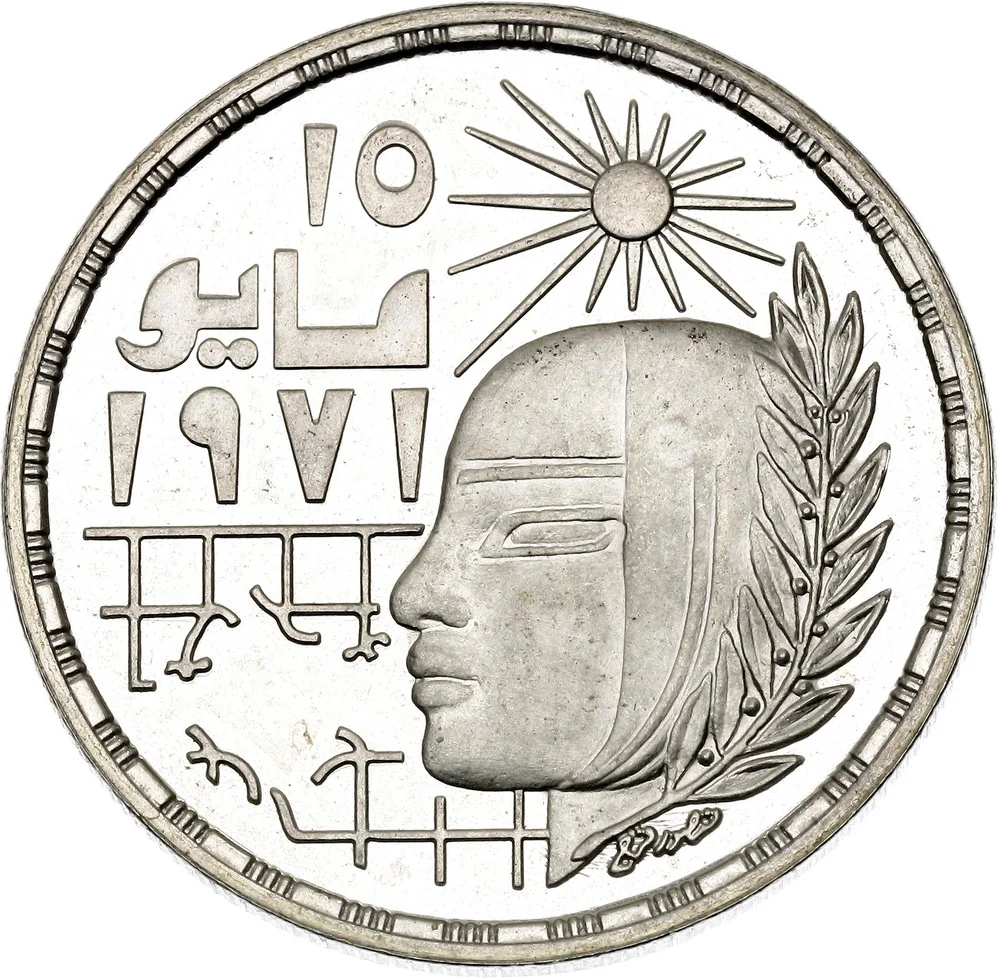
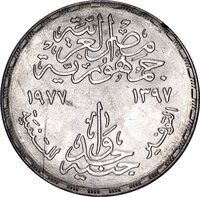
Obverse
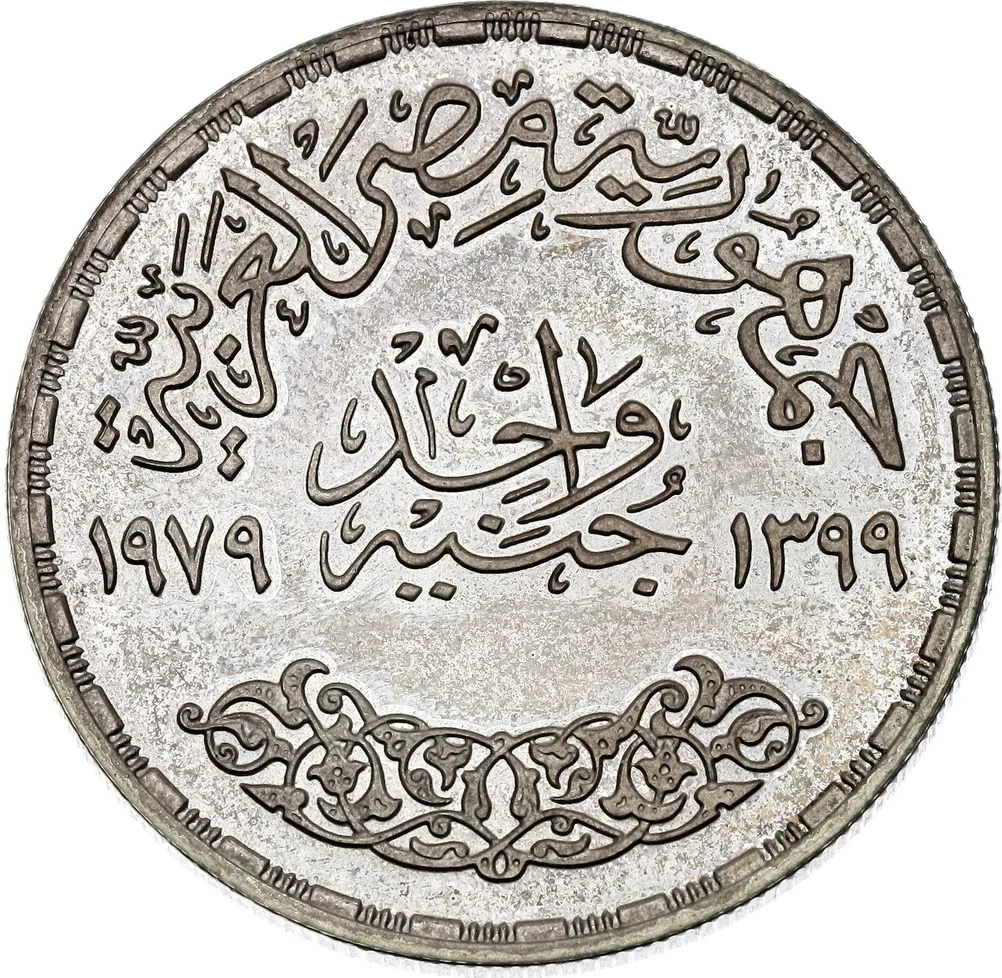
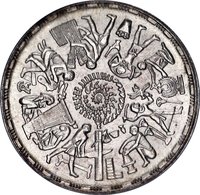
Reverse
Edge
Reeded
Mints
| Name | Mark |
|---|---|
| Egyptian Mint Authority | — |
Mintings
| Year | Mint Mark | Mintage | Quality | Collection |
|---|---|---|---|---|
| 1977 | — | 50,000 | ||
| 1979 | — | 48,500 | ||
| 1979 | — | 1,500 | Proof |
Historical background
In January 1977, Egypt faced a severe economic and social crisis, the direct result of austerity measures imposed by the government under pressure from the International Monetary Fund (IMF). Facing a massive foreign debt, high inflation, and a crippling budget deficit, President Anwar Sadat's administration agreed to an IMF loan package that required the elimination of key subsidies on basic necessities like flour, rice, cooking oil, and bottled gas. The sudden removal of these subsidies on January 17-18 caused the price of these staples to double overnight, imposing an unbearable burden on the majority of Egyptians who were already struggling.
The immediate consequence was the "Bread Intifada" or "Egyptian Food Riots," which erupted spontaneously across major cities. For two days, hundreds of thousands of Egyptians took to the streets in the largest public protests since the 1952 revolution. The demonstrations turned violent, with clashes against security forces, attacks on government buildings, and the destruction of symbols of wealth associated with Sadat's Infitah (economic opening) policy. The scale of the unrest shocked the regime, which responded by deploying the army to restore order, resulting in dozens of deaths and hundreds of injuries.
The crisis forced a dramatic reversal. By January 19, Sadat was compelled to cancel the austerity decree entirely and reinstate the subsidies, a humiliating retreat that exposed the limits of his authority and the profound social fragility of his economic policies. The 1977 riots were a pivotal moment, demonstrating the explosive political risk of subsidy removal and deeply scarring the Egyptian state's approach to economic reform for decades. It entrenched a lasting fear of popular unrest, making subsequent governments extremely cautious about implementing similar IMF-mandated measures that would directly impact the poor.
The immediate consequence was the "Bread Intifada" or "Egyptian Food Riots," which erupted spontaneously across major cities. For two days, hundreds of thousands of Egyptians took to the streets in the largest public protests since the 1952 revolution. The demonstrations turned violent, with clashes against security forces, attacks on government buildings, and the destruction of symbols of wealth associated with Sadat's Infitah (economic opening) policy. The scale of the unrest shocked the regime, which responded by deploying the army to restore order, resulting in dozens of deaths and hundreds of injuries.
The crisis forced a dramatic reversal. By January 19, Sadat was compelled to cancel the austerity decree entirely and reinstate the subsidies, a humiliating retreat that exposed the limits of his authority and the profound social fragility of his economic policies. The 1977 riots were a pivotal moment, demonstrating the explosive political risk of subsidy removal and deeply scarring the Egyptian state's approach to economic reform for decades. It entrenched a lasting fear of popular unrest, making subsequent governments extremely cautious about implementing similar IMF-mandated measures that would directly impact the poor.
🌟 Limited