

10 Pence – Saint Helena and Ascension
United Kingdom
Context
Years: 2015–2022
Country: United Kingdom 
Issuer: Saint Helena and Ascension
Ruler: Elizabeth II
Currency:
(since 1976)
Material
References
KM: #Click to copy to clipboard23a
Numista: #234647
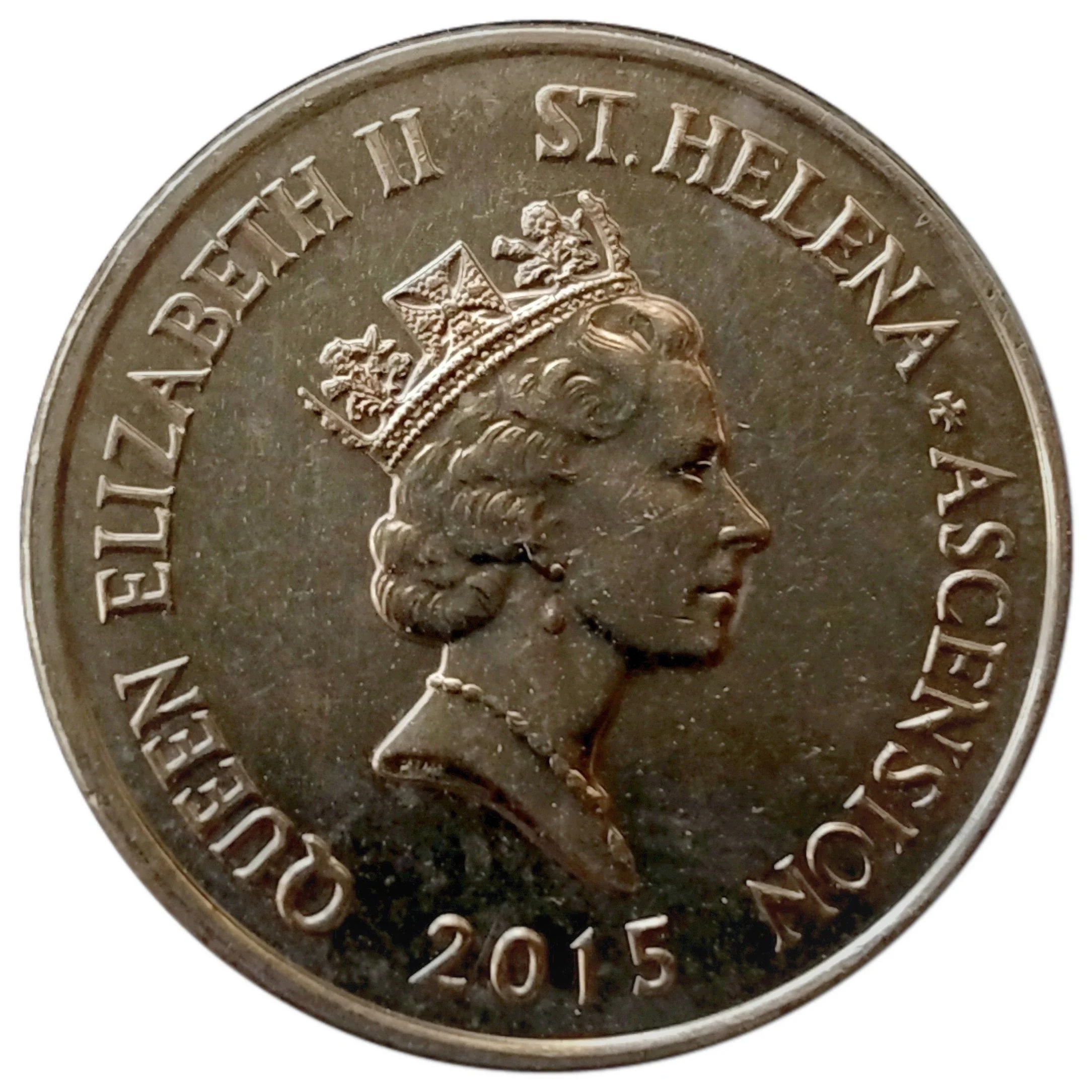
Obverse
Description:
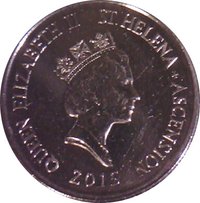
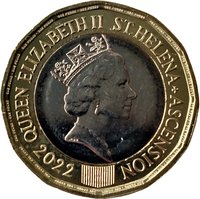
Queen Elizabeth II.
Inscription:
QUEEN ELIZABETH II ST. HELENA + ASCENSION
2015
2015
Script: Latin
Designer: Raphael David Maklouf
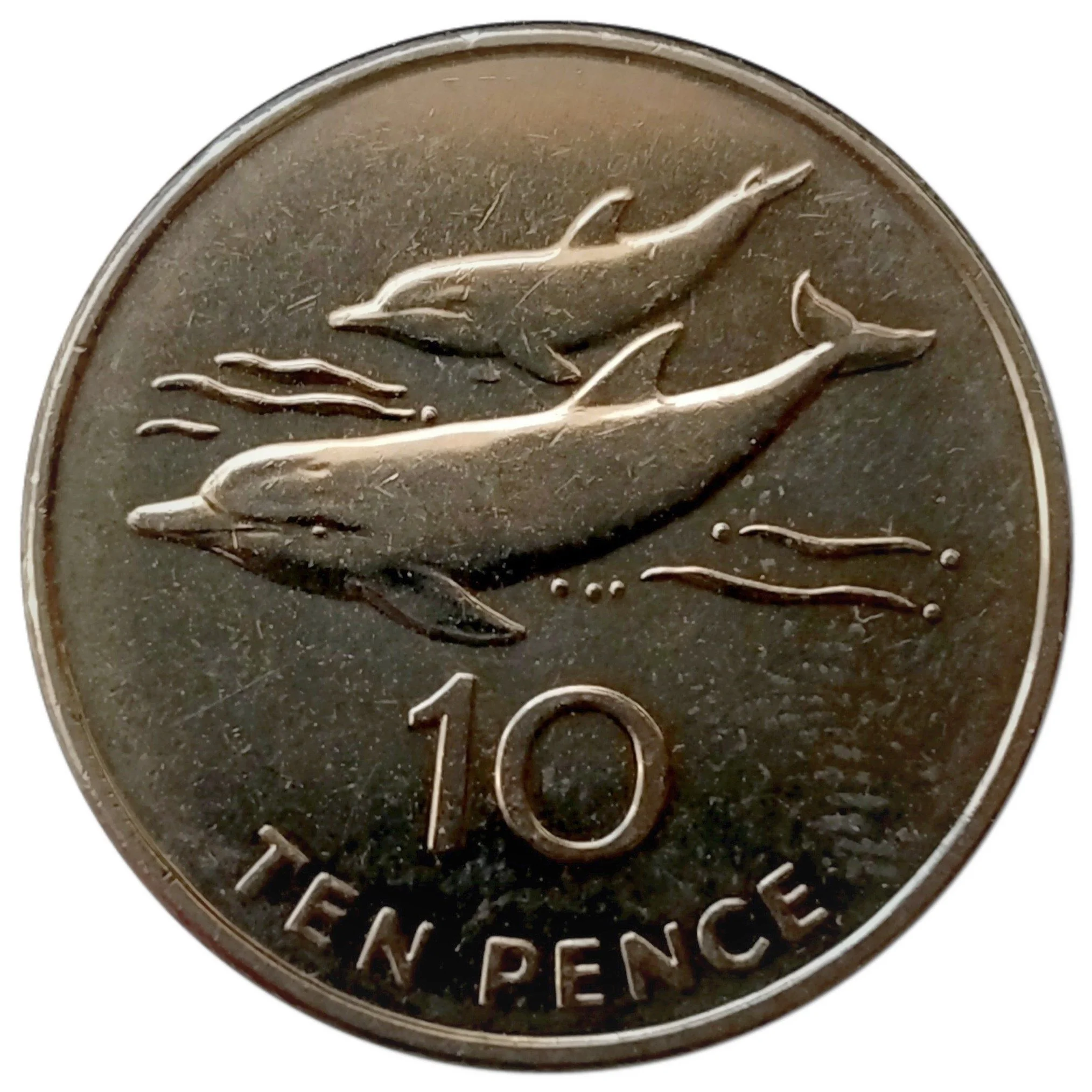
Reverse
Edge
Reeded
Categories
| Animal> Marine mammal |
| Person> Monarch |
Mints
| Name | Mark |
|---|---|
| Royal Mint | — |
Mintings
| Year | Mint Mark | Mintage | Quality | Collection |
|---|---|---|---|---|
| 2015 | — | — | ||
| 2022 | — | — |
Historical background
In 2015, the currency situation on Saint Helena and Ascension Island was defined by the ongoing transition to a new, unified currency. Both territories, as part of the British Overseas Territory of Saint Helena, Ascension and Tristan da Cunha, historically used the Saint Helena pound (SHP), which was pegged at par with the British pound sterling (GBP). However, physical currency was a persistent issue; the islands relied on British banknotes and coins shipped from the UK, which were often in short supply, leading to practical difficulties in everyday cash transactions.
The key development in 2015 was the imminent introduction of a new series of banknotes and coins. The Saint Helena Government had commissioned new designs featuring local iconography to replace the circulating British notes. While the pound unit and its sterling peg remained unchanged, this was a significant step towards establishing a distinct and reliable physical currency for the territory. The new notes, printed by De La Rue, were formally launched on the islands in early 2016, with 2015 being the final year of reliance on the old system.
Throughout this period, the monetary system remained stable in terms of value, but the chronic cash shortages highlighted the logistical challenges of remote island economies. The currency reform was seen as a move to assert a stronger local identity and improve practical economic functioning. Importantly, the British pound sterling continued to be accepted interchangeably on the islands, providing stability alongside the new, locally issued Saint Helena pound notes and coins that began entering circulation at the very end of 2015 and into 2016.
The key development in 2015 was the imminent introduction of a new series of banknotes and coins. The Saint Helena Government had commissioned new designs featuring local iconography to replace the circulating British notes. While the pound unit and its sterling peg remained unchanged, this was a significant step towards establishing a distinct and reliable physical currency for the territory. The new notes, printed by De La Rue, were formally launched on the islands in early 2016, with 2015 being the final year of reliance on the old system.
Throughout this period, the monetary system remained stable in terms of value, but the chronic cash shortages highlighted the logistical challenges of remote island economies. The currency reform was seen as a move to assert a stronger local identity and improve practical economic functioning. Importantly, the British pound sterling continued to be accepted interchangeably on the islands, providing stability alongside the new, locally issued Saint Helena pound notes and coins that began entering circulation at the very end of 2015 and into 2016.
🌟 Limited