

2 kroner (Constitution of Norway) – Norway
Add to wishlist
Circulating commemorative coins
Commemoration: 100th Anniversary of the Constitution of Norway
Norway
Context
Year: 1914
Issuer: Norway
Ruler: Haakon VII
Currency:
(since 1875)
Demonetized: Yes
Total mintage: 225,600
Material
References
KM: #
Numista: #23426
Value
Exchange value: 2 NOK
Bullion value: $29.44
Obverse
Description:
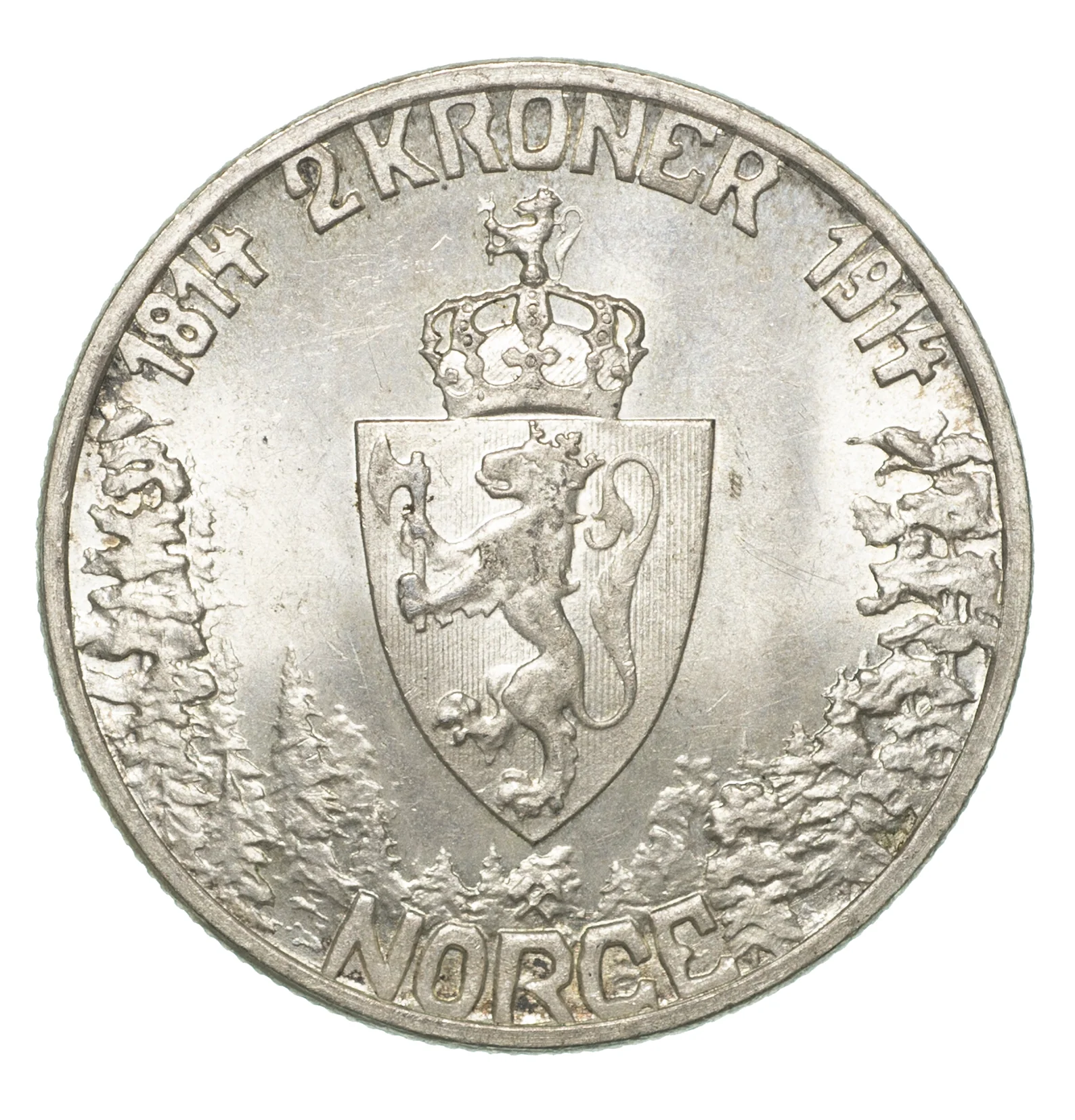
Crowned shield with a vertical-line background, topped by a second crowned lion. Both Norwegian lions face left, holding halberds. Trees flank the bottom. Value and date are above; mintmark and inscription are below. A solid ring is on the rim.
Inscription:
1814 2 KRONER 1914
⚒
NORGE
⚒
NORGE
Translation:
Two Kroner 1814 1914
Hammer
Norway
Hammer
Norway
Script: Latin
Engraver: Gunnar Utsond
Reverse
Description:
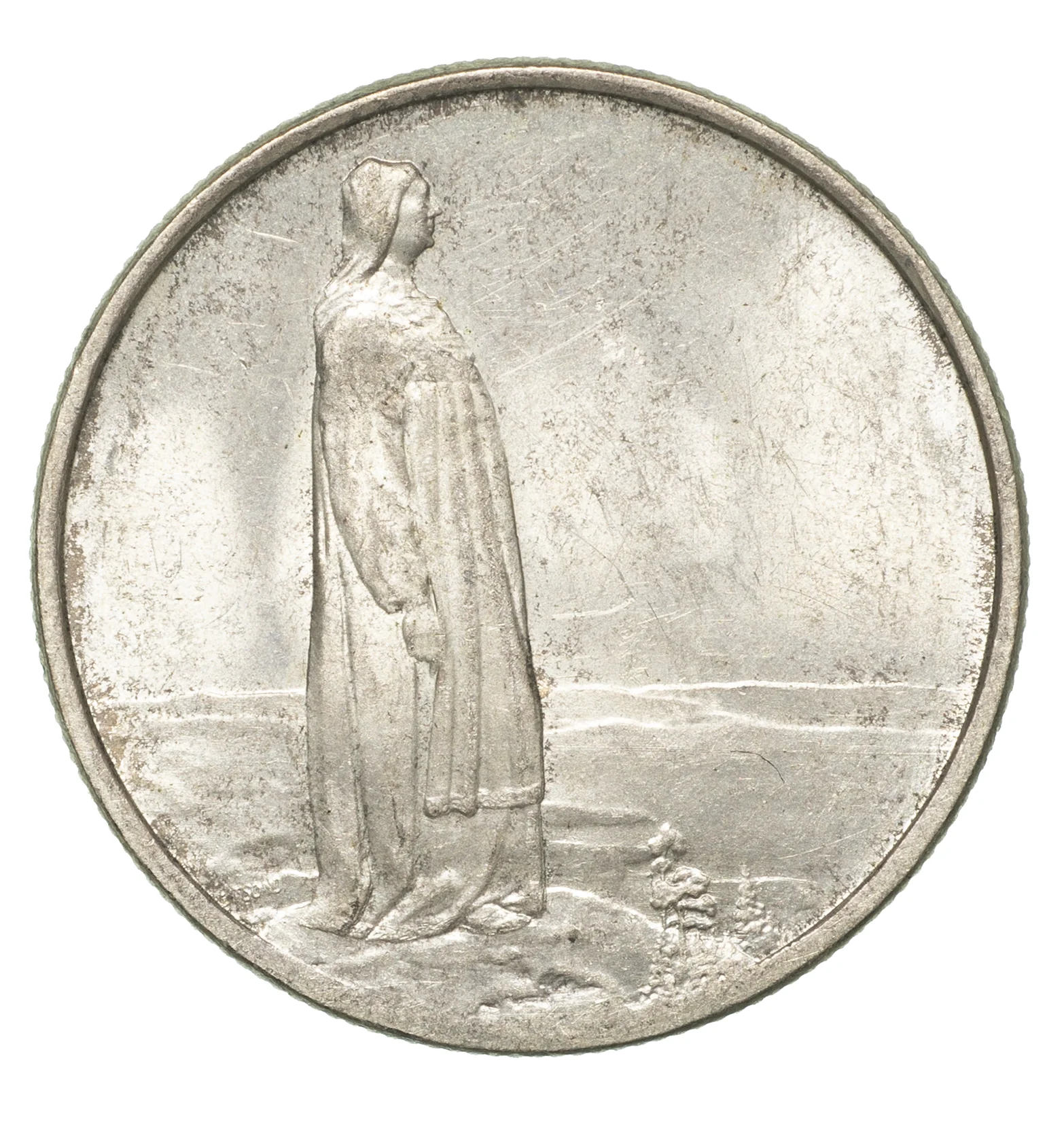
Woman in cloth facing right, amid water and foliage. Engraver's signature lower left. Solid ring on rim.
Inscription:
UTSOND
Script: Latin
Engraver: Gunnar Utsond
Edge
Reeded
Categories
| Symbols> Coat of Arms |
Mints
| Name | Mark |
|---|---|
| Norwegian Mint | — |
Mintings
| Year | Mint Mark | Mintage | Quality | Collection |
|---|---|---|---|---|
| 1914 | — | 69,500 | Matte | |
| 1914 | — | 156,100 |
Historical background
In 1914, Norway was part of the Scandinavian Monetary Union (SMU), established in 1873 with Denmark and joined by Sweden in 1875. This union created a fixed exchange rate and free circulation of each member's gold-backed coins across all three countries, effectively creating a common currency area. The Norwegian krone, introduced in 1875 to replace the speciedaler, was defined as 1/2480 of a kilogram of pure gold, providing it with solidity and international credibility on the eve of World War I.
The outbreak of war in August 1914 triggered an immediate financial crisis. Fearing instability and a drain on gold reserves, Norway, like its neighbours, swiftly suspended the gold standard on August 4th. This decisive action was taken to halt the export of gold, protect the central bank's reserves, and allow greater control over the money supply and interest rates to manage the economic shock. The suspension also effectively ended the practical functioning of the Scandinavian Monetary Union, as the free convertibility and fixed parity that underpinned it were abandoned.
Consequently, Norway entered the war period with a currency that was no longer convertible to gold. The government and Norges Bank faced the challenging task of financing wartime imports and maintaining economic stability without the automatic discipline of the gold standard. This set the stage for a period of inflationary pressure, increased state intervention in the economy, and a definitive move towards a managed national currency, ending the era of international monetary union that had characterized the pre-war krone.
The outbreak of war in August 1914 triggered an immediate financial crisis. Fearing instability and a drain on gold reserves, Norway, like its neighbours, swiftly suspended the gold standard on August 4th. This decisive action was taken to halt the export of gold, protect the central bank's reserves, and allow greater control over the money supply and interest rates to manage the economic shock. The suspension also effectively ended the practical functioning of the Scandinavian Monetary Union, as the free convertibility and fixed parity that underpinned it were abandoned.
Consequently, Norway entered the war period with a currency that was no longer convertible to gold. The government and Norges Bank faced the challenging task of financing wartime imports and maintaining economic stability without the automatic discipline of the gold standard. This set the stage for a period of inflationary pressure, increased state intervention in the economy, and a definitive move towards a managed national currency, ending the era of international monetary union that had characterized the pre-war krone.
🌱 Fairly Common