

1500 Pesos (Battle of Boyaca) – Colombia
Non-circulating coins
Commemoration: 150th Anniversary of the Battle of Boyaca
Colombia
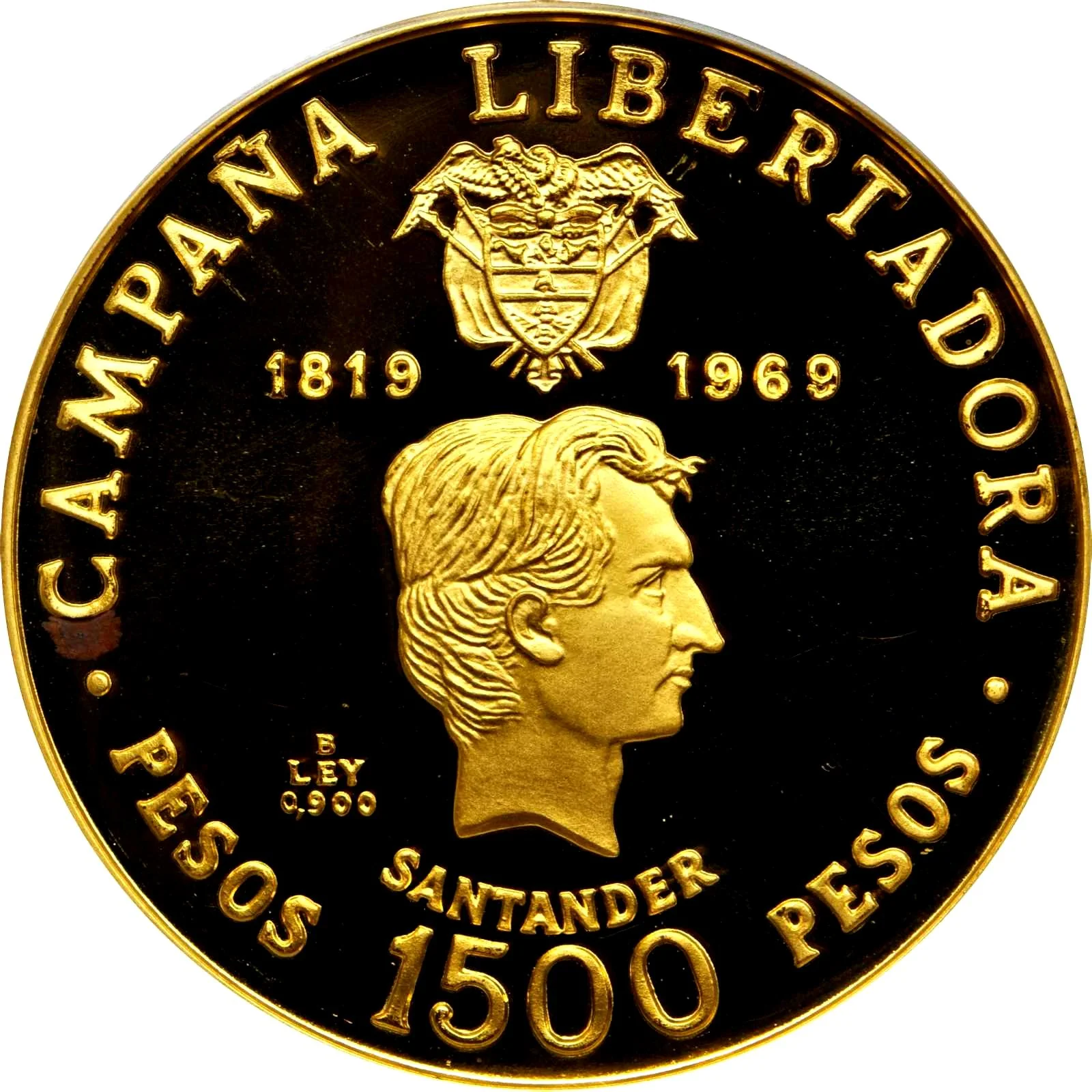
Obverse
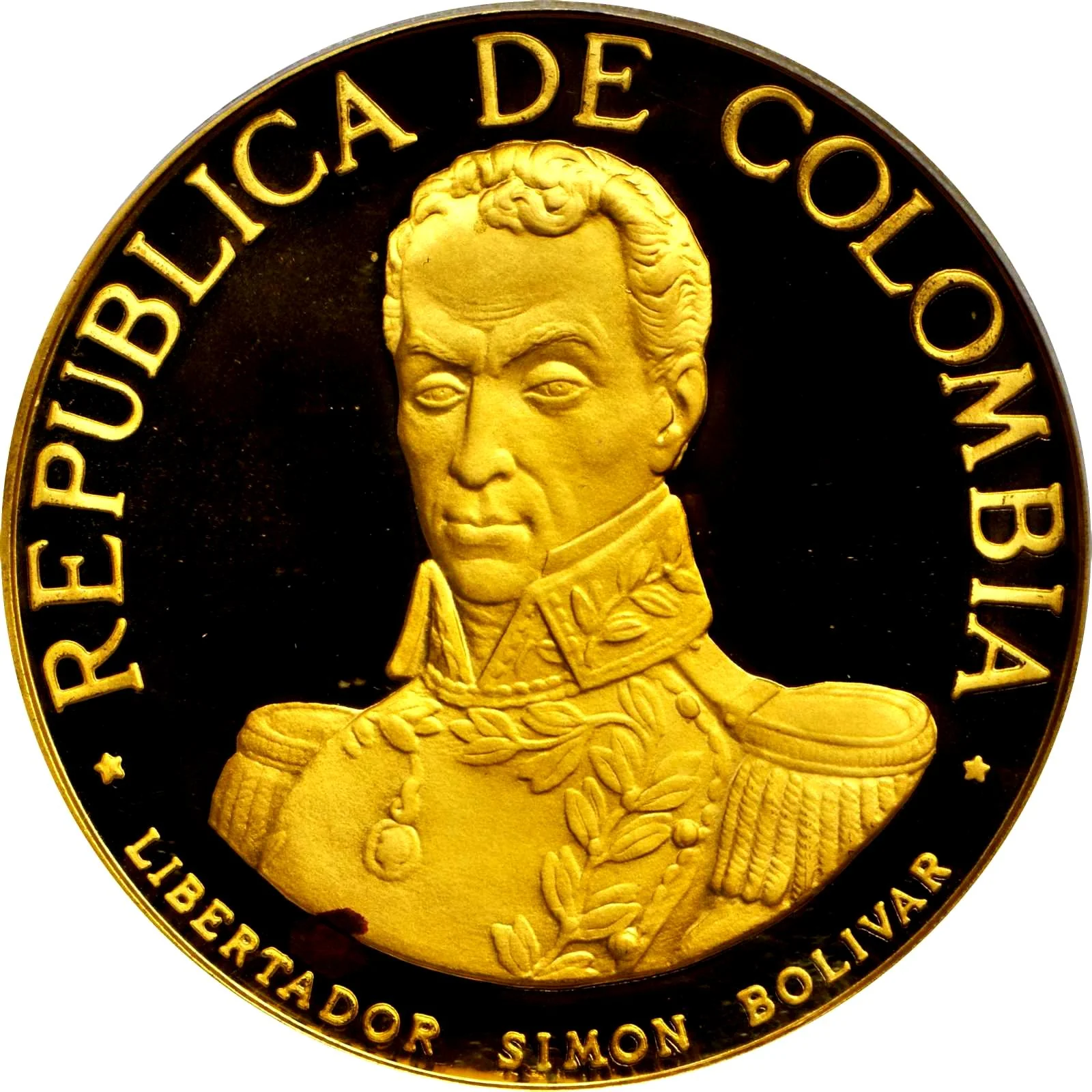
Reverse
Description:
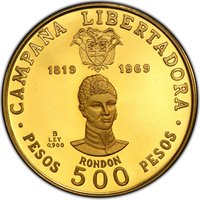
Santander's head right, arms between dates, denomination below.
Inscription:
CAMPANA LIBERTADORA
1819 1969
B
LEY
0,900
SANTANDER
PESOS 1500 PESOS
1819 1969
B
LEY
0,900
SANTANDER
PESOS 1500 PESOS
Script: Latin
Edge
Categories
| Person> Military leader |
| Person> Politician |
| Symbols> Coat of Arms |
| History> War |
Mints
| Name | Mark |
|---|---|
| Bogota Mint | B |
| Unoaerre | NI |
Historical background
In 1969, Colombia's currency situation was characterized by a managed exchange rate system under the framework of the Bretton Woods agreement, with the Colombian peso pegged to the United States dollar. The official exchange rate was maintained at a fixed parity of 16.25 pesos per dollar, a rate established in 1962 and supported by the country's membership in the International Monetary Fund (IMF). This stability was actively managed by the Banco de la República, which intervened in the foreign exchange market to maintain the peg, drawing on Colombia's international reserves, which were bolstered by a sustained period of economic growth known as the "Development Plan" era.
However, this apparent stability masked underlying pressures. Colombia was experiencing persistent, though moderate, inflation, which gradually eroded the peso's real value and created a disparity with the fixed nominal rate. This situation encouraged capital flight and increased demand for dollars, putting steady pressure on the country's foreign reserves. The economy remained heavily dependent on primary exports, particularly coffee, which accounted for the majority of foreign exchange earnings, making the currency vulnerable to fluctuations in global commodity prices and highlighting a structural lack of diversification.
Consequently, while no dramatic devaluation occurred in 1969 itself, the year represented the calm before a significant monetary reform. The mounting pressures of inflation and balance of payments constraints would culminate just a few years later, in 1971, with the "Crawling Peg" (Mini-devaluaciones) system. This policy, adopted in response to the very imbalances evident in 1969, involved small, frequent devaluations of the peso to better reflect inflation differentials and maintain export competitiveness, marking a decisive shift away from the rigid fixed parity that had defined the decade.
However, this apparent stability masked underlying pressures. Colombia was experiencing persistent, though moderate, inflation, which gradually eroded the peso's real value and created a disparity with the fixed nominal rate. This situation encouraged capital flight and increased demand for dollars, putting steady pressure on the country's foreign reserves. The economy remained heavily dependent on primary exports, particularly coffee, which accounted for the majority of foreign exchange earnings, making the currency vulnerable to fluctuations in global commodity prices and highlighting a structural lack of diversification.
Consequently, while no dramatic devaluation occurred in 1969 itself, the year represented the calm before a significant monetary reform. The mounting pressures of inflation and balance of payments constraints would culminate just a few years later, in 1971, with the "Crawling Peg" (Mini-devaluaciones) system. This policy, adopted in response to the very imbalances evident in 1969, involved small, frequent devaluations of the peso to better reflect inflation differentials and maintain export competitiveness, marking a decisive shift away from the rigid fixed parity that had defined the decade.
✨ Legendary