

5 Pounds (coronation of Queen Elizabeth II) – United Kingdom
Non-circulating coins
Commemoration: 65th anniversary of coronation of Queen Elizabeth II
United Kingdom
Context

Material
References
KM: #Click to copy to clipboard1583b
Numista: #232766
Value
Exchange value: 5 GBP = $6.77
Bullion value: $6116.86
Inflation-adjusted value: 6.72 GBP
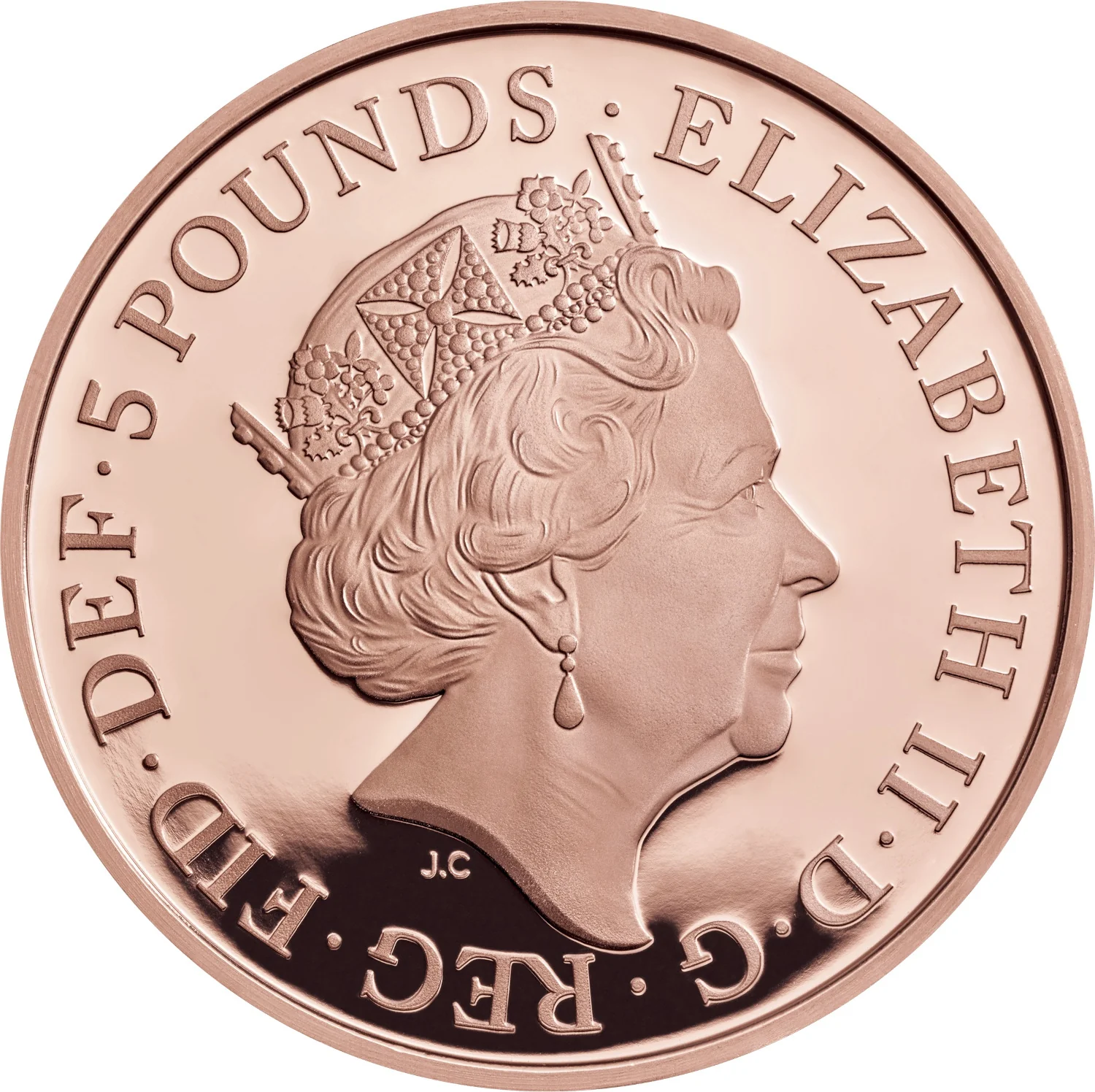
Obverse
Description:
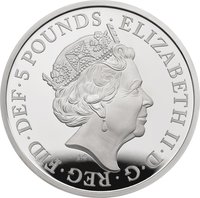
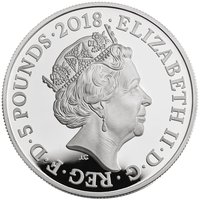
Queen Elizabeth V crowned right, wearing George IV State Diadem.
Inscription:
ELIZABETH II·D·G·REG·FID·DEF·5 POUNDS·
J.C
J.C
Translation:
Elizabeth II, by the Grace of God, Queen, Defender of the Faith, 5 Pounds
Script: Latin
Engraver: Jody Clark
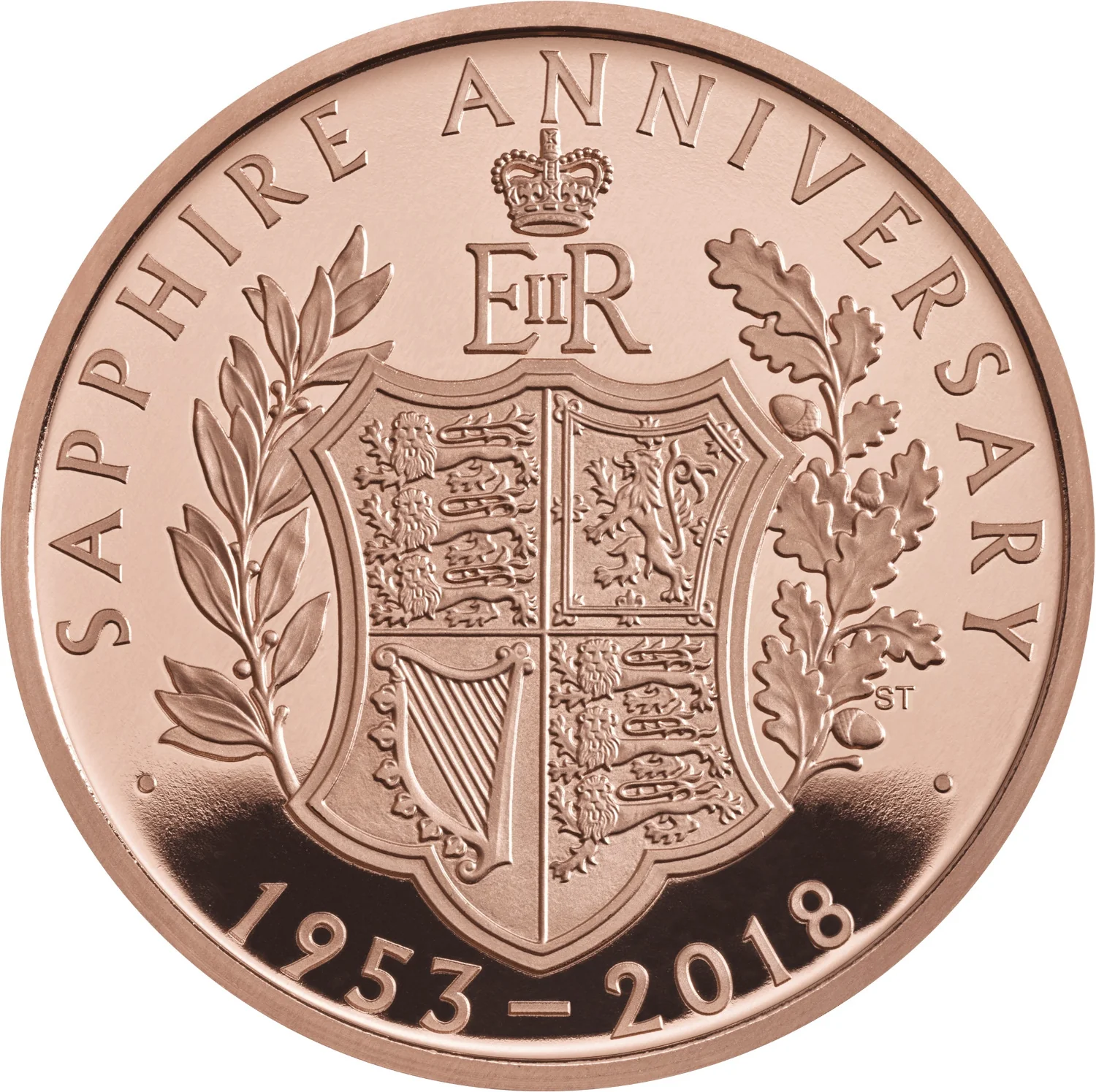
Reverse
Description:
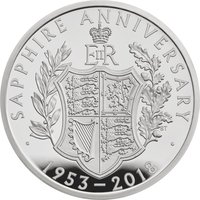
Royal Standard with Westminster-style arms, Queen's cypher above, dates below.
Inscription:
SAPPHIRE ANNIVERSARY
E II R
ST
· 1953 - 2018 ·
E II R
ST
· 1953 - 2018 ·
Script: Latin
Engraver: Stephen Taylor
Edge
Plain with incuse lettering
Legend:
SHINE THROUGH THE AGES
Categories
| Event> Coronation |
Mints
| Name | Mark |
|---|---|
| Royal Mint | — |
Mintings
| Year | Mint Mark | Mintage | Quality | Collection |
|---|---|---|---|---|
| 2018 | — | 475 | Proof |
Historical background
In 2018, the United Kingdom's currency, the pound sterling, remained under significant pressure from the protracted and complex Brexit negotiations. The dominant theme was uncertainty, as the UK government, led by Prime Minister Theresa May, struggled to secure a withdrawal agreement with the European Union that could pass through a deeply divided Parliament. This political deadlock created persistent volatility for the pound, which tended to weaken on headlines suggesting a "no-deal" Brexit was becoming more likely and strengthen slightly on signs of potential compromise. The currency was notably sensitive to key parliamentary votes and EU summits, trading as a real-time barometer of political risk.
Economically, the Bank of England (BoE) faced a challenging balancing act. In November 2017, it had raised interest rates for the first time in a decade, and in August 2018, it implemented a second hike to 0.75% in response to above-target inflation and solid wage growth. However, this tightening cycle was cautious and data-dependent, as the overarching Brexit uncertainty clouded the economic outlook. While unemployment was at a multi-decade low, business investment stagnated due to the lack of clarity on future trading relations, limiting the pound's potential for a sustained recovery based on fundamental economic strength.
By the end of 2018, the pound had weathered another turbulent year, closing roughly where it began against the US dollar but having experienced considerable fluctuations in between. The currency's fate was almost entirely tethered to political developments rather than traditional economic metrics. The pivotal event came in November with the announcement of a draft withdrawal agreement, which initially boosted sterling on hopes of a resolution, only for it to fall again as domestic political opposition mounted, setting the stage for the profound parliamentary crises that would define early 2019.
Economically, the Bank of England (BoE) faced a challenging balancing act. In November 2017, it had raised interest rates for the first time in a decade, and in August 2018, it implemented a second hike to 0.75% in response to above-target inflation and solid wage growth. However, this tightening cycle was cautious and data-dependent, as the overarching Brexit uncertainty clouded the economic outlook. While unemployment was at a multi-decade low, business investment stagnated due to the lack of clarity on future trading relations, limiting the pound's potential for a sustained recovery based on fundamental economic strength.
By the end of 2018, the pound had weathered another turbulent year, closing roughly where it began against the US dollar but having experienced considerable fluctuations in between. The currency's fate was almost entirely tethered to political developments rather than traditional economic metrics. The pivotal event came in November with the announcement of a draft withdrawal agreement, which initially boosted sterling on hopes of a resolution, only for it to fall again as domestic political opposition mounted, setting the stage for the profound parliamentary crises that would define early 2019.

✨ Legendary