

1 Dollar (Arctic Territories) – Canada
Non-circulating coins
Commemoration: 100th Anniversary of the Arctic Territories
Canada
Context
Material
References
KM: #Click to copy to clipboard128
Numista: #23272
Value
Exchange value: 1 CAD = $0.73
Bullion value: $33.90
Inflation-adjusted value: 4.05 CAD
Obverse
Description:
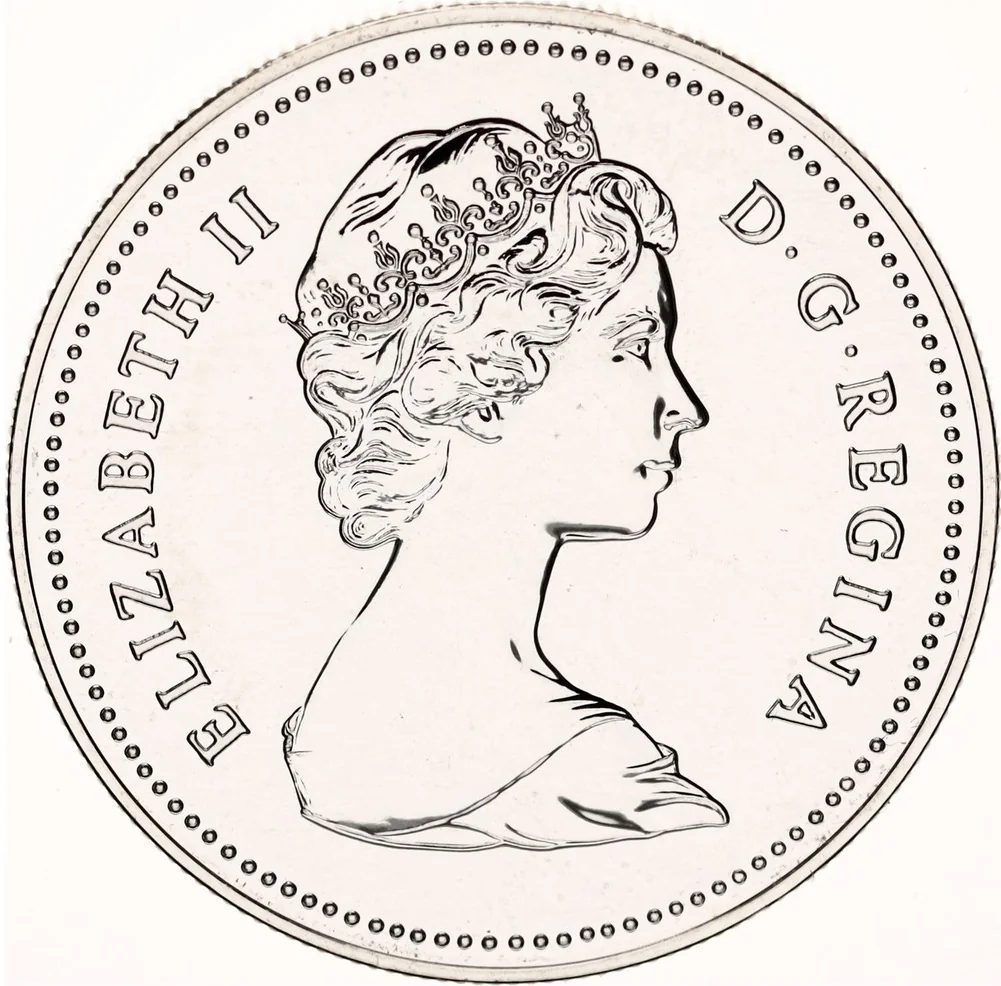
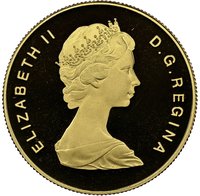
Bust of Queen Elizabeth II at age 37, wearing a tiara and facing right.
Inscription:
ELIZABETH II D·G·REGINA
Translation:
Elizabeth II by the Grace of God Queen
Script: Latin
Designer: Arnold Machin
Reverse
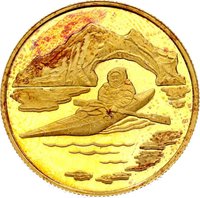
Description:
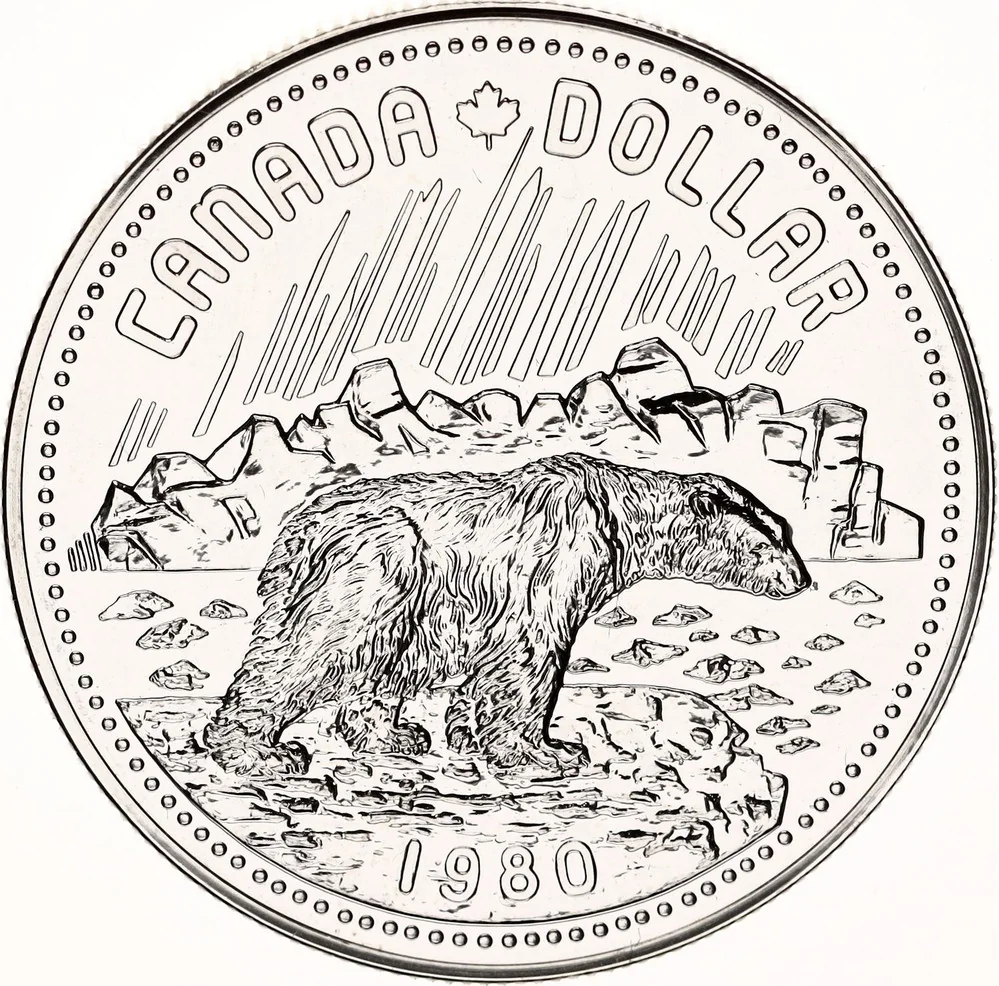
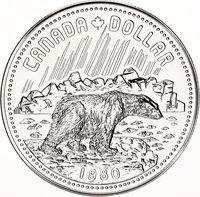
Polar bear calendar.
Inscription:
CANADA DOLLAR
1980
1980
Script: Latin
Engraver: Walter Ott
Designer: Donald D. Paterson
Edge
Reeded
Mints
| Name | Mark |
|---|---|
| Royal Canadian Mint of Ottawa | — |
Mintings
| Year | Mint Mark | Mintage | Quality | Collection |
|---|---|---|---|---|
| 1980 | — | 389,564 |
Historical background
In 1980, Canada's currency situation was characterized by significant inflationary pressures and a period of monetary policy transition. The decade prior had seen inflation surge globally due to oil price shocks and loose monetary policy, and Canada was no exception. As the new Liberal government under Prime Minister Pierre Trudeau took office, the country was grappling with an annual inflation rate hovering around 10%. The Bank of Canada, under Governor Gerald Bouey, was in the early stages of a major policy shift away from directly targeting interest rates and toward focusing on the money supply (monetarism) to curb this persistent inflation, a strategy that would define the early 1980s.
The Canadian dollar itself was relatively strong in the foreign exchange markets at the start of the decade, trading in a range between 85 and 87 cents U.S. This strength was partly attributed to high global commodity prices, particularly for oil and gas, following the 1979 energy crisis. Canada's status as a net energy exporter provided support for the currency. However, this external strength masked growing domestic economic concerns, including rising unemployment and a looming recession, which would soon challenge the currency's valuation.
Ultimately, the monetary tightening required to combat inflation led to sharply higher interest rates, precipitating a severe recession in 1981-82. This economic contraction, combined with a global decline in commodity prices, subsequently placed heavy downward pressure on the Canadian dollar. Thus, the currency situation in 1980 stood at a precarious inflection point: superficially robust due to resource exports, but fundamentally vulnerable to the harsh anti-inflation medicine being administered by the central bank, setting the stage for a volatile and challenging economic period ahead.
The Canadian dollar itself was relatively strong in the foreign exchange markets at the start of the decade, trading in a range between 85 and 87 cents U.S. This strength was partly attributed to high global commodity prices, particularly for oil and gas, following the 1979 energy crisis. Canada's status as a net energy exporter provided support for the currency. However, this external strength masked growing domestic economic concerns, including rising unemployment and a looming recession, which would soon challenge the currency's valuation.
Ultimately, the monetary tightening required to combat inflation led to sharply higher interest rates, precipitating a severe recession in 1981-82. This economic contraction, combined with a global decline in commodity prices, subsequently placed heavy downward pressure on the Canadian dollar. Thus, the currency situation in 1980 stood at a precarious inflection point: superficially robust due to resource exports, but fundamentally vulnerable to the harsh anti-inflation medicine being administered by the central bank, setting the stage for a volatile and challenging economic period ahead.
🌱 Common