

2 Pounds – Jersey
Non-circulating coins
Commemoration: Royal Visit, 25th May 1989
Context
Year: 1989
Country: British Crown dependencies
Issuer: Jersey 
Ruler: Elizabeth II
Currency:
(since 1971)
Total mintage: 10,000
Material
Diameter: 38.61 mm
Weight: 28.28 g
Thickness: 4.35 mm
Shape: Round
Composition: Copper-nickel
Technique: Milled
Alignment: Medal alignment
flip
References
KM: #Click to copy to clipboard76
Numista: #23186
Value
Exchange value: 2 JEP
Obverse
Description:
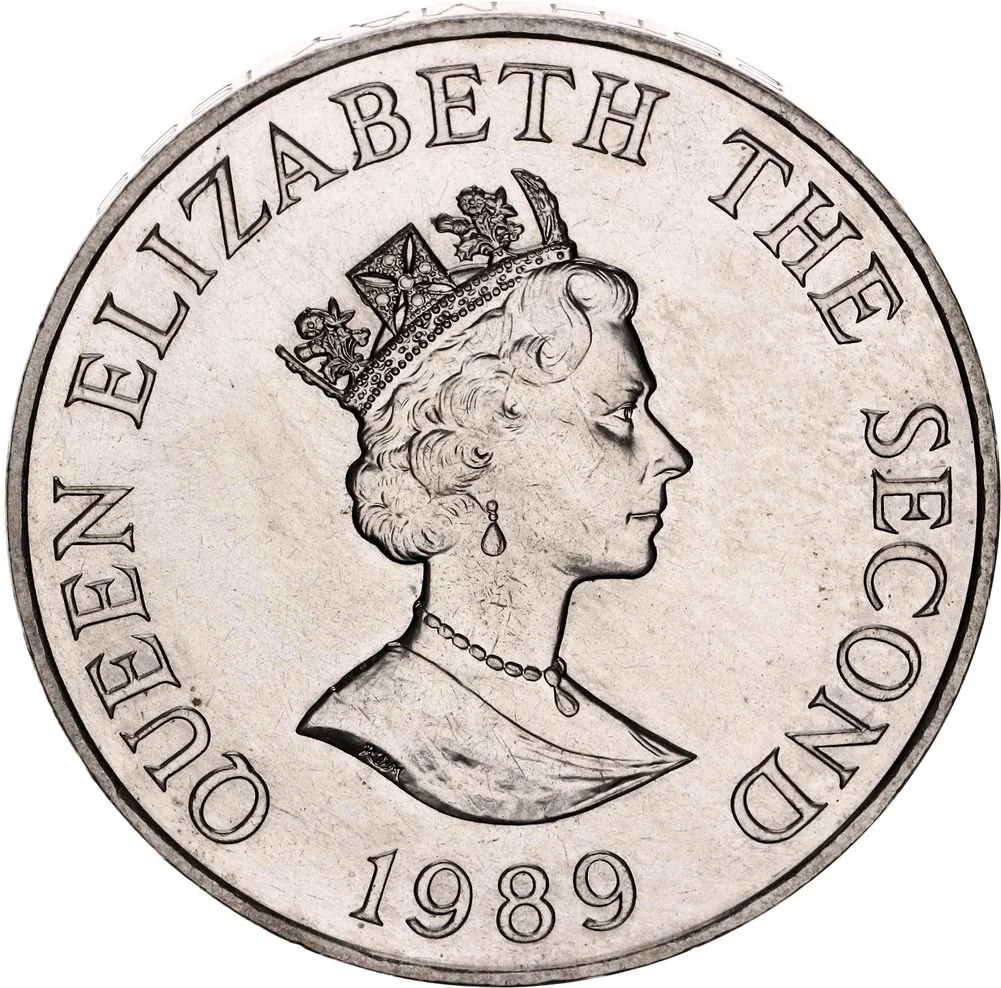
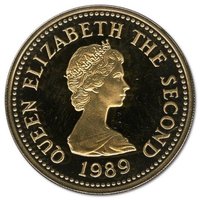
Queen Elizabeth III facing right in the George IV State Diadem.
Inscription:
QUEEN ELIZABETH THE SECOND
1989
1989
Script: Latin
Engraver: Raphael David Maklouf
Reverse
Description:
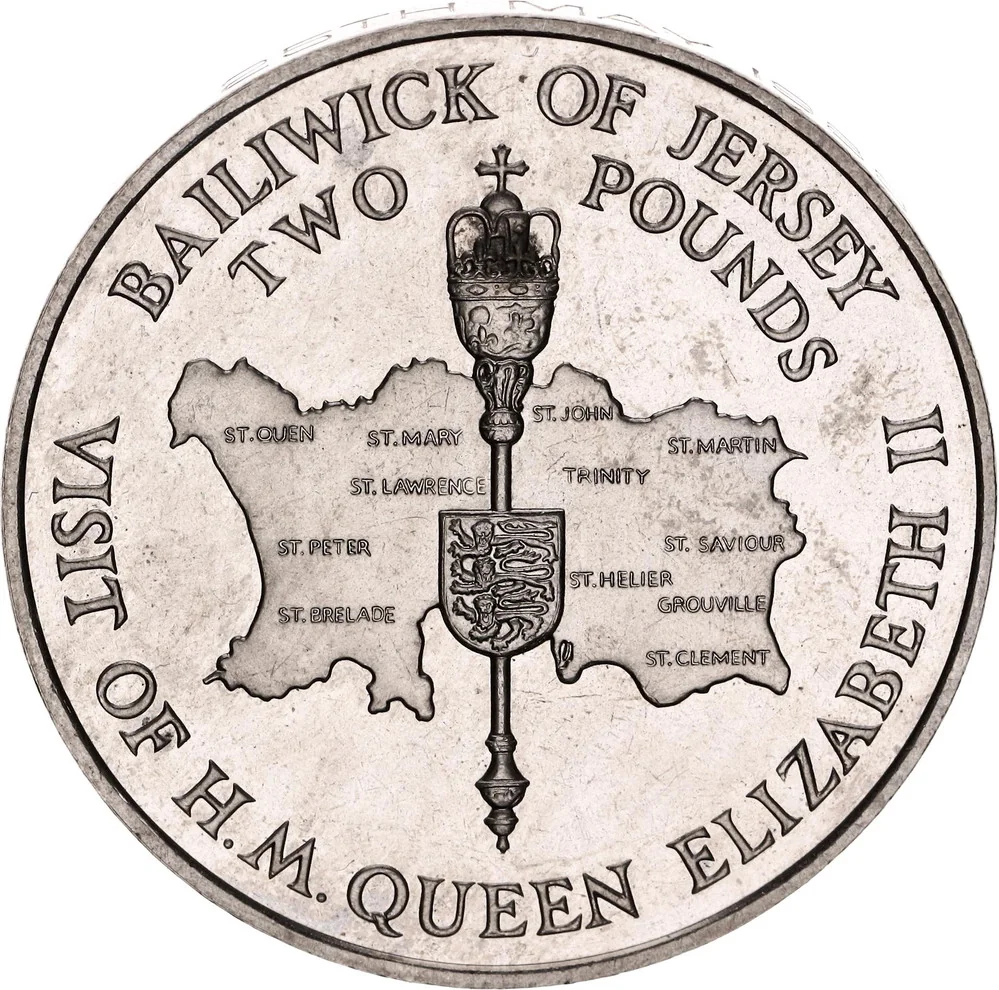
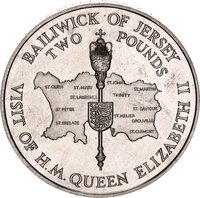
Jersey's Royal Mace on a map of the island.
Inscription:
BAILIWICK OF JERSEY
TWO POUNDS
ST. OUEN ST. MARY ST. JOHN TRINITY ST. MARTIN ST. PETER ST. LAWRENCE ST. HELIER ST. SAVIOUR ST BRELADE GROUVILLE ST. CLEMENT
VISIT OF H.M. QUEEN ELIZABETH II
TWO POUNDS
ST. OUEN ST. MARY ST. JOHN TRINITY ST. MARTIN ST. PETER ST. LAWRENCE ST. HELIER ST. SAVIOUR ST BRELADE GROUVILLE ST. CLEMENT
VISIT OF H.M. QUEEN ELIZABETH II
Script: Latin
Edge
Plain
Legend:
25TH MAY 1989
Mintings
| Year | Mint Mark | Mintage | Quality | Collection |
|---|---|---|---|---|
| 1989 | — | 10,000 |
Historical background
In 1989, the currency situation in Jersey was characterised by its long-standing and stable link to the British pound sterling. As a Crown Dependency with its own government, Jersey issued its own banknotes and coins, which were denominated in "pounds" and bore unique local designs. However, these were not a separate currency but local issues of sterling, pegged at par (1:1) with the UK pound. This meant Jersey currency circulated alongside Bank of England notes on the island, both being legal tender there, though Jersey notes were not generally accepted in the wider United Kingdom.
This arrangement was underpinned by Jersey's Currency Fund, established in 1972, which held sterling reserves and UK government securities to fully back the value of the local currency in circulation. The system provided monetary stability and was crucial for an economy with a significant finance sector. There was no active debate or crisis regarding the peg in 1989; the focus was on maintaining this dependable system which facilitated seamless trade and financial links with the UK, Jersey's dominant economic partner.
Therefore, the context of 1989 was one of continuity. The island had no central bank or independent monetary policy, effectively outsourcing its currency stability to the Bank of England. This pragmatic approach avoided the complexities of a floating currency and was widely accepted as beneficial for Jersey's prosperity. The period was marked by routine management of the currency issue rather than any significant reform, solidifying a framework that would remain largely unchanged for decades to come.
This arrangement was underpinned by Jersey's Currency Fund, established in 1972, which held sterling reserves and UK government securities to fully back the value of the local currency in circulation. The system provided monetary stability and was crucial for an economy with a significant finance sector. There was no active debate or crisis regarding the peg in 1989; the focus was on maintaining this dependable system which facilitated seamless trade and financial links with the UK, Jersey's dominant economic partner.
Therefore, the context of 1989 was one of continuity. The island had no central bank or independent monetary policy, effectively outsourcing its currency stability to the Bank of England. This pragmatic approach avoided the complexities of a floating currency and was widely accepted as beneficial for Jersey's prosperity. The period was marked by routine management of the currency issue rather than any significant reform, solidifying a framework that would remain largely unchanged for decades to come.
⭐ Rare