

2 Pounds (Queen Mother) – Jersey
Non-circulating coins
Commemoration: 90th anniversary of the birth of the Queen Mother
Context
Year: 1990
Country: British Crown dependencies
Issuer: Jersey 
Ruler: Elizabeth II
Currency:
(since 1971)
Total mintage: 10,000
Material
Diameter: 38.61 mm
Weight: 28.28 g
Thickness: 3.35 mm
Shape: Round
Composition: Copper-nickel
Technique: Milled
Alignment: Medal alignment
flip
References
KM: #Click to copy to clipboard83
Numista: #23185
Value
Exchange value: 2 JEP
Obverse
Description:
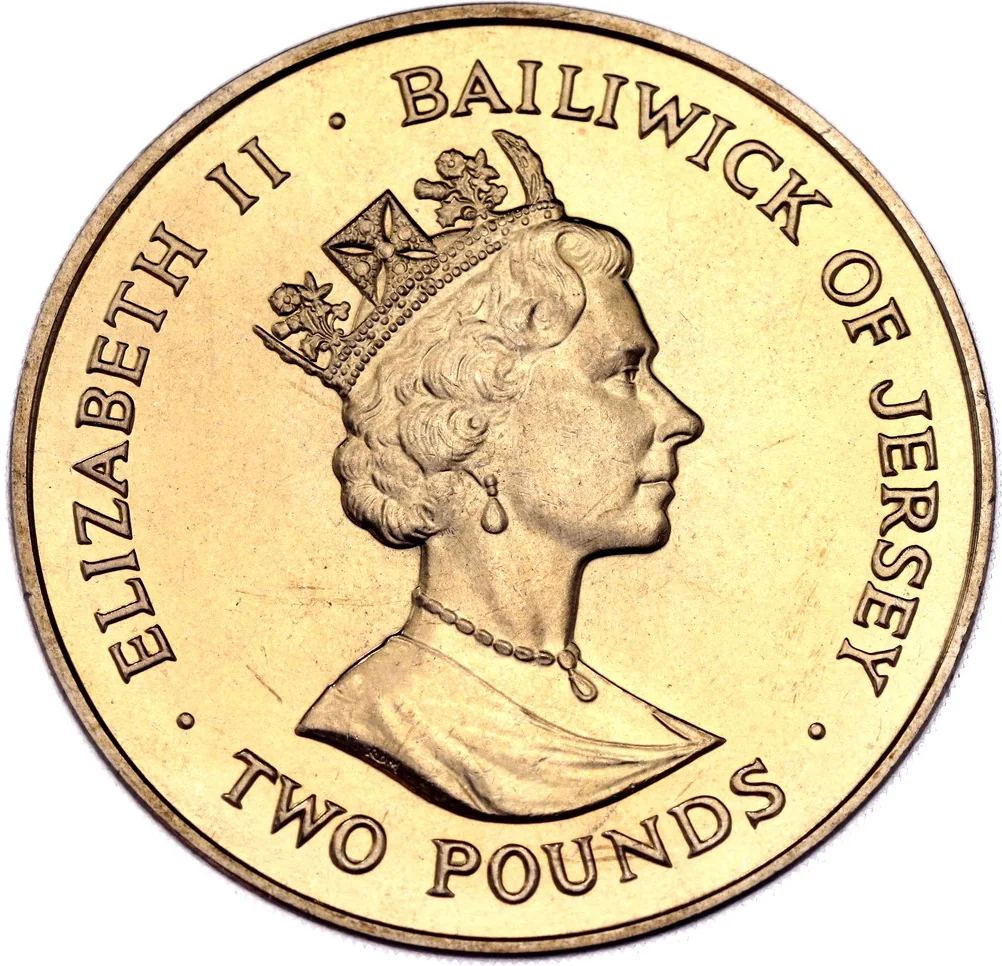
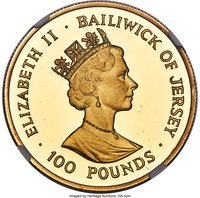
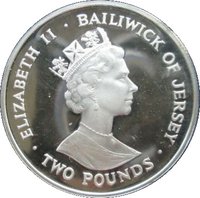
Queen Elizabeth III crowned right, wearing the George IV State Diadem.
Inscription:
· ELIZABETH II · BAILIWICK OF JERSEY · TWO POUNDS
Translation:
ELIZABETH II BAILIWICK OF JERSEY TWO POUNDS
Script: Latin
Language: English
Engraver: Raphael David Maklouf
Reverse
Description:
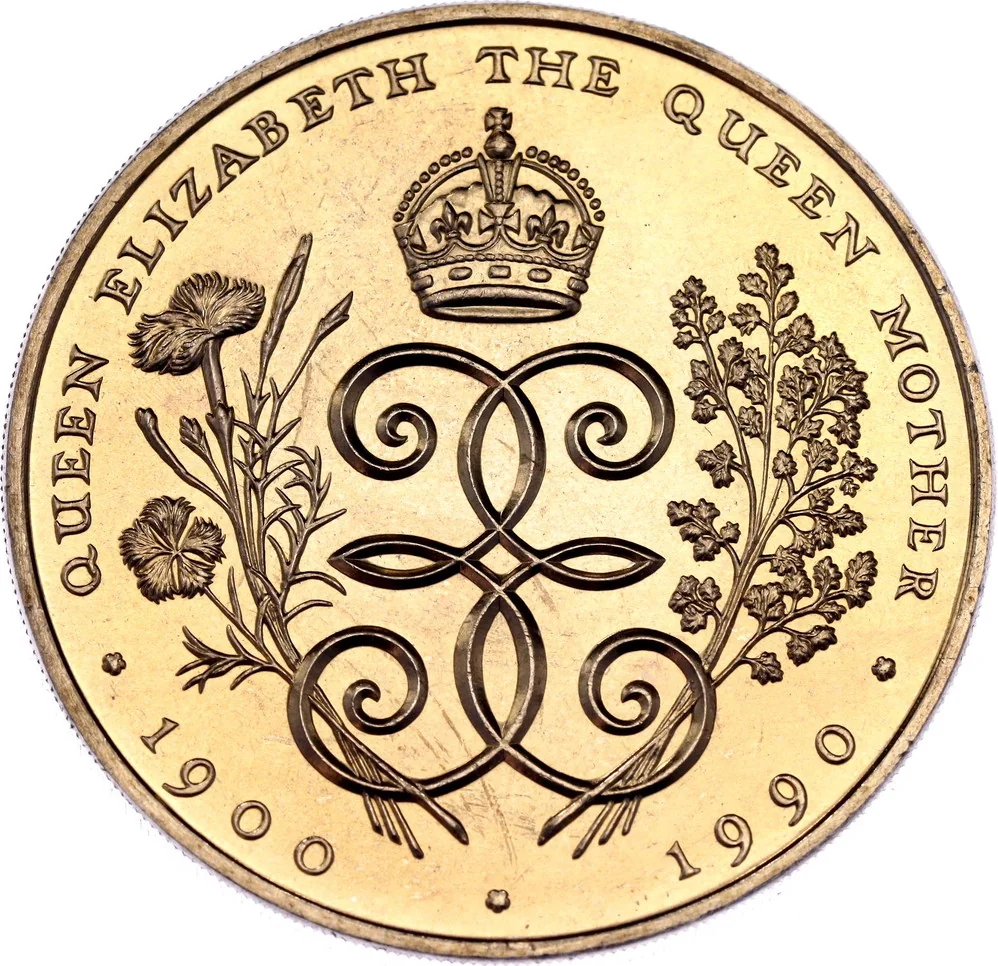
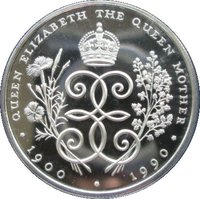
Jersey's Pink and Fern flowers, linked by Queen Elizabeth The Queen Mother's personal cypher.
Inscription:
· QUEEN ELIZABETH THE QUEEN MOTHER ·
1900 · 1990
EE
1900 · 1990
EE
Script: Latin
Engraver: Robert Elderton
Edge
Milled
Categories
| Event> Birth anniversary |
| Symbol> Crown |
Mintings
| Year | Mint Mark | Mintage | Quality | Collection |
|---|---|---|---|---|
| 1990 | — | 10,000 |
Historical background
In 1990, Jersey's currency situation was defined by its unique and long-standing dual-currency system, a legacy of its historical ties. The island officially used the Jersey pound, which was issued by the States of Jersey and circulated alongside Bank of England notes. Crucially, these currencies were at parity and were both legal tender on the island, creating a practical environment where notes from both issuers were used interchangeably in daily transactions.
This system functioned smoothly due to a strict adherence to a one-to-one peg with sterling, as Jersey was (and remains) within the "sterling area." The island's government maintained substantial sterling reserves to fully back its own note issue, ensuring absolute confidence in its currency. There were no foreign exchange controls between Jersey and the United Kingdom, allowing for the free movement of capital. Economically, the period was stable, with the island's burgeoning finance sector benefiting from this predictable and secure monetary framework.
Therefore, the background for 1990 shows no currency crisis or significant change; instead, it was a period of consolidated stability. The key features were the successful operation of the dual circulation, the unwavering peg to sterling, and the backing of the local issue with reserves. This arrangement reinforced Jersey's economic stability and its close constitutional relationship with the UK, while also symbolising its domestic autonomy in monetary affairs.
This system functioned smoothly due to a strict adherence to a one-to-one peg with sterling, as Jersey was (and remains) within the "sterling area." The island's government maintained substantial sterling reserves to fully back its own note issue, ensuring absolute confidence in its currency. There were no foreign exchange controls between Jersey and the United Kingdom, allowing for the free movement of capital. Economically, the period was stable, with the island's burgeoning finance sector benefiting from this predictable and secure monetary framework.
Therefore, the background for 1990 shows no currency crisis or significant change; instead, it was a period of consolidated stability. The key features were the successful operation of the dual circulation, the unwavering peg to sterling, and the backing of the local issue with reserves. This arrangement reinforced Jersey's economic stability and its close constitutional relationship with the UK, while also symbolising its domestic autonomy in monetary affairs.

⭐ Rare