

10 Zlotys (Battle of Vienna) – Poland
Circulating commemorative coins
Commemoration: 250th Anniversary of the Battle of Vienna - Jan III Sobieski
Poland

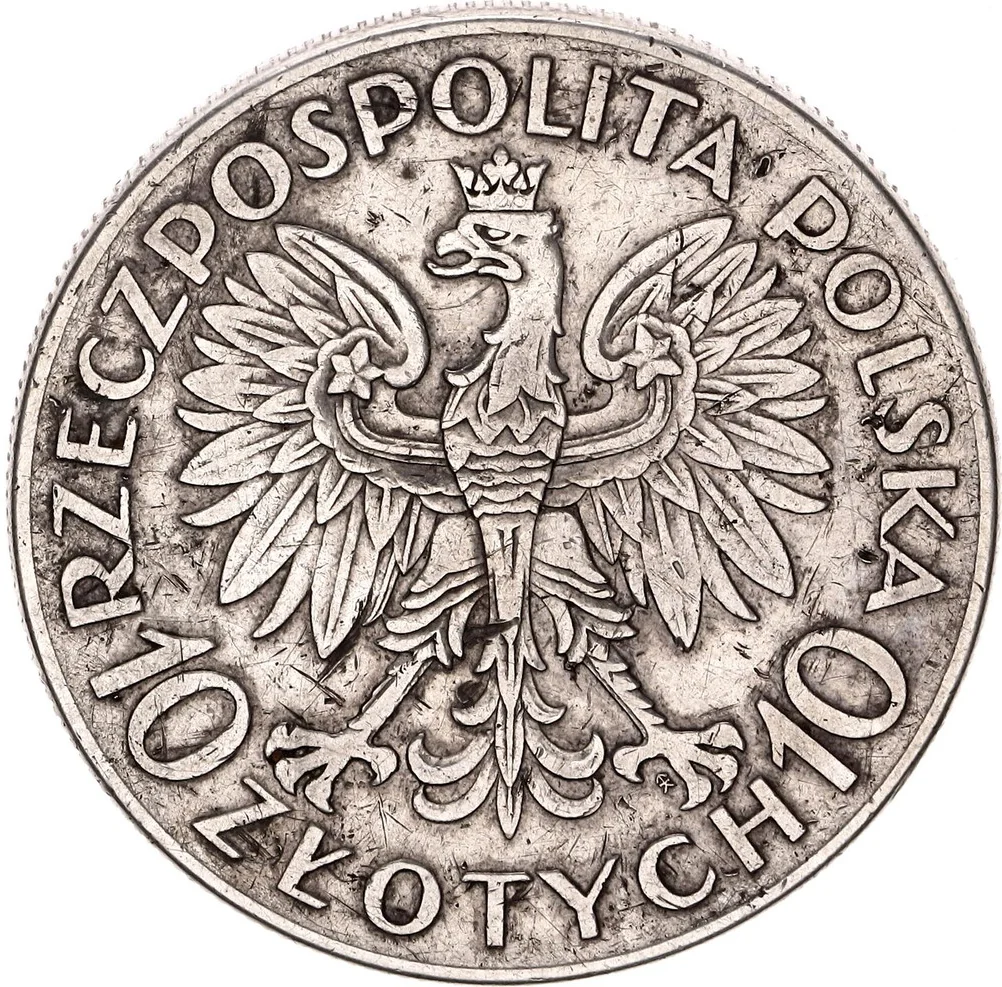
Obverse
Description:
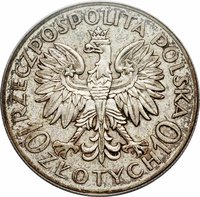
Crowned eagles:
Inscription:
RZECZPOSPOLITA POLSKA
mw
10 ZŁOTYCH 10
mw
10 ZŁOTYCH 10
Translation:
REPUBLIC OF POLAND
mw
10 ZŁOTYCH 10
mw
10 ZŁOTYCH 10
Script: Latin
Language: Polish
Designer: Jan Wysocki
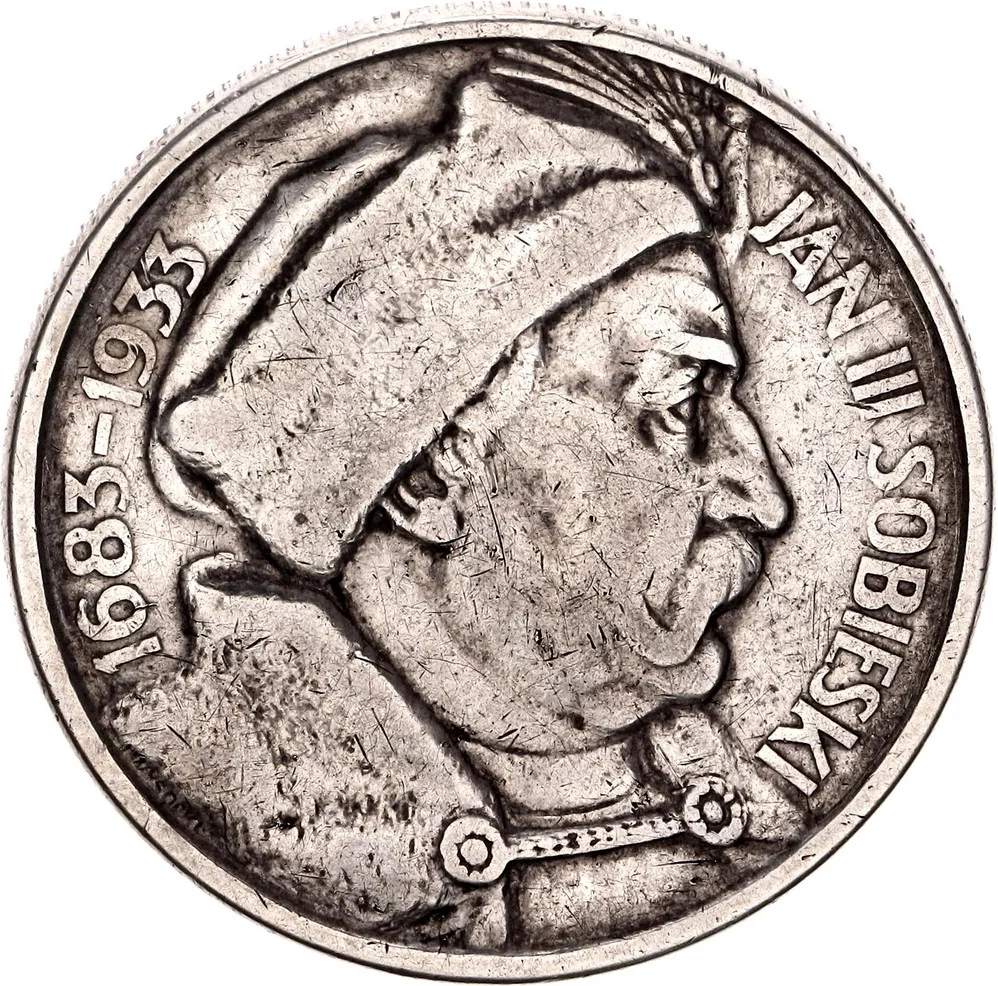
Reverse
Description:
Right-facing bust, dates left.
Inscription:
1683-1933
JAN III SOBIESKI
JAN III SOBIESKI
Script: Latin
Designer: Jan Wysocki
Edge
Plain
Mints
| Name | Mark |
|---|---|
| Mint of Poland | (MW) |
Mintings
| Year | Mint Mark | Mintage | Quality | Collection |
|---|---|---|---|---|
| 1933 | MW | 300,000 | ||
| 1933 | MW | 100 | Proof |
Historical background
In 1933, Poland's currency situation was defined by the aftermath of the Great Depression and the instability of the złoty. The country had introduced a new currency, the złoty, in 1924 under Władysław Grabski's reforms, pegging it to gold. However, this stability was short-lived. The global economic collapse severely impacted Poland's agricultural and industrial exports, leading to a drastic fall in foreign reserves, a large budget deficit, and a loss of confidence in the currency. By the early 1930s, the gold standard was unsustainable, and Poland faced severe deflation and a banking crisis.
The government, led by Prime Minister Janusz Jędrzejewicz, was forced to take decisive action in 1933. In April, Poland officially suspended the gold standard, following the path of other nations like the UK. This allowed for a controlled devaluation of the złoty and gave the government and the Bank of Poland greater control over monetary policy. The state implemented strict foreign exchange controls to stem capital flight and conserve dwindling gold and foreign currency reserves, effectively creating a managed, non-convertible currency.
These measures, while necessary, were part of a broader "statist" turn in economic policy. The devaluation aimed to make Polish goods cheaper abroad and stimulate exports, while the exchange controls centralized financial authority. The situation remained precarious, but the actions of 1933 marked a pivotal shift from a failing orthodox monetary system to a state-directed, protectionist model aimed at insulating the economy, a prelude to the more comprehensive reforms and recovery that would follow later in the decade under Eugeniusz Kwiatkowski's industrialization plan.
The government, led by Prime Minister Janusz Jędrzejewicz, was forced to take decisive action in 1933. In April, Poland officially suspended the gold standard, following the path of other nations like the UK. This allowed for a controlled devaluation of the złoty and gave the government and the Bank of Poland greater control over monetary policy. The state implemented strict foreign exchange controls to stem capital flight and conserve dwindling gold and foreign currency reserves, effectively creating a managed, non-convertible currency.
These measures, while necessary, were part of a broader "statist" turn in economic policy. The devaluation aimed to make Polish goods cheaper abroad and stimulate exports, while the exchange controls centralized financial authority. The situation remained precarious, but the actions of 1933 marked a pivotal shift from a failing orthodox monetary system to a state-directed, protectionist model aimed at insulating the economy, a prelude to the more comprehensive reforms and recovery that would follow later in the decade under Eugeniusz Kwiatkowski's industrialization plan.
🌟 Uncommon