

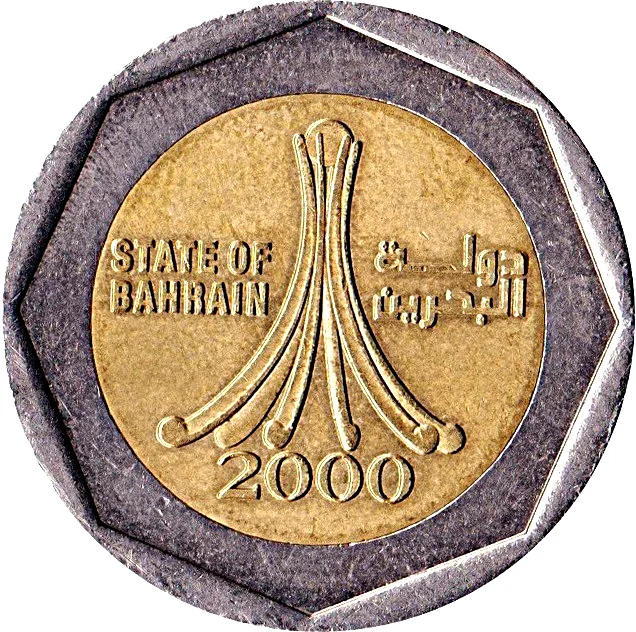
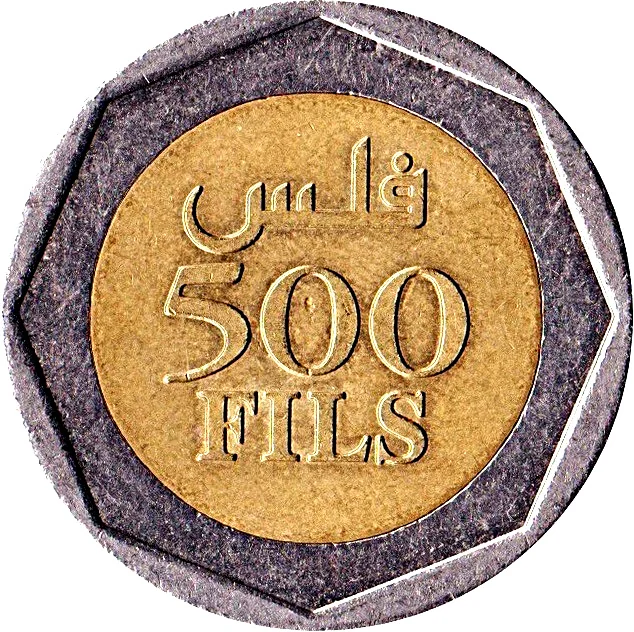

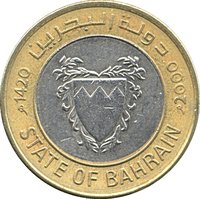
Obverse
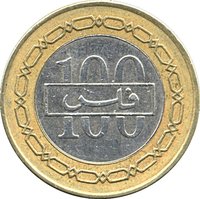
Reverse
Edge
Reeded
Mints
| Name | Mark |
|---|---|
| Monnaie de Paris | — |
| Royal Mint | — |
Mintings
| Year | Mint Mark | Mintage | Quality | Collection |
|---|---|---|---|---|
| 2000 | — | — | ||
| 2001 | — | — |
Historical background
In 2000, Bahrain's currency situation was defined by its long-standing and stable peg to the US Dollar, a policy formally established in 1980. The Bahraini Dinar (BHD) was fixed at a rate of 1 USD = 0.376 BHD, a parity that provided crucial monetary stability for the small, open economy. This peg was managed by the Bahrain Monetary Agency (BMA), the precursor to the Central Bank of Bahrain, and was underpinned by substantial foreign exchange reserves, largely derived from the country's oil and gas revenues and its growing role as a regional financial hub.
The primary rationale for this fixed exchange rate regime was to anchor inflation, facilitate predictable trade and investment flows, and bolster confidence in the financial sector, which was a key pillar of the national economy. Given Bahrain's limited domestic production base and heavy reliance on imports, the dollar peg helped control the cost of imported goods and services. Furthermore, it provided a stable environment for the rapidly expanding offshore banking sector and the Bahrain Stock Exchange, aligning the kingdom's financial practices with international markets.
While the peg was largely successful, the year 2000 also presented underlying challenges. Bahrain's oil reserves were declining relative to its Gulf neighbors, creating longer-term fiscal pressures. The fixed exchange rate meant Bahrain ceded independent monetary policy, forcing the BMA to mirror US Federal Reserve interest rate decisions, which were not always aligned with domestic economic cycles. Nevertheless, the commitment to the peg remained absolute, viewed as a non-negotiable cornerstone of economic policy essential for maintaining investor confidence and the kingdom's competitive position within the Gulf Cooperation Council (GCC).
The primary rationale for this fixed exchange rate regime was to anchor inflation, facilitate predictable trade and investment flows, and bolster confidence in the financial sector, which was a key pillar of the national economy. Given Bahrain's limited domestic production base and heavy reliance on imports, the dollar peg helped control the cost of imported goods and services. Furthermore, it provided a stable environment for the rapidly expanding offshore banking sector and the Bahrain Stock Exchange, aligning the kingdom's financial practices with international markets.
While the peg was largely successful, the year 2000 also presented underlying challenges. Bahrain's oil reserves were declining relative to its Gulf neighbors, creating longer-term fiscal pressures. The fixed exchange rate meant Bahrain ceded independent monetary policy, forcing the BMA to mirror US Federal Reserve interest rate decisions, which were not always aligned with domestic economic cycles. Nevertheless, the commitment to the peg remained absolute, viewed as a non-negotiable cornerstone of economic policy essential for maintaining investor confidence and the kingdom's competitive position within the Gulf Cooperation Council (GCC).
🌱 Common