

1 Dollar – Australia
Circulating commemorative coins
Commemoration: International Year of Peace
Australia
Context

Material
References
KM: #Click to copy to clipboard87
Numista: #2298
Value
Exchange value: 1 AUD = $0.71
Inflation-adjusted value: 3.55 AUD
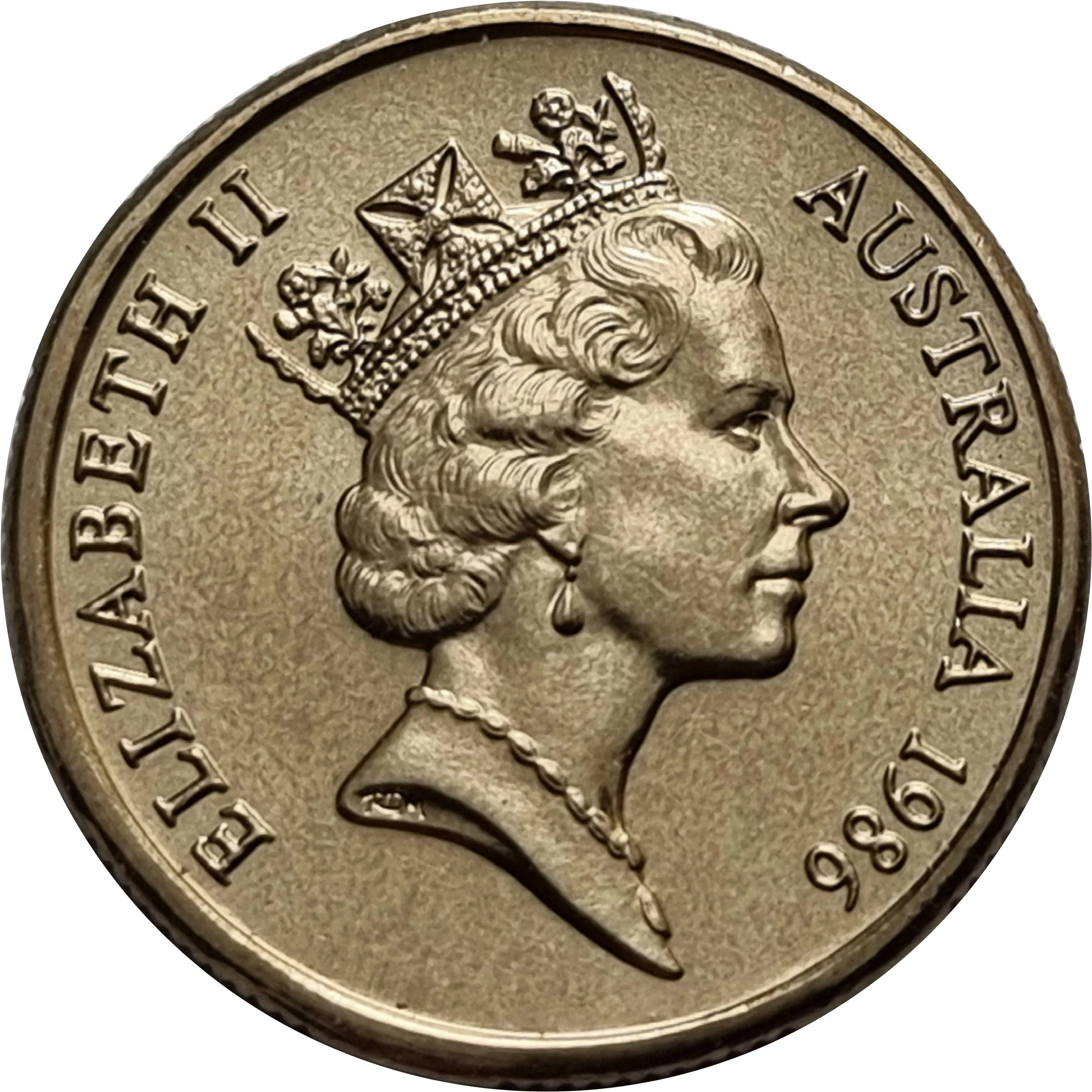
Obverse
Description:
Queen Elizabeth III facing right in the King George IV State Diadem.
Inscription:
ELIZABETH II
AUSTRALIA 1986
RDM
AUSTRALIA 1986
RDM
Script: Latin
Designer: Raphael David Maklouf
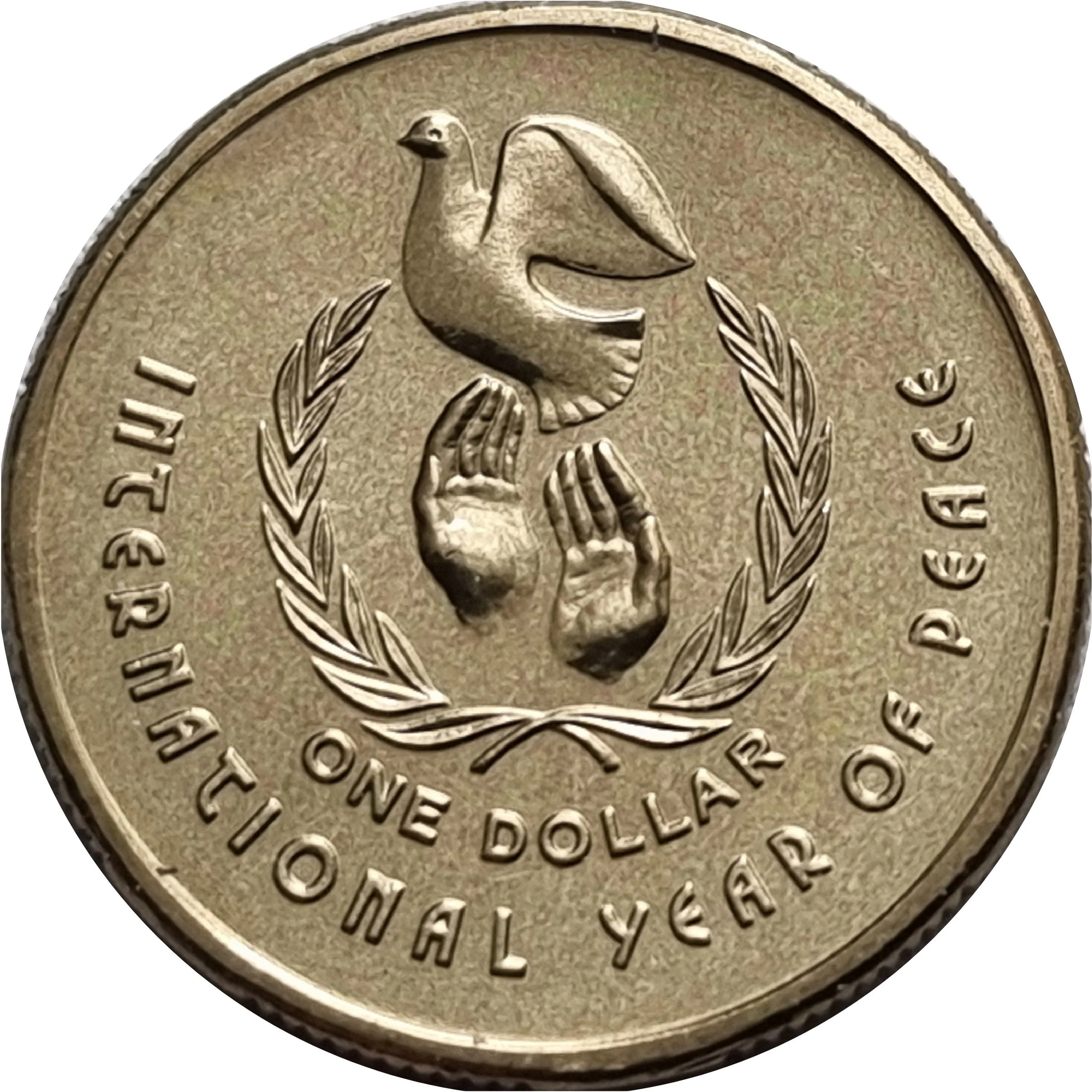
Reverse
Description:
Peace dove released over olive wreath, with legend below.
Inscription:
ONE DOLLAR
INTERNATIONAL YEAR OF PEACE
INTERNATIONAL YEAR OF PEACE
Script: Latin
Designer: Horst Hahne
Edge
7 shorter smooth segments between 7 reeded segments (11 grooves each)
Categories
| Animal> Bird |
| History> Peace |
| Symbol> Wreath |
| Organization> United Nations |
Mints
| Name | Mark |
|---|---|
| Royal Australian Mint | — |
Mintings
| Year | Mint Mark | Mintage | Quality | Collection |
|---|---|---|---|---|
| 1986 | — | 66,789 | BU | |
| 1986 | — | 25,200,000 | ||
| 1986 | — | 67,000 | Proof |
Historical background
In 1986, Australia's currency situation was dominated by a sharp and concerning depreciation of the Australian dollar, which had profound economic and psychological impacts. Following the float of the dollar in December 1983, the currency entered a period of significant volatility. By 1986, it had fallen to what were then historic lows, plummeting to around 57 US cents in July of that year. This dramatic slide was driven by a combination of a high current account deficit, falling prices for key commodity exports, and a general loss of international investor confidence in the Australian economy. The decline was so severe that it triggered a national debate about economic management and competitiveness.
The falling dollar exposed structural weaknesses in the economy, notably a heavy reliance on foreign borrowing to finance imports and a persistent "twin deficits" problem—concurrent fiscal and current account deficits. Treasurer Paul Keating famously crystallised the national anxiety in a May 1986 television interview, warning that Australia risked becoming a "banana republic" if it did not address its fundamental economic imbalances. This phrase became a defining moment, underscoring the gravity of the situation and the urgent need for policy reform to boost export competitiveness and reduce the nation's external vulnerability.
The currency crisis of 1986 acted as a catalyst for significant economic policy shifts. The government, alongside the Reserve Bank of Australia, responded with a mix of tight monetary policy to defend the currency and curb inflation, and began advocating for microeconomic reforms to improve productivity. While the dollar's fall inflicted short-term pain by increasing the cost of imports and foreign debt, it also provided a substantial boost to export-oriented industries like mining, agriculture, and later, tourism and education. This adjustment period set the stage for the difficult but transformative economic reforms of the late 1980s and early 1990s.
The falling dollar exposed structural weaknesses in the economy, notably a heavy reliance on foreign borrowing to finance imports and a persistent "twin deficits" problem—concurrent fiscal and current account deficits. Treasurer Paul Keating famously crystallised the national anxiety in a May 1986 television interview, warning that Australia risked becoming a "banana republic" if it did not address its fundamental economic imbalances. This phrase became a defining moment, underscoring the gravity of the situation and the urgent need for policy reform to boost export competitiveness and reduce the nation's external vulnerability.
The currency crisis of 1986 acted as a catalyst for significant economic policy shifts. The government, alongside the Reserve Bank of Australia, responded with a mix of tight monetary policy to defend the currency and curb inflation, and began advocating for microeconomic reforms to improve productivity. While the dollar's fall inflicted short-term pain by increasing the cost of imports and foreign debt, it also provided a substantial boost to export-oriented industries like mining, agriculture, and later, tourism and education. This adjustment period set the stage for the difficult but transformative economic reforms of the late 1980s and early 1990s.

🌱 Very Common