

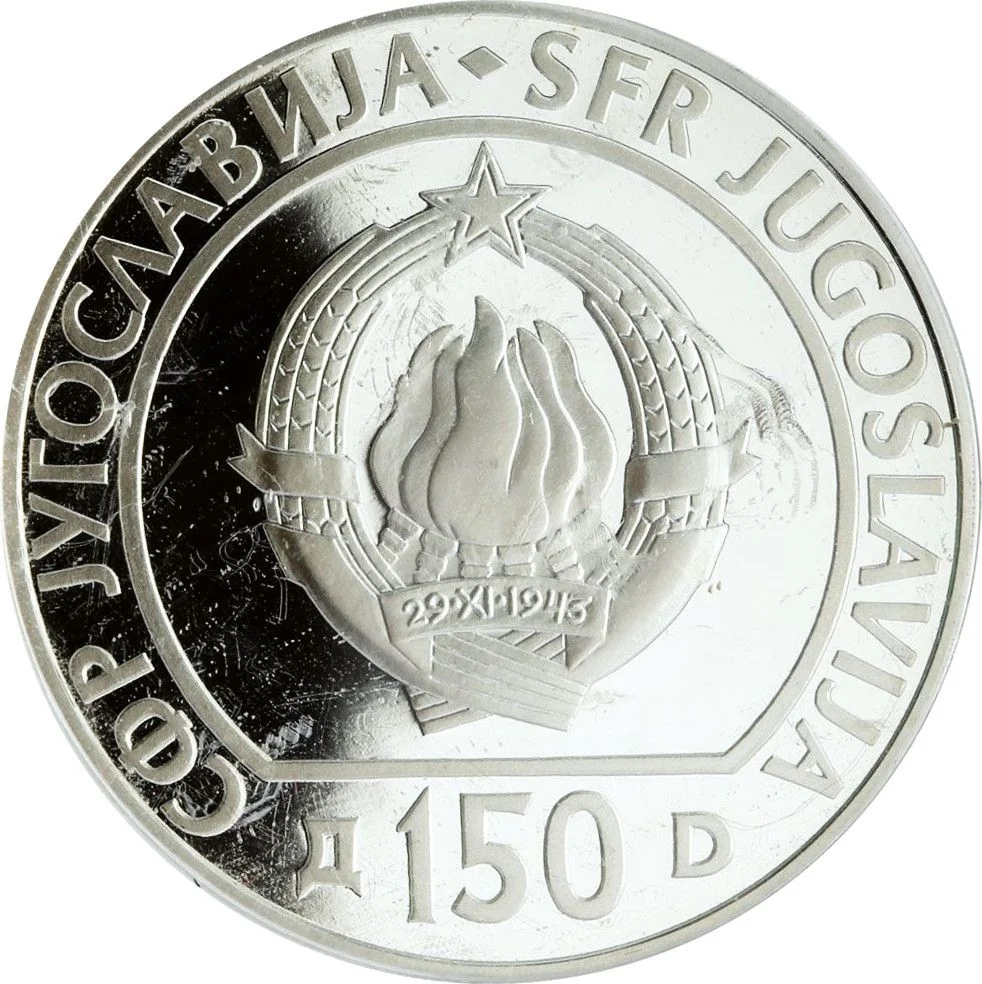
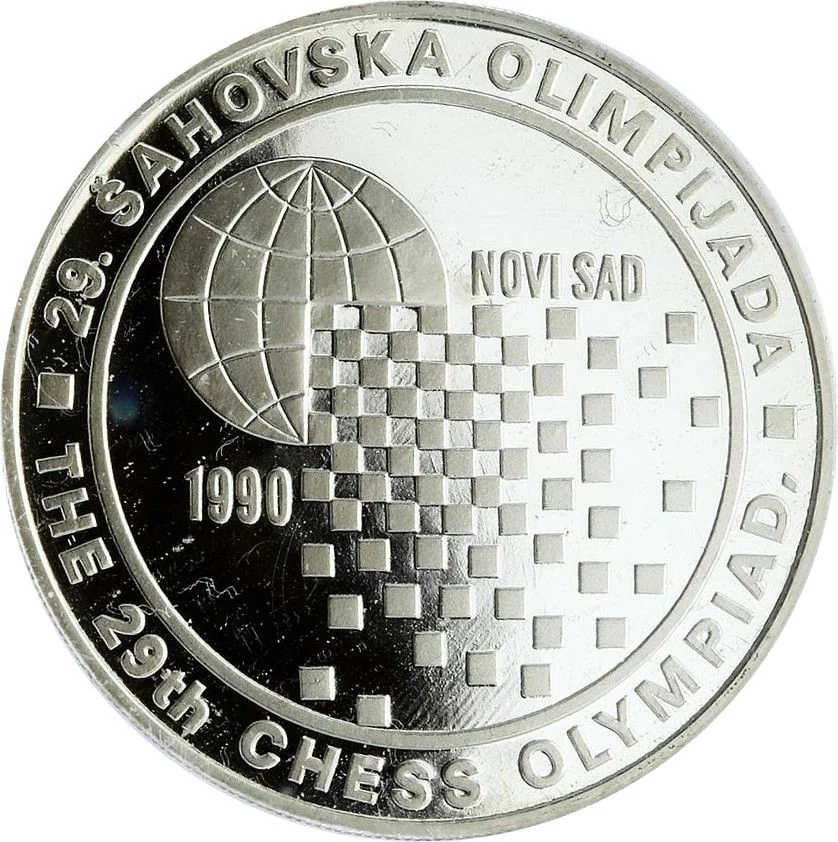
150 dinars – Yugoslavia
Add to wishlist
Non-circulating coins
Commemoration: 1990 Chess Olympiad
Context
Year: 1990
Issuer: Yugoslavia
Period:
(1963—1992)
Currency:
(1990—1992)
Demonetized: Yes
Total mintage: 10,000
Material
References
KM: #
Numista: #22960
Value
Exchange value: 150 YUN
Bullion value: $39.70
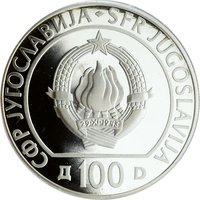
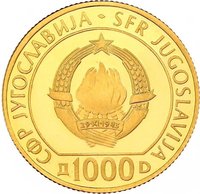
Obverse
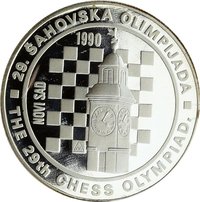
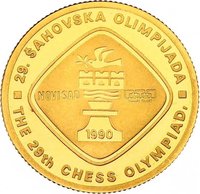
Reverse
Description:
Globe with chessboard design on the right.
Inscription:
29. $AHOVSKA OLIMPIJADA
THE 29th CHESS OLYMPIAD.
NOVI SAD
1990
THE 29th CHESS OLYMPIAD.
NOVI SAD
1990
Translation:
THE 29th CHESS OLYMPIAD.
NOVI SAD
1990
NOVI SAD
1990
Script: Latin
Languages: Serbo-Croatian, English
Edge
Reeded
Categories
| Symbol> Globe |
| Symbols> Coat of Arms |
Mintings
| Year | Mint Mark | Mintage | Quality | Collection |
|---|---|---|---|---|
| 1990 | — | 10,000 | Proof |
Historical background
By 1990, the Socialist Federal Republic of Yugoslavia was in the final stages of a profound economic and political crisis that would soon lead to its dissolution. The currency, the Yugoslav dinar, was severely weakened by years of structural problems, including massive foreign debt, rampant inflation inherited from the 1980s, and the inefficient self-management system. The federal government's attempts at stabilization through austerity and currency reforms had repeatedly failed, largely because the six constituent republics (Slovenia, Croatia, Bosnia and Herzegovina, Serbia, Montenegro, and Macedonia) could not agree on a unified economic policy. Political nationalism was rising, and economic authority was fracturing along republican lines.
The currency situation was characterized by a destructive cycle of "high inflation" (reaching over 2,700% annually by 1990) and repeated, desperate reforms. In December 1989, the federal government under Prime Minister Ante Marković had introduced a "hard dinar" pegged to the West German Deutsche Mark, which briefly stabilized prices and raised hopes. However, this strict monetary policy caused a deep recession and soaring unemployment. More critically, the peg was undermined by the refusal of republican-level banks, particularly in Serbia under Slobodan Milošević, to adhere to the federal central bank's restrictive credit policies. Serbia's unilateral issuance of massive unauthorized credits to favored enterprises destroyed the monetary unity of the country.
Consequently, by the end of 1990, Yugoslavia effectively ceased to have a single, functional currency. The Marković reform had collapsed, and hyperinflation was returning. The republics were increasingly operating as separate economic entities, with Slovenia and Croatia taking concrete steps toward establishing their own monetary systems as they moved toward independence. The failure of the common dinar symbolized the collapse of federal authority, making the violent breakup of the state in 1991 almost an economic inevitability as much as a political one.
The currency situation was characterized by a destructive cycle of "high inflation" (reaching over 2,700% annually by 1990) and repeated, desperate reforms. In December 1989, the federal government under Prime Minister Ante Marković had introduced a "hard dinar" pegged to the West German Deutsche Mark, which briefly stabilized prices and raised hopes. However, this strict monetary policy caused a deep recession and soaring unemployment. More critically, the peg was undermined by the refusal of republican-level banks, particularly in Serbia under Slobodan Milošević, to adhere to the federal central bank's restrictive credit policies. Serbia's unilateral issuance of massive unauthorized credits to favored enterprises destroyed the monetary unity of the country.
Consequently, by the end of 1990, Yugoslavia effectively ceased to have a single, functional currency. The Marković reform had collapsed, and hyperinflation was returning. The republics were increasingly operating as separate economic entities, with Slovenia and Croatia taking concrete steps toward establishing their own monetary systems as they moved toward independence. The failure of the common dinar symbolized the collapse of federal authority, making the violent breakup of the state in 1991 almost an economic inevitability as much as a political one.
💎 Very Rare