

5 Yuan – People's Republic of China
Non-circulating coins
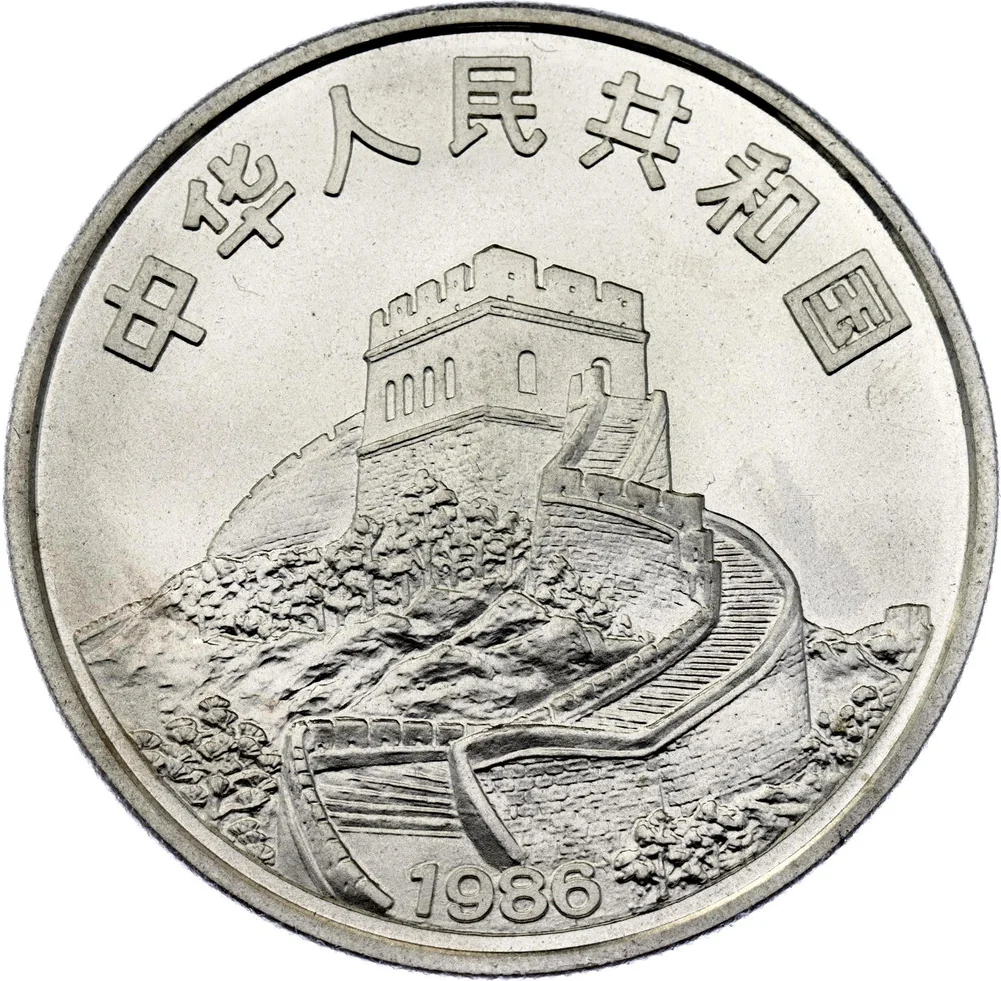
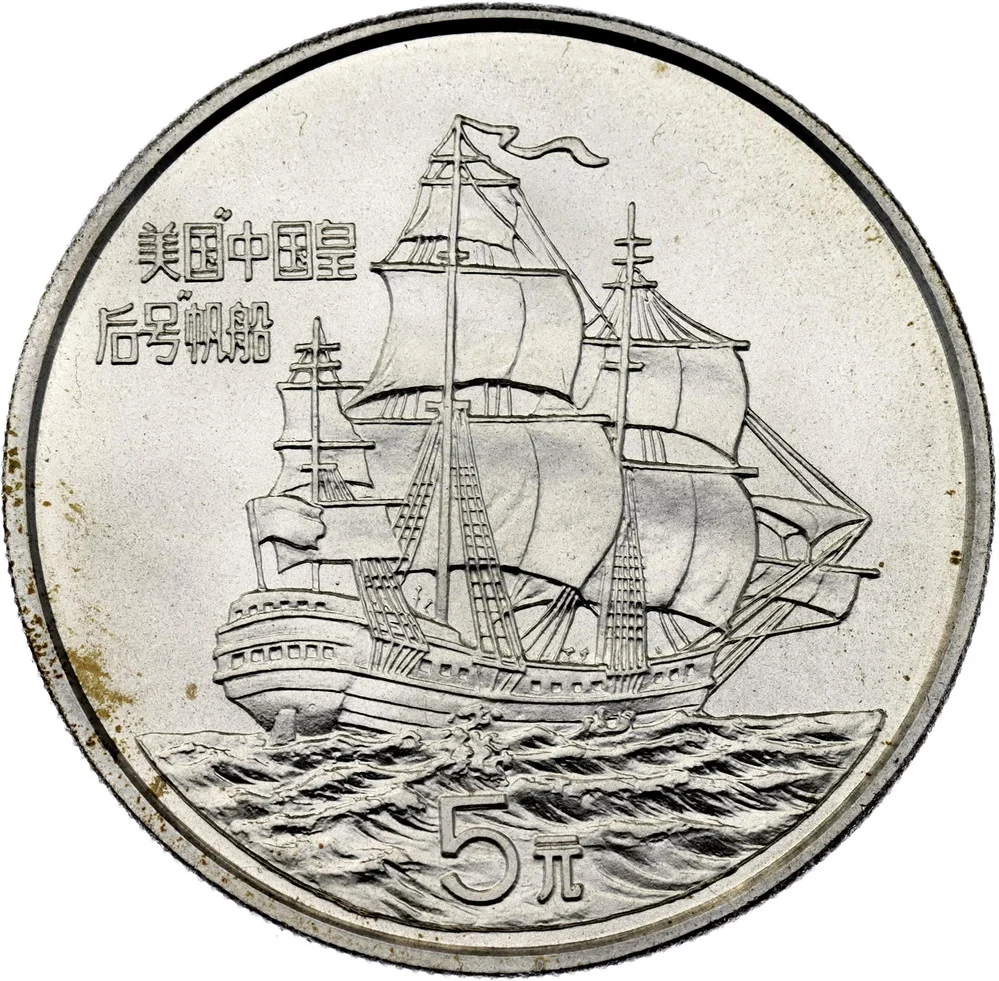
Commemoration: The Empress of China
China
Context
Year: 1986
Country: China 
Issuer: People's Republic of China
Period:
(since 1949)
Currency:
(since 1955)
Total mintage: 90,000
Material
References
KM: #Click to copy to clipboard152
Numista: #22944
Value
Exchange value: 5 CNY = $0.73
Bullion value: $69.24
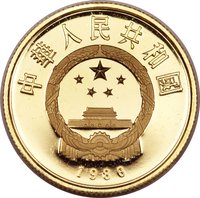
Obverse
Reverse
Edge
Milled
Categories
| Transportation> Watercraft |
Mintings
| Year | Mint Mark | Mintage | Quality | Collection |
|---|---|---|---|---|
| 1986 | — | 90,000 | BU |
Historical background
In 1986, the People's Republic of China was navigating a critical phase of its economic reform program initiated under Deng Xiaoping. The currency, the Renminbi (RMB), operated under a complex dual-track system. Officially, it was pegged to a basket of currencies at a strong, overvalued rate for state-planned transactions. However, a parallel and vibrant foreign exchange certificate (FEC) system and a burgeoning black market existed for most practical trade and personal use, where the RMB traded at a much weaker, market-influenced rate. This disconnect reflected the tension between a receding command economy and the forces of liberalization and foreign investment the reforms sought to attract.
The primary economic focus was on controlling inflation and managing the trade balance, rather than making the RMB a convertible currency. The overvalued official rate subsidized imports of crucial machinery and technology for modernization but hurt export competitiveness. To address this, China had established "swap centres" in special economic zones like Shenzhen, where enterprises could trade foreign exchange at negotiated rates closer to market value. This year was part of a gradual, controlled experiment in moving toward a more realistic exchange rate, but full convertibility was deemed too risky for the still-fragile economic system.
Overall, the 1986 currency situation was characterized by managed inconsistency. It was a transitional tool, deliberately distorting prices to protect and guide domestic industries while cautiously opening a window to global market forces. The arrangements were cumbersome and fostered arbitrage, but they served the broader strategic goal of shielding the vast domestic economy from external shocks while selectively integrating with global trade, setting the stage for the more unified exchange rate reforms that would follow in the early 1990s.
The primary economic focus was on controlling inflation and managing the trade balance, rather than making the RMB a convertible currency. The overvalued official rate subsidized imports of crucial machinery and technology for modernization but hurt export competitiveness. To address this, China had established "swap centres" in special economic zones like Shenzhen, where enterprises could trade foreign exchange at negotiated rates closer to market value. This year was part of a gradual, controlled experiment in moving toward a more realistic exchange rate, but full convertibility was deemed too risky for the still-fragile economic system.
Overall, the 1986 currency situation was characterized by managed inconsistency. It was a transitional tool, deliberately distorting prices to protect and guide domestic industries while cautiously opening a window to global market forces. The arrangements were cumbersome and fostered arbitrage, but they served the broader strategic goal of shielding the vast domestic economy from external shocks while selectively integrating with global trade, setting the stage for the more unified exchange rate reforms that would follow in the early 1990s.

🌟 Limited