

½ rupee – India - British
Add to wishlist
India
Context
Years: 1941–1942
Country: India
Issuer: India - British
Ruler: George VI
Currency:
(1770—1947)
Demonetized: Yes
Total mintage: 87,700,000
Material
References
KM: #
Numista: #22927
Value
Bullion value: $7.28
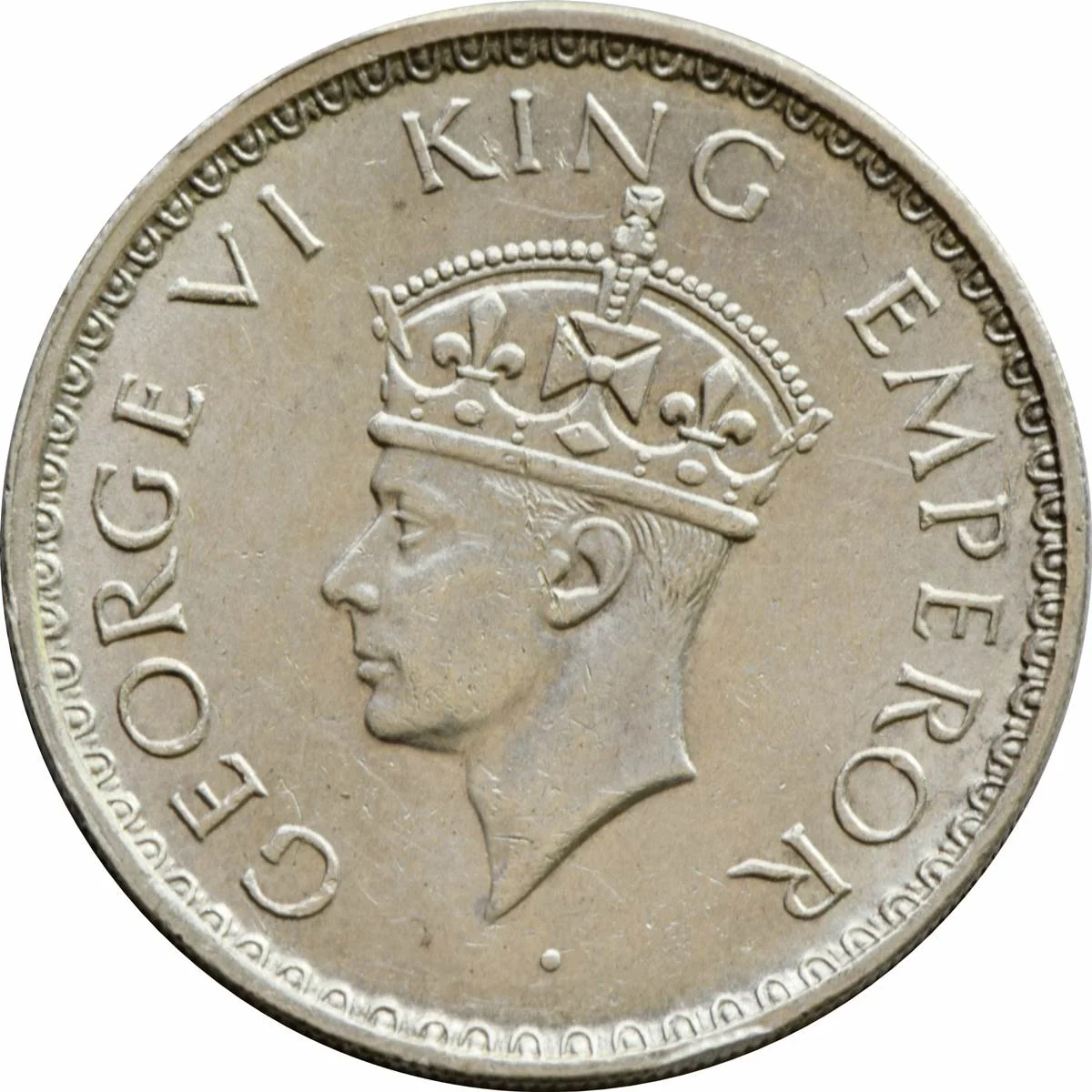
Obverse
Description:
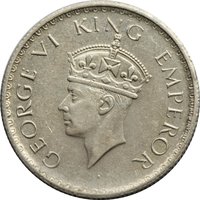
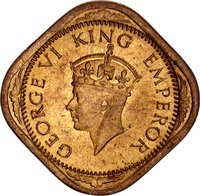
George VI left-facing portrait. Outer legend, small rim design.
Inscription:
GEORGE VI KING EMPEROR
Translation:
GEORGE VI KING EMPEROR
Language: English
Engraver: Percy Metcalfe
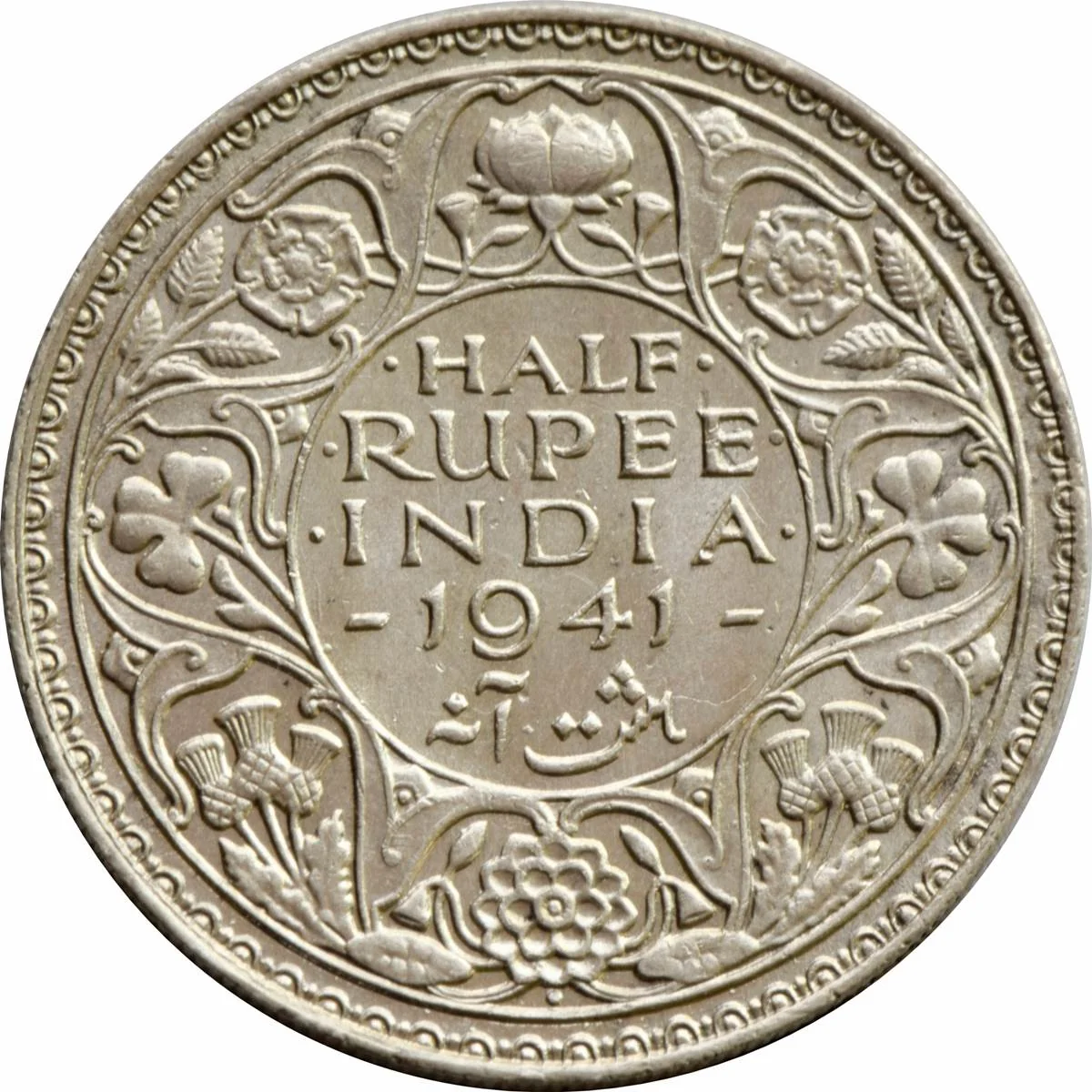
Reverse
Edge
Security edge
Mintings
| Year | Mint Mark | Mintage | Quality | Collection |
|---|---|---|---|---|
| 1941 | • | 26,100,000 | ||
| 1942 | • | 61,600,000 |
Historical background
In 1941, British India's currency situation was defined by the exigencies of the Second World War. The colonial government had officially abandoned the gold standard in 1931, but the rupee remained pegged to the British pound sterling. This link meant India's monetary policy was subservient to Britain's war finance needs. The primary mechanism was the "Sterling Balance" system, whereby Britain paid for massive Indian war supplies (raw materials, munitions, and goods for troops) not with gold or dollars, but by crediting the Government of India's account in London with sterling. These balances grew exponentially, representing a vast debt owed by Britain to India, which would become a major point of post-war economic and political contention.
Domestically, the war triggered significant inflationary pressures. Government spending on the war effort surged, financed largely by borrowing from the Reserve Bank of India (established in 1935) and the printing of currency. This increase in money supply, coupled with severe shortages of consumer goods due to import disruptions and wartime prioritization, led to a sharp rise in prices. The situation was exacerbated by the devastating Bengal famine of 1943, where wartime inflation, supply mismanagement, and policy failures tragically converged.
Furthermore, the physical currency saw changes. Faced with a shortage of metal, the government introduced "Quaternary Silver" coins in 1940, containing only 50% silver, and by 1942, replaced them entirely with nickel-brass. High-value banknotes (Rs. 1,000 and Rs. 10,000) were also demonetized in 1946 to curb black money hoarded during the war, a move that foreshadowed future monetary actions. Thus, the currency landscape of 1941 was one of strained colonial dependency, burgeoning sterling debt, and mounting internal economic stress, setting the stage for the financial challenges of imminent independence.
Domestically, the war triggered significant inflationary pressures. Government spending on the war effort surged, financed largely by borrowing from the Reserve Bank of India (established in 1935) and the printing of currency. This increase in money supply, coupled with severe shortages of consumer goods due to import disruptions and wartime prioritization, led to a sharp rise in prices. The situation was exacerbated by the devastating Bengal famine of 1943, where wartime inflation, supply mismanagement, and policy failures tragically converged.
Furthermore, the physical currency saw changes. Faced with a shortage of metal, the government introduced "Quaternary Silver" coins in 1940, containing only 50% silver, and by 1942, replaced them entirely with nickel-brass. High-value banknotes (Rs. 1,000 and Rs. 10,000) were also demonetized in 1946 to curb black money hoarded during the war, a move that foreshadowed future monetary actions. Thus, the currency landscape of 1941 was one of strained colonial dependency, burgeoning sterling debt, and mounting internal economic stress, setting the stage for the financial challenges of imminent independence.
🌱 Common