

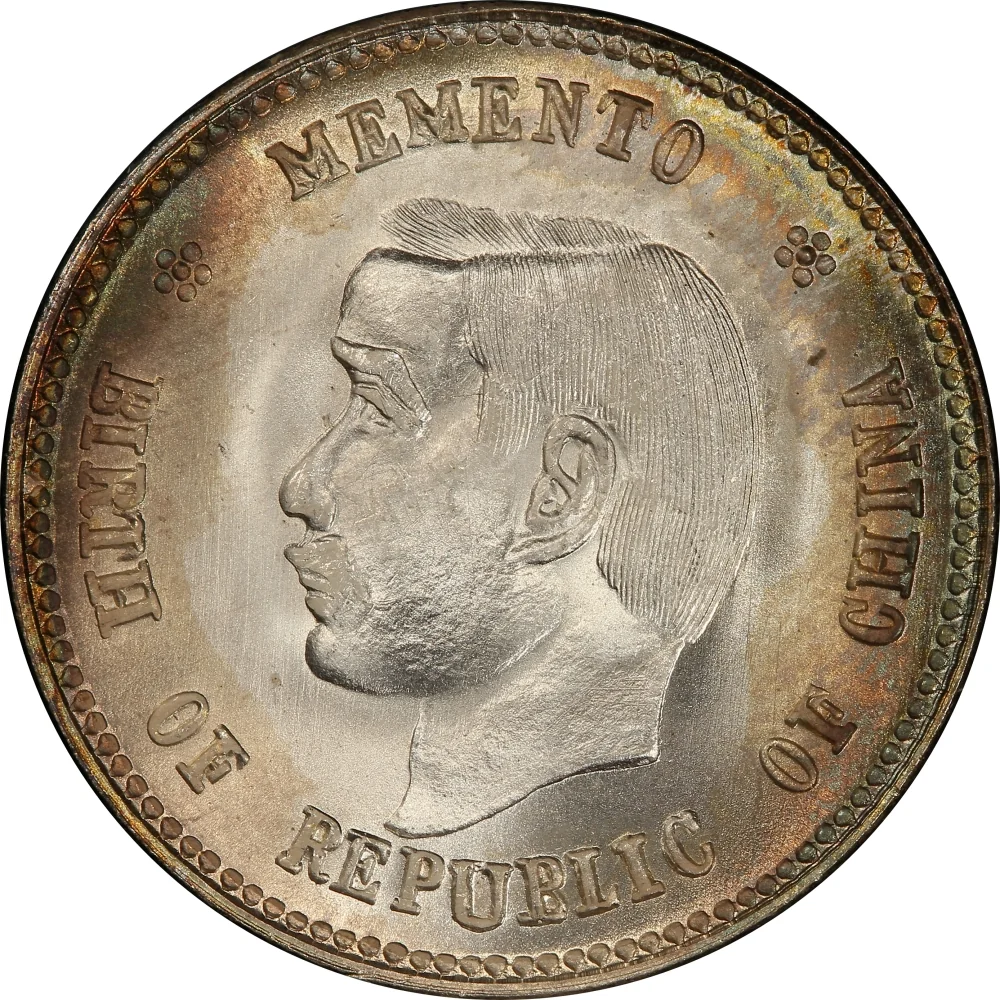
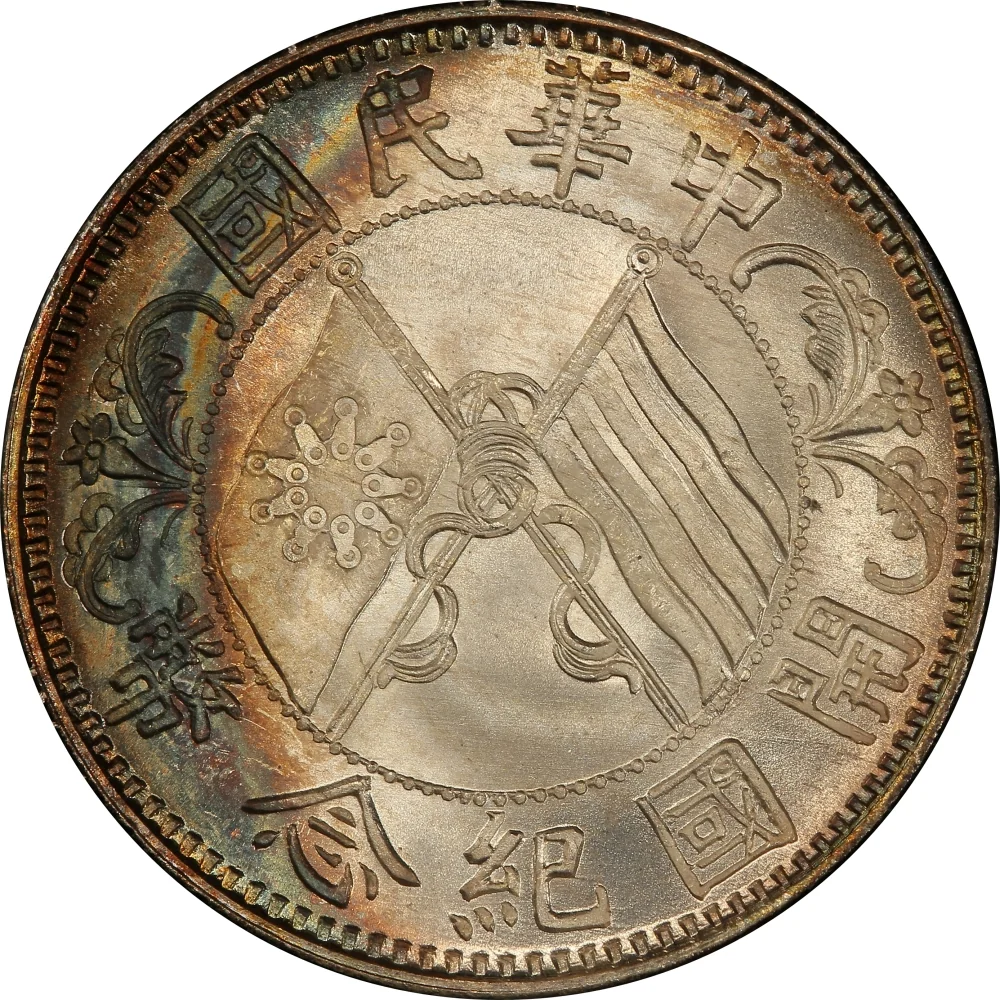
2 jiao – Republic of China
Add to wishlist
Circulating commemorative coins
Commemoration: Memento: Birth of the Republic
China
Context
Year: 1912
Country: China
Issuer: Republic of China
Period:
(1912—1949)
Currency:
(1912—1948)
Demonetized: Yes
Material
References
Y: #
Numista: #22876
Value
Bullion value: $13.29
Obverse
Reverse
Description:
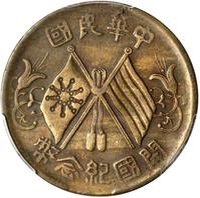
Crossed flags with floral motifs, Chinese characters above and below.
Inscription:
國民華中
幣念紀國開
幣念紀國開
Translation:
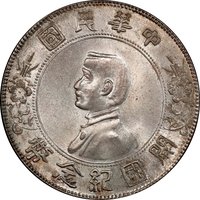
In Commemoration of the Founding of the Nation, Republic of China
Scripts: Chinese (traditional, regular script)
Language: Chinese
Edge
Categories
| Event> Birth anniversary |
| Person> Politician |
| Symbol> Flag |
| Mustache/Beard |
| Plants> Flower |
Mintings
| Year | Mint Mark | Mintage | Quality | Collection |
|---|---|---|---|---|
| 1912 | — | — |
Historical background
Following the 1911 Revolution and the establishment of the Republic of China in 1912, the new republic inherited a chaotic and fragmented monetary system. The imperial Qing dynasty's currency, based on the silver tael (a unit of weight, not a coin), coexisted with a vast array of foreign silver dollars (like Mexican and Spanish pieces of eight), domestically minted silver yuan (notably the "Dragon Dollars"), and a flood of copper cash and private banknotes. There was no unified national currency; instead, China's economy operated on a complex system where exchange rates between these forms of money fluctuated by region and even by merchant guild. This financial disarray severely hampered trade, government finance, and the central authority's ability to project power.
Recognizing this as a critical threat to national unity and modernization, the fledgling republican government under President Yuan Shikai made monetary reform an immediate priority. In 1914, it promulgated the "National Currency Act," establishing the silver yuan with Yuan Shikai's portrait (the "Yuan Shikai Dollar" or "Fat Man Dollar") as the new standard national unit. The law aimed to unify the currency by replacing the tael with the yuan, standardizing weight and purity, and granting the sole right of coinage to the central government's Tianjin Mint. This was a bold attempt to impose financial sovereignty and integrate the national market.
However, the republic's political instability—marked by Yuan's attempt to become emperor, the subsequent warlord era, and the lack of strong central control—severely undermined these reforms. While the new silver dollar became widely accepted and circulated for decades, the government could not eliminate the tael in customs or large transactions, nor could it curb the issuance of unbacked paper notes by provincial warlords and private banks. Thus, the envisioned unified currency system remained an incomplete project. The Republic entered a period of prolonged financial fragmentation, where the modern, standardized yuan circulated alongside the very traditional and regional currencies it was meant to replace, reflecting the country's broader struggle between centralization and disintegration.
Recognizing this as a critical threat to national unity and modernization, the fledgling republican government under President Yuan Shikai made monetary reform an immediate priority. In 1914, it promulgated the "National Currency Act," establishing the silver yuan with Yuan Shikai's portrait (the "Yuan Shikai Dollar" or "Fat Man Dollar") as the new standard national unit. The law aimed to unify the currency by replacing the tael with the yuan, standardizing weight and purity, and granting the sole right of coinage to the central government's Tianjin Mint. This was a bold attempt to impose financial sovereignty and integrate the national market.
However, the republic's political instability—marked by Yuan's attempt to become emperor, the subsequent warlord era, and the lack of strong central control—severely undermined these reforms. While the new silver dollar became widely accepted and circulated for decades, the government could not eliminate the tael in customs or large transactions, nor could it curb the issuance of unbacked paper notes by provincial warlords and private banks. Thus, the envisioned unified currency system remained an incomplete project. The Republic entered a period of prolonged financial fragmentation, where the modern, standardized yuan circulated alongside the very traditional and regional currencies it was meant to replace, reflecting the country's broader struggle between centralization and disintegration.
💎 Very Rare