

10 Shillings (Norman Conquest) – Guernsey
Circulating commemorative coins
Commemoration: 900th Anniversary of Norman Conquest
Context
Year: 1966
Country: British Crown dependencies
Issuer: Guernsey
Ruler: Elizabeth II
Currency:
(1808—1971)
Demonetized: Yes
Total mintage: 310,000
Material
Weight: 11.31 g
Thickness: 2 mm
Shape: Square with rounded corners
Technique: Milled
Alignment: Medal alignment
flip
References
KM: #Click to copy to clipboard19
Numista: #10988
Obverse
Description:
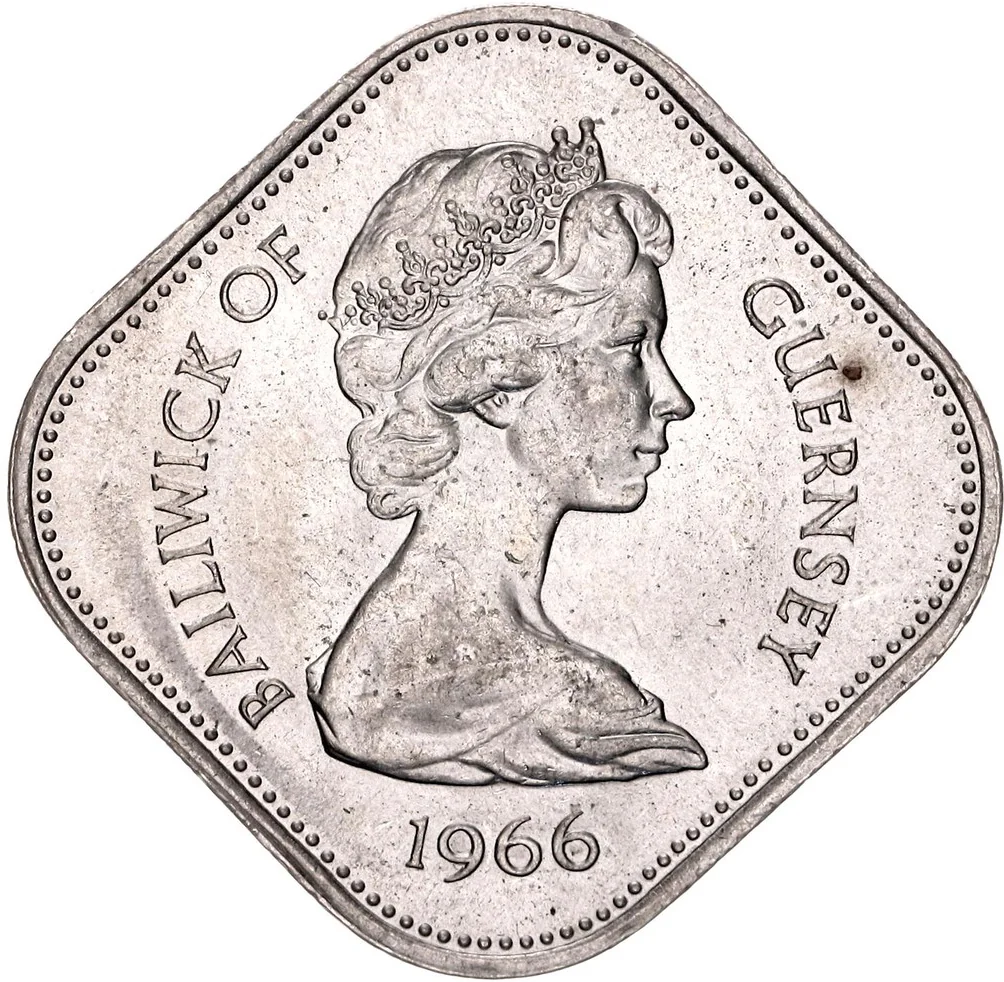
Second portrait of Queen Elizabeth II at 27, right, encircled by inscription.
Inscription:
BAILIWICK OF GUERNSEY
1966
1966
Script: Latin
Engraver: Arnold Machin
Reverse
Description:
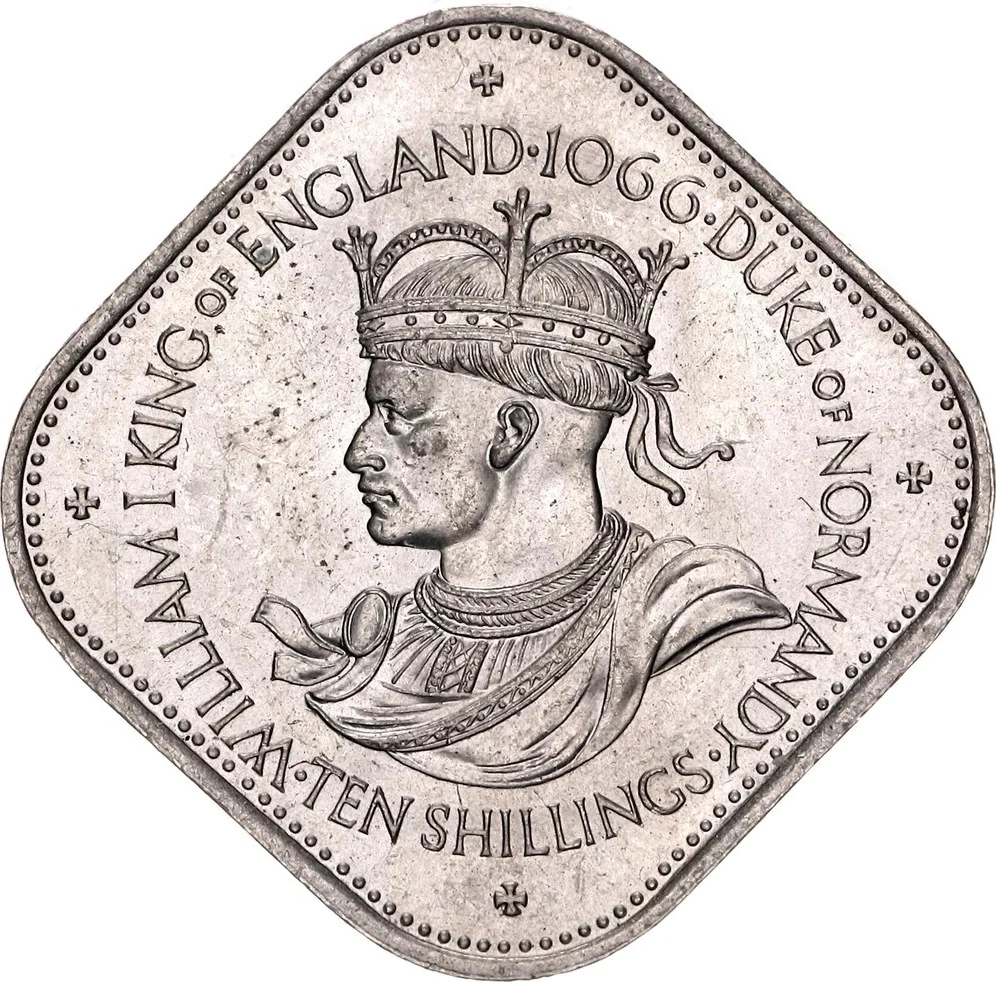
King William I, left profile, encircled by inscription with four corner crosses.
Inscription:
WILLIAM I KING of ENGLAND·1066·DUKE of NORMANDY
·TEN SHILLINGS·
·TEN SHILLINGS·
Script: Latin
Engraver: Arnold Machin
Edge
Plain
Mints
| Name | Mark |
|---|---|
| Royal Mint (Tower Hill) | — |
Mintings
| Year | Mint Mark | Mintage | Quality | Collection |
|---|---|---|---|---|
| 1966 | — | 300,000 | ||
| 1966 | — | 10,000 | Proof |
Historical background
In 1966, Guernsey's currency situation was defined by its unique, dual-system relationship with the British pound sterling. The island issued its own local banknotes, the Guernsey pound, which were not legal tender in the United Kingdom but were pegged at par with sterling. This meant the two currencies circulated side-by-side on the island, with Guernsey's notes serving as a practical symbol of its constitutional autonomy while being fully backed by sterling reserves held in London. The system was one of mutual convenience: it provided Guernsey with seigniorage revenue and a tangible identity, while ensuring full monetary stability through the sterling link.
However, this arrangement also created a persistent and costly administrative burden. Because Guernsey's notes were not recognised on the UK mainland, all surplus local currency returning to the island's banks had to be physically sorted, packaged, and shipped back to Guernsey at significant expense. This logistical challenge was a growing concern for the island's banks and authorities, highlighting an inefficiency inherent in a system reliant on the physical movement of cash to maintain parity and supply.
The year 1966 itself was not one of crisis but of operational strain within a long-established framework. It fell within a period of increasing economic self-awareness for the island, preceding more significant financial developments. The logistical and cost issues surrounding the repatriation of notes would eventually contribute to the momentum for reform, leading to the landmark Currency and Coinage Act of 1969. This later legislation would consolidate the Guernsey pound's status and address these practical problems, but in 1966, the situation remained one of a stable yet cumbersome dual circulation.
However, this arrangement also created a persistent and costly administrative burden. Because Guernsey's notes were not recognised on the UK mainland, all surplus local currency returning to the island's banks had to be physically sorted, packaged, and shipped back to Guernsey at significant expense. This logistical challenge was a growing concern for the island's banks and authorities, highlighting an inefficiency inherent in a system reliant on the physical movement of cash to maintain parity and supply.
The year 1966 itself was not one of crisis but of operational strain within a long-established framework. It fell within a period of increasing economic self-awareness for the island, preceding more significant financial developments. The logistical and cost issues surrounding the repatriation of notes would eventually contribute to the momentum for reform, leading to the landmark Currency and Coinage Act of 1969. This later legislation would consolidate the Guernsey pound's status and address these practical problems, but in 1966, the situation remained one of a stable yet cumbersome dual circulation.
🌱 Common