

½ Cent – New Brunswick
Canada
Context
Year: 1861
Country: Canada 
Issuer: New Brunswick
Ruler: Victoria
Currency:
(1860—1867)
Demonetized: Yes
Total mintage: 222,800
Material
References
KM: #Click to copy to clipboard5
Numista: #22550
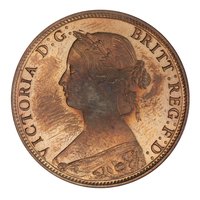
Obverse
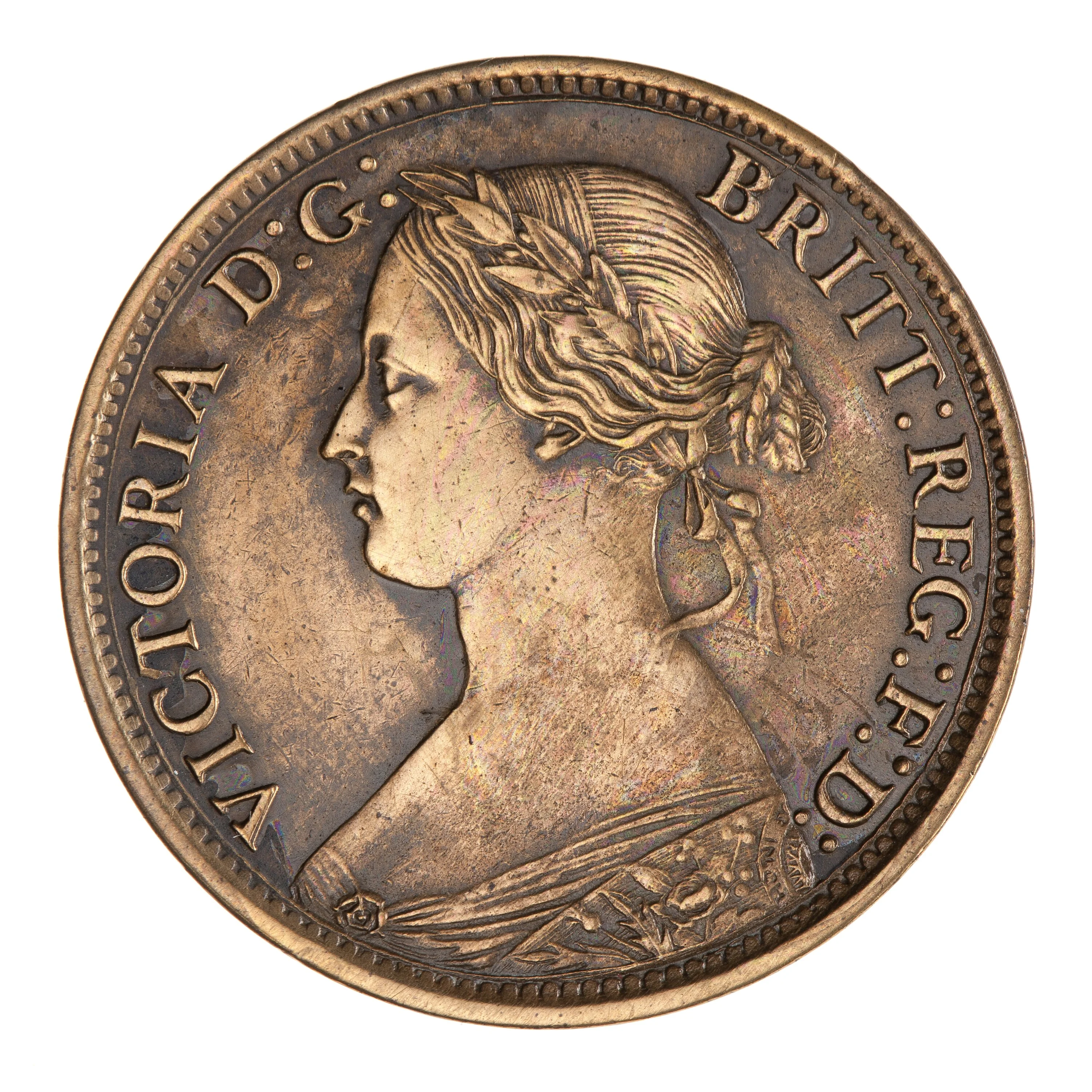
Description:
Victoria left-facing bust.
Inscription:
VICTORIA D:G: BRITT:REG:F:D:
Translation:
Victoria by the Grace of God, Queen of Britain, Defender of the Faith.
Script: Latin
Language: Latin
Engraver: Leonard Charles Wyon
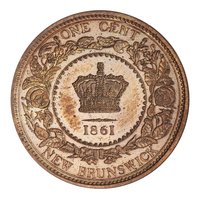
Reverse
Description:
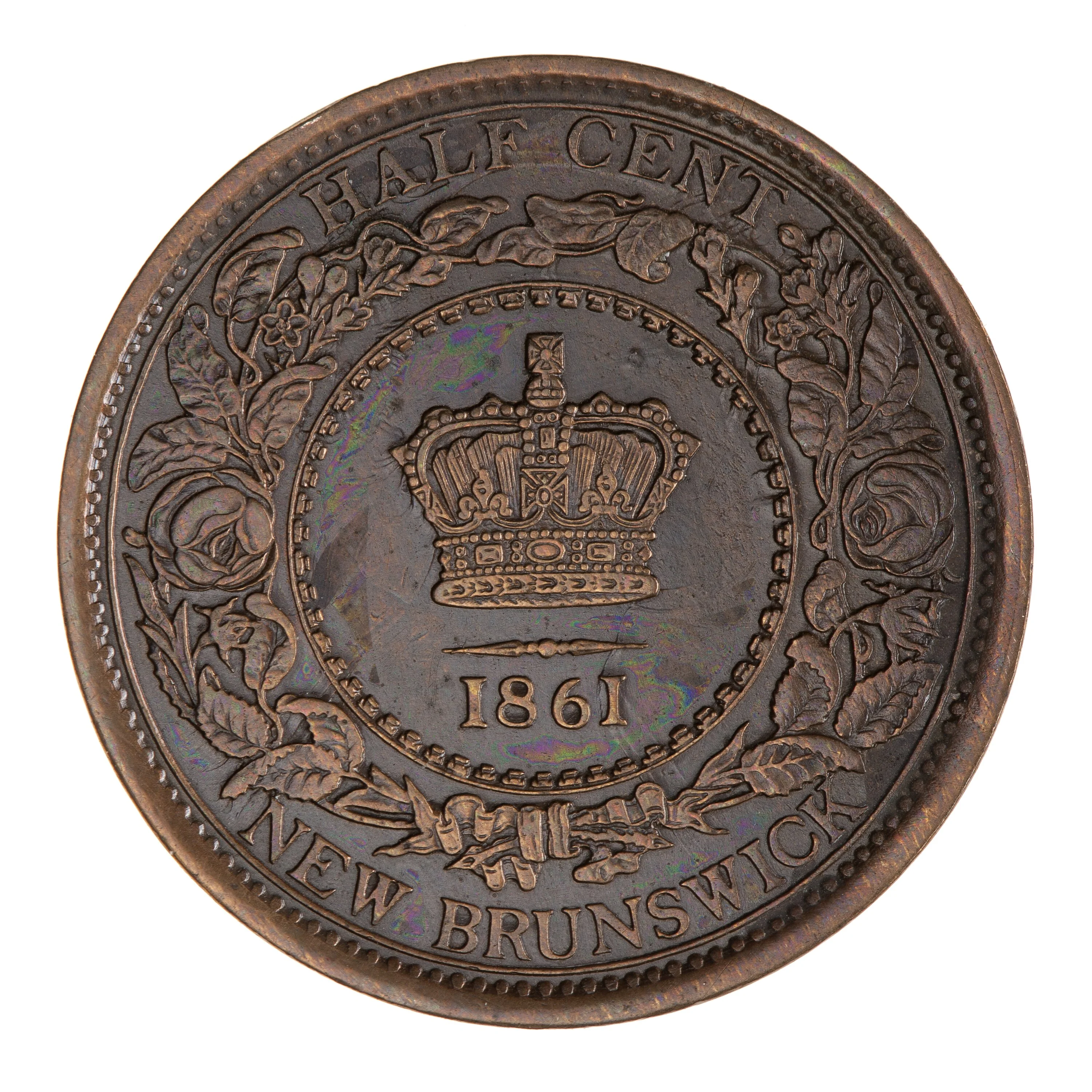
Date and crown inside beaded circle, value above.
Inscription:
HALF CENT
1861
NEW BRUNSWICK
1861
NEW BRUNSWICK
Script: Latin
Edge
Plain
Mints
| Name | Mark |
|---|---|
| Royal Mint (Tower Hill) | — |
Mintings
| Year | Mint Mark | Mintage | Quality | Collection |
|---|---|---|---|---|
| 1861 | — | 222,800 | ||
| 1861 | — | — | Proof |
Historical background
In 1861, New Brunswick, like its fellow British North American colonies, faced a complex and often chaotic currency situation. The province operated without a standardized, government-issued paper currency. Instead, a confusing mix of foreign and private monies circulated, including British sovereigns and coins, Spanish and Mexican silver dollars, and banknotes issued by a handful of chartered commercial banks like the Bank of New Brunswick and the Commercial Bank of Saint John. The value of these private banknotes was only as secure as the issuing bank's reputation, leading to periodic instability and distrust, especially in times of economic downturn.
This fragmented system created significant practical problems for daily commerce and government finance. Exchange rates between the different forms of money fluctuated, and the scarcity of small change was a persistent irritant. Furthermore, the heavy reliance on foreign coinage, particularly gold, meant that the colony's money supply was vulnerable to international flows of precious metals, which could suddenly contract in times of crisis. The provincial government had limited tools to manage monetary policy or stimulate the economy through controlled currency issuance.
The currency disarray of 1861 existed within the broader context of a push for colonial union. New Brunswick's merchants and politicians were increasingly aware that a unified currency system would be essential for facilitating inter-colonial trade and building a stronger, integrated economy. While the definitive solution—a federal currency under a new Canadian Confederation—was still six years away, the monetary inconveniences and risks of the pre-Confederation era were a tangible motivator for the political changes that would follow in the 1860s.
This fragmented system created significant practical problems for daily commerce and government finance. Exchange rates between the different forms of money fluctuated, and the scarcity of small change was a persistent irritant. Furthermore, the heavy reliance on foreign coinage, particularly gold, meant that the colony's money supply was vulnerable to international flows of precious metals, which could suddenly contract in times of crisis. The provincial government had limited tools to manage monetary policy or stimulate the economy through controlled currency issuance.
The currency disarray of 1861 existed within the broader context of a push for colonial union. New Brunswick's merchants and politicians were increasingly aware that a unified currency system would be essential for facilitating inter-colonial trade and building a stronger, integrated economy. While the definitive solution—a federal currency under a new Canadian Confederation—was still six years away, the monetary inconveniences and risks of the pre-Confederation era were a tangible motivator for the political changes that would follow in the 1860s.
⭐ Somewhat Rare