

50 cruzeiros – Brazil
Add to wishlist
Brazil
Context
Years: 1981–1986
Issuer: Brazil
Period:
(since 1967)
Currency:
(1967—1986)
Demonetization: 1986
Total mintage: 897,798,000
Material
Diameter: 28 mm
Weight: 6.35 g
Thickness: 1.62 mm
Shape: Round
Composition: Stainless steel
Technique: Milled
Alignment: Coin alignment
flip
References
KM: #
Numista: #2246
Value
Exchange value: 50 BRB
Inflation-adjusted value: 31249525775056.43 BRB
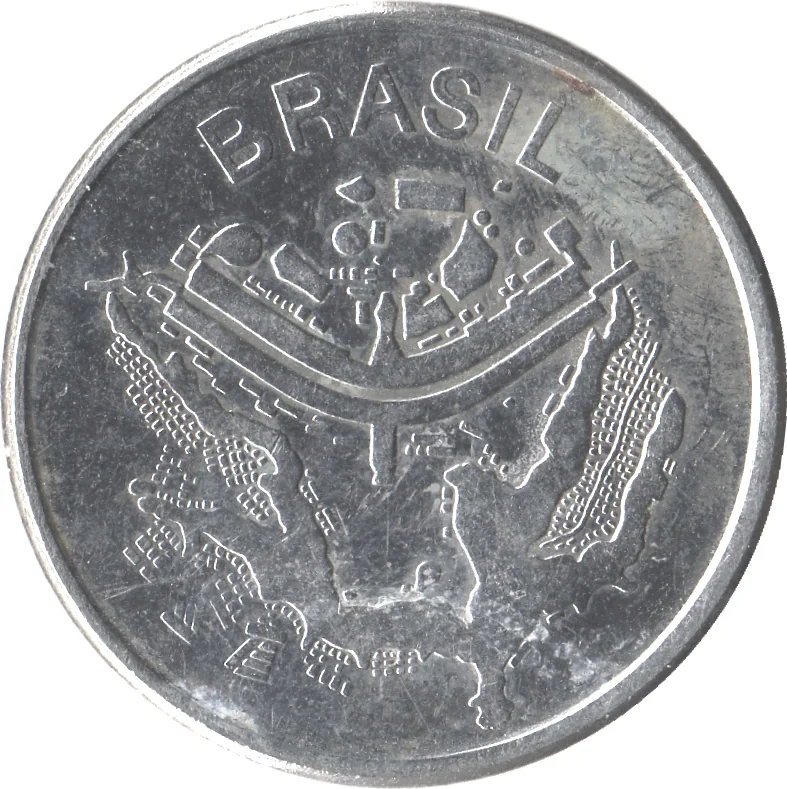
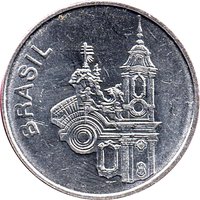
Obverse
Description:
Brasilia map with country name.
Inscription:
BRASIL
Translation:
BRASIL
Script: Latin
Language: Portuguese
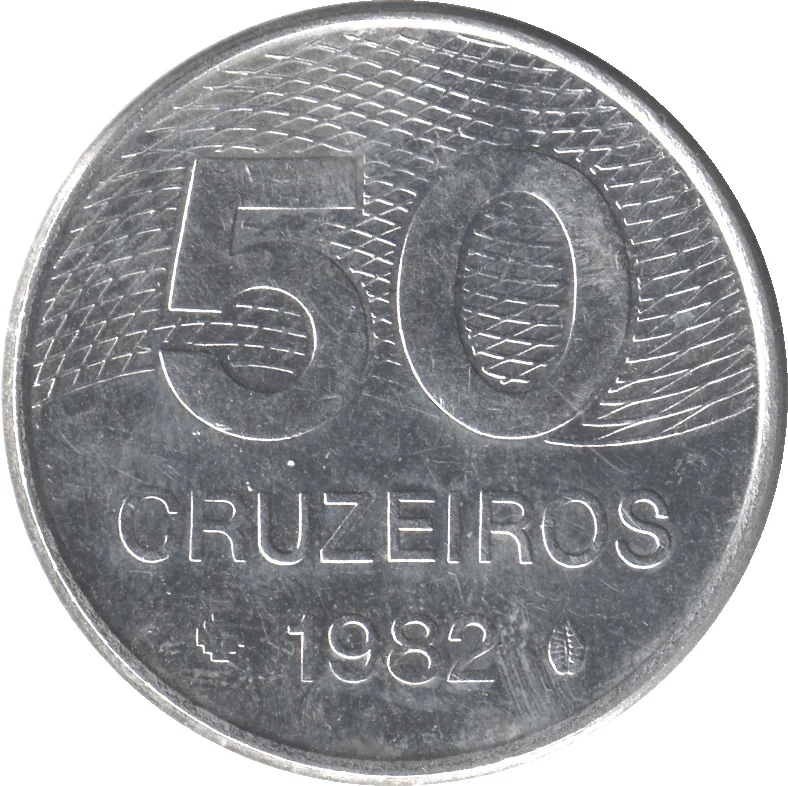
Reverse
Edge
Plain
Categories
| Map |
Mints
| Name | Mark |
|---|---|
| Casa da Moeda do Brasil | — |
Mintings
| Year | Mint Mark | Mintage | Quality | Collection |
|---|---|---|---|---|
| 1981 | — | 57,000,000 | ||
| 1982 | — | 134,000,000 | ||
| 1983 | — | 181,800,000 | ||
| 1984 | — | 292,418,000 | ||
| 1985 | — | 180,000,000 | ||
| 1986 | — | 52,580,000 |
Historical background
In 1981, Brazil was in the throes of a severe economic crisis, marked by the culmination of the "lost decade" and the devastating effects of the 1979 oil shock. The country was burdened by an enormous foreign debt, which had been aggressively accumulated during the military government's developmentalist push in the 1970s. As global interest rates skyrocketed under U.S. Federal Reserve Chairman Paul Volcker's policies, Brazil's debt service costs became unsustainable, leading to a profound balance of payments crisis. This external stranglehold forced the government to seek emergency loans from the International Monetary Fund (IMF), which came with strict austerity conditions, further contracting the economy.
Domestically, the currency situation was characterized by a complex and failing system of mini-devaluations, known as the "crawling peg." The Brazilian cruzeiro was subject to frequent, pre-announced devaluations intended to manage inflation and maintain export competitiveness. However, this mechanism was completely overwhelmed by rampant domestic inflation, which soared to over 100% annually. The result was a chronic and severe overvaluation of the currency in real terms, which discouraged exports, encouraged capital flight, and created widespread distortions in the economy, as prices and wages were perpetually out of sync with the rapidly eroding value of the cruzeiro.
The currency instability of 1981 was both a cause and a symptom of a deeper malaise. The overvalued cruzeiro, combined with the IMF-mandated recessionary policies, led to a sharp contraction in GDP—Brazil's first negative growth year since the 1930s. This period set the stage for the coming years of hyperinflation and repeated, failed currency reforms (like the cruzado in 1986) that would define Brazil's economic landscape for the next decade. The 1981 crisis thus represented a critical inflection point where the model of debt-fueled growth collapsed, exposing the fundamental fragility of Brazil's monetary and fiscal foundations.
Domestically, the currency situation was characterized by a complex and failing system of mini-devaluations, known as the "crawling peg." The Brazilian cruzeiro was subject to frequent, pre-announced devaluations intended to manage inflation and maintain export competitiveness. However, this mechanism was completely overwhelmed by rampant domestic inflation, which soared to over 100% annually. The result was a chronic and severe overvaluation of the currency in real terms, which discouraged exports, encouraged capital flight, and created widespread distortions in the economy, as prices and wages were perpetually out of sync with the rapidly eroding value of the cruzeiro.
The currency instability of 1981 was both a cause and a symptom of a deeper malaise. The overvalued cruzeiro, combined with the IMF-mandated recessionary policies, led to a sharp contraction in GDP—Brazil's first negative growth year since the 1930s. This period set the stage for the coming years of hyperinflation and repeated, failed currency reforms (like the cruzado in 1986) that would define Brazil's economic landscape for the next decade. The 1981 crisis thus represented a critical inflection point where the model of debt-fueled growth collapsed, exposing the fundamental fragility of Brazil's monetary and fiscal foundations.

🌱 Very Common