

10 Réis – Madeira Islands
Portugal
Context
Years: 1842–1852
Country: Portugal 
Issuer: Madeira Islands
Ruler: Mary II
Currency:
(1842—1910)
Demonetized: Yes
Total mintage: 1
Material
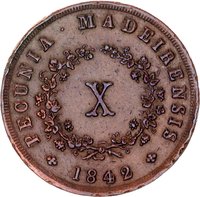
References
KM: #Click to copy to clipboard2
Numista: #22433
Obverse
Description:
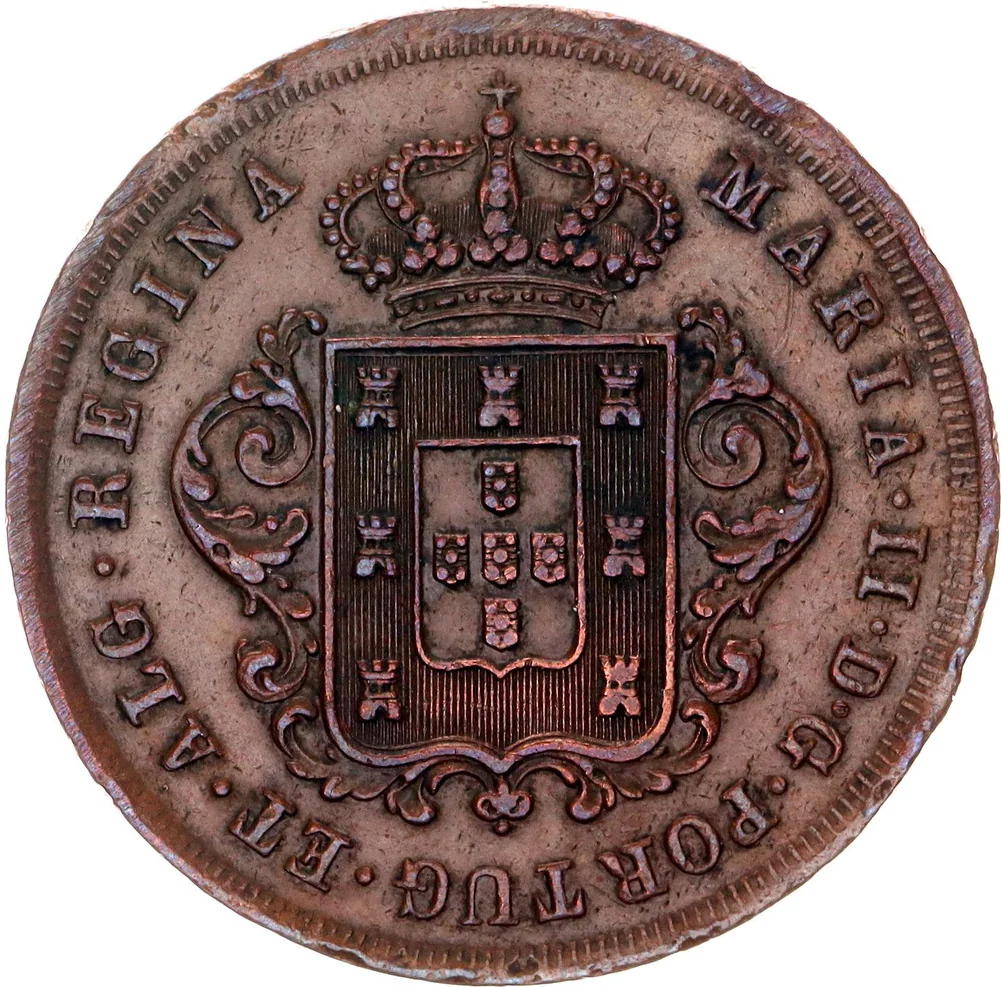
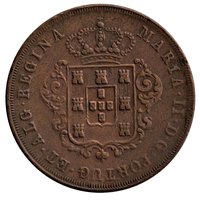
Portuguese coat of arms: A royal crown above a shield. The main shield features seven castles. Within it is a smaller shield with five smaller shields in a cross, each containing five dots. Supporters and a scroll flank the design, all surrounded by lettering.
Inscription:
MARIA·II·D·G·PORTUG·ET·ALG·REGINA
Translation:
Maria II, by the Grace of God, Queen of Portugal and the Algarves
Script: Latin
Languages: Portuguese, Latin
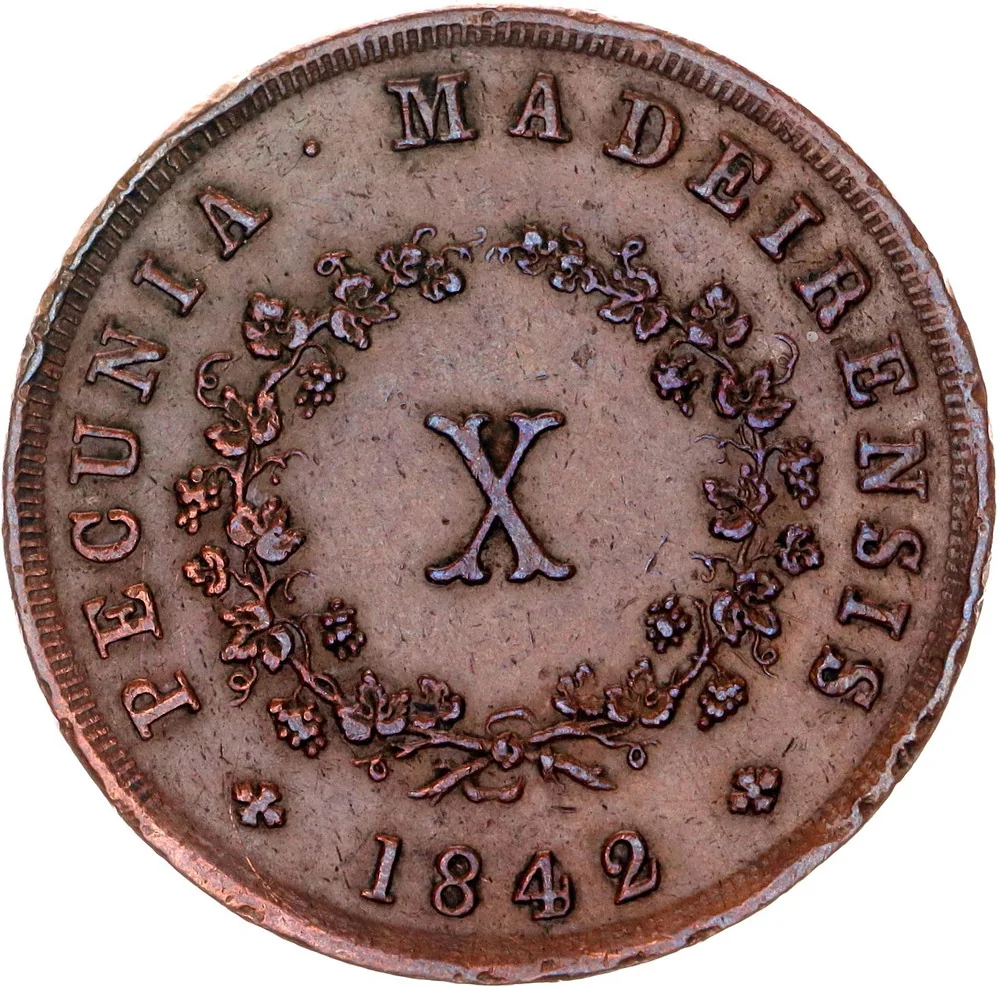
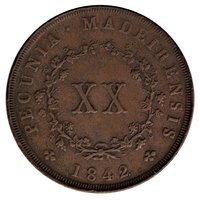
Reverse
Edge
Plain
Mintings
| Year | Mint Mark | Mintage | Quality | Collection |
|---|---|---|---|---|
| 1842 | — | — | ||
| 1850 | — | 1 | ||
| 1852 | — | — |
Historical background
In 1842, the currency situation in the Madeira Islands was complex and transitional, reflecting its position as a Portuguese Atlantic territory with strong economic ties to Britain. The official currency was the Portuguese real, but in practice, British gold sovereigns and pounds sterling circulated widely alongside other foreign coins, particularly Spanish and Brazilian. This monetary plurality arose from Madeira's role as a vital provisioning stop for transatlantic shipping and its booming wine export trade, centred on British merchants in Funchal. The local economy was effectively bilingual in currency, with high-value transactions often conducted in sterling.
This coexistence created practical challenges. Exchange rates between the various coins fluctuated, leading to confusion in everyday commerce and potential for loss in conversion. The Portuguese state, struggling with its own fiscal instability on the mainland, exerted limited monetary control over the archipelago. There was no local mint, and the supply of official coinage was often insufficient, further cementing the reliance on foreign specie. For the island's large population of small farmers, artisans, and labourers, this system was often opaque and disadvantageous.
The year 1842 itself did not mark a specific monetary reform for Madeira, but it fell within a broader period of Portuguese attempts to standardize the national currency system. The context was one of a fragmented circulatory regime, where the theoretical authority of the Portuguese real was persistently undermined by the practical dominance and reliability of British gold in international trade. This situation would persist until more forceful national monetary laws were enacted later in the 19th century, gradually phasing out the everyday use of foreign coinage on the islands.
This coexistence created practical challenges. Exchange rates between the various coins fluctuated, leading to confusion in everyday commerce and potential for loss in conversion. The Portuguese state, struggling with its own fiscal instability on the mainland, exerted limited monetary control over the archipelago. There was no local mint, and the supply of official coinage was often insufficient, further cementing the reliance on foreign specie. For the island's large population of small farmers, artisans, and labourers, this system was often opaque and disadvantageous.
The year 1842 itself did not mark a specific monetary reform for Madeira, but it fell within a broader period of Portuguese attempts to standardize the national currency system. The context was one of a fragmented circulatory regime, where the theoretical authority of the Portuguese real was persistently undermined by the practical dominance and reliability of British gold in international trade. This situation would persist until more forceful national monetary laws were enacted later in the 19th century, gradually phasing out the everyday use of foreign coinage on the islands.
🌟 Uncommon