

4 riksdaler riksmynt – Sweden
Add to wishlist
Sweden
Context
Years: 1861–1871
Issuer: Sweden
Ruler: Charles XV
Currency:
(1855—1873)
Demonetized: Yes
Total mintage: 3,019,941
Material
References
KM: #
Numista: #22415
Value
Bullion value: $63.90
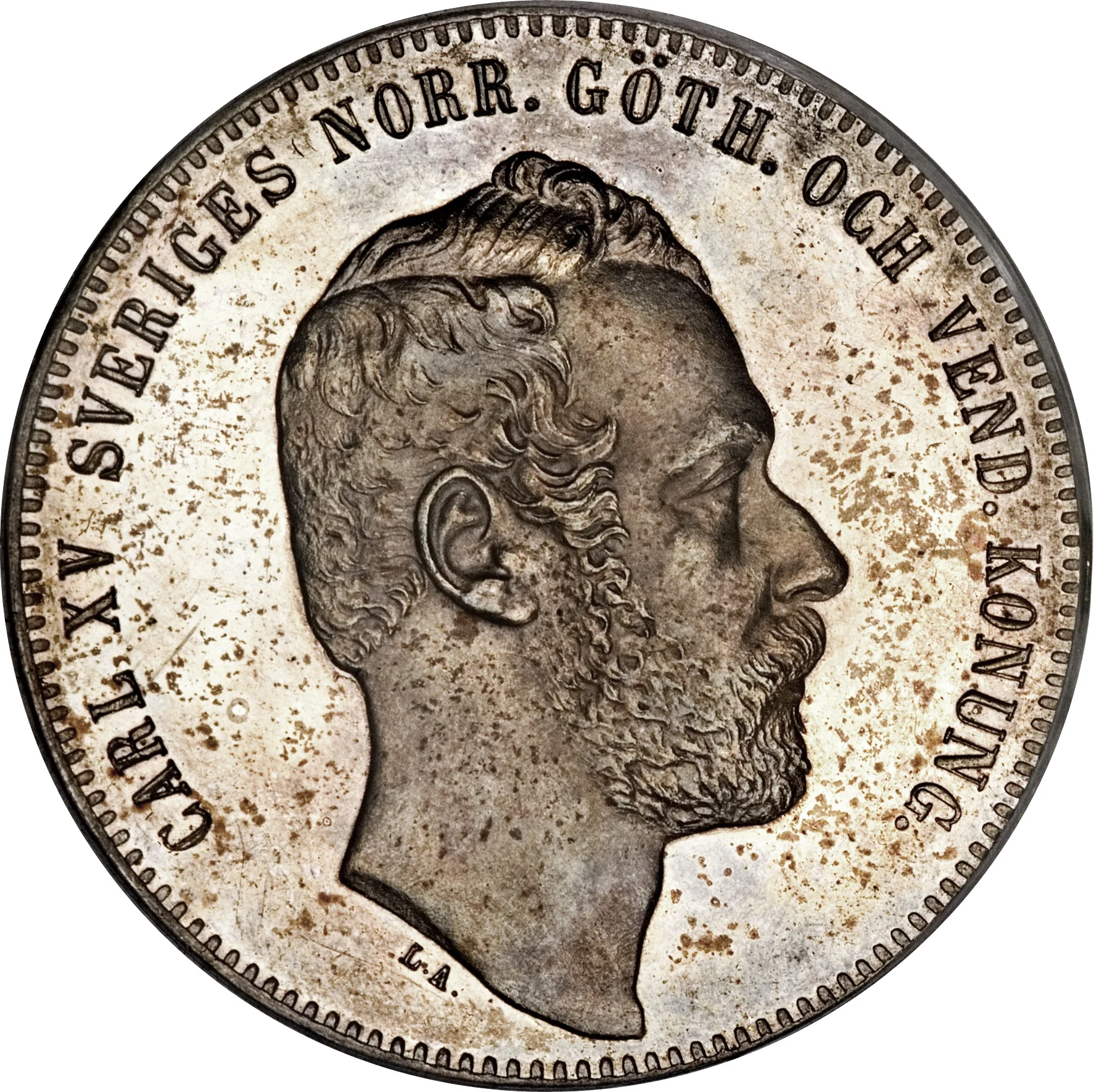
Obverse
Description:
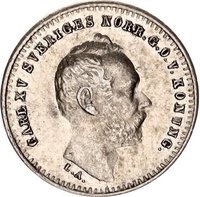
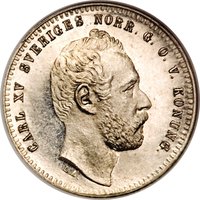
King's head right, encircled by inscription. Engraver's initials below neck.
Inscription:
CARL XV SVERIGES NORR. GÖTH. OCH VEND. KONUNG.
L.A.
L.A.
Translation:
CARL XV SWEDEN'S NORR. GOTH. AND WEND. KING.
L.A.
L.A.
Script: Latin
Language: Swedish
Engraver: Lea Ahlborn
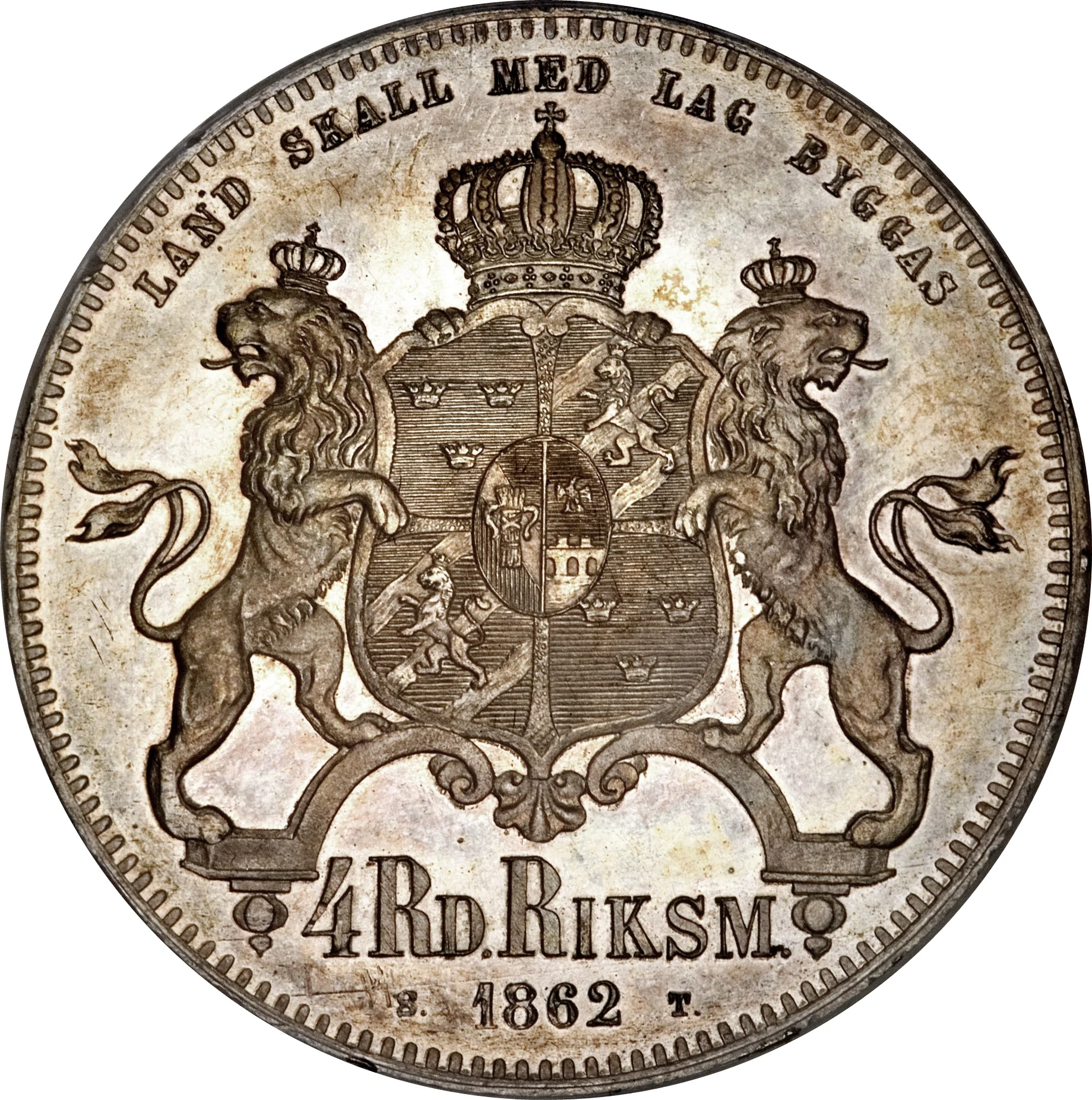
Reverse
Description:
Sweden's crowned royal arms, flanked by lion supporters. Above, the king's motto; below, the value, mintmark, and date.
Inscription:
LAND SKALL MED LAG BYGGAS
4 RD. RIKSM.
S. 1862 T.
4 RD. RIKSM.
S. 1862 T.
Translation:
The land shall be built with law.
4 Rd. Riksm.
S. 1862 T.
4 Rd. Riksm.
S. 1862 T.
Script: Latin
Language: Swedish
Engraver: Lea Ahlborn
Edge
Smooth with incused lettering.
Legend:
75/100 DELAR FINSILVER
Translation:
Seventy-five hundredths fine silver.
Language: Swedish
Categories
| Symbols> Coat of Arms |
Mints
| Name | Mark |
|---|---|
| Kungliga Myntet | — |
Mintings
| Year | Mint Mark | Mintage | Quality | Collection |
|---|---|---|---|---|
| 1861 | — | 206,769 | ||
| 1862 | — | 942,553 | ||
| 1863 | — | 267,868 | ||
| 1864 | — | 534,735 | ||
| 1865 | — | 107,060 | ||
| 1866 | — | 40,984 | ||
| 1867 | — | 64,024 | ||
| 1868 | — | 120,492 | ||
| 1869 | — | 314,227 | ||
| 1870 | — | 161,461 | ||
| 1871 | — | 259,768 |
Historical background
In 1861, Sweden operated under a complex dual currency system, established by the Riksbank Act of 1834. The system was based on two parallel standards: the Riksdaler Riksmynt (Rdr Rmt) for domestic transactions and the Riksdaler Specie (Rdr Sp) for international trade and large-scale finance. The Riksdaler Specie was a silver-based currency, with its value tied to a specific weight of fine silver, while the Riksdaler Riksmynt was a lower-valued token currency, theoretically convertible into silver but often fluctuating in value. This created constant confusion and practical difficulties in commerce, as all prices and accounts had to be stated in both units.
The mid-19th century was a period of rapid industrialization and expanding international trade for Sweden, which exposed the inefficiencies of this bimetallic structure. The fixed exchange rate between the two currencies (1 Rdr Sp = 4 Rdr Rmt) was increasingly difficult to maintain, leading to arbitrage and monetary instability. Furthermore, the global trend was moving toward the gold standard, which offered greater stability and facilitated international exchange. Sweden’s Scandinavian neighbours were also moving in this direction, increasing pressure for monetary reform.
Consequently, 1861 was a pivotal year of transition. The Riksdag (parliament) passed legislation to prepare for a shift to a single, modern currency. This laid the groundwork for the Scandinavian Monetary Union, which would be established in 1873 with Denmark and Norway, and for the introduction of the Krona (crown) as Sweden’s new decimalized, gold-backed currency. Thus, the situation in 1861 was one of a cumbersome and outdated system in its final years, with clear political and economic momentum building for its imminent replacement.
The mid-19th century was a period of rapid industrialization and expanding international trade for Sweden, which exposed the inefficiencies of this bimetallic structure. The fixed exchange rate between the two currencies (1 Rdr Sp = 4 Rdr Rmt) was increasingly difficult to maintain, leading to arbitrage and monetary instability. Furthermore, the global trend was moving toward the gold standard, which offered greater stability and facilitated international exchange. Sweden’s Scandinavian neighbours were also moving in this direction, increasing pressure for monetary reform.
Consequently, 1861 was a pivotal year of transition. The Riksdag (parliament) passed legislation to prepare for a shift to a single, modern currency. This laid the groundwork for the Scandinavian Monetary Union, which would be established in 1873 with Denmark and Norway, and for the introduction of the Krona (crown) as Sweden’s new decimalized, gold-backed currency. Thus, the situation in 1861 was one of a cumbersome and outdated system in its final years, with clear political and economic momentum building for its imminent replacement.
⭐ Rare