

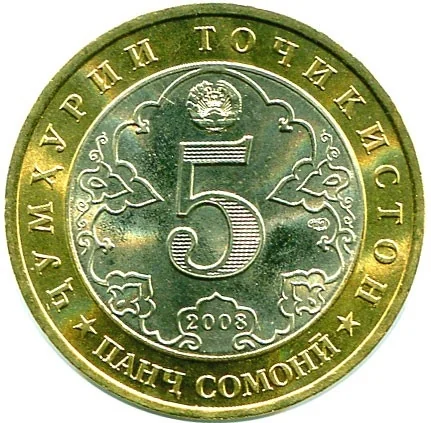
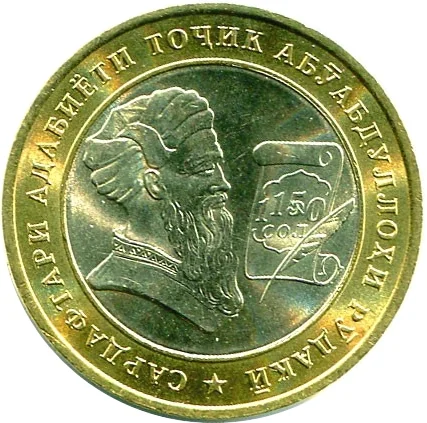
5 somoni (Persian (Tajik) literature and Abuabdullo Rudaki) – Tajikistan
Add to wishlist
Circulating commemorative coins
Commemoration: 1150th Anniversary founding of Persian (Tajik) literature by Abuabdullo Rudaki
Tajikistan
Context
References
KM: #
Numista: #22206
Value
Exchange value: 5 TJS
Obverse
Reverse
Edge
Categories
| Art> Literature |
| Event> Birth anniversary |
Mints
| Name | Mark |
|---|---|
| Saint Petersburg | — |
Mintings
| Year | Mint Mark | Mintage | Quality | Collection |
|---|---|---|---|---|
| 2008 | СПМД | 100,000 | BU |
Historical background
In 2008, Tajikistan's currency, the somoni, faced significant pressure due to a combination of external shocks and domestic vulnerabilities. The global financial crisis and the concurrent slump in commodity prices severely impacted the country's two primary sources of foreign currency: remittances and aluminum exports. Remittances, which constituted nearly 50% of GDP and flowed primarily from migrant workers in Russia, began to sharply decline as the Russian economy contracted. Simultaneously, global prices for aluminum, the country's main export from the state-owned TALCO plant, fell dramatically, further straining the balance of payments.
Domestically, the National Bank of Tajikistan (NBT) was engaged in a difficult balancing act. To support the somoni, it expended substantial foreign exchange reserves, which were already low. However, maintaining a relatively stable exchange rate came at the cost of depleting these critical reserves. Furthermore, a severe energy crisis during the winter of 2007-2008, leading to widespread electricity shortages and economic disruption, had already weakened fiscal stability and heightened import demands for fuel and food, adding to the pressure on the currency.
The culmination of these factors led to a controlled but significant devaluation in mid-2008. The NBT adjusted the official exchange rate, resulting in a somoni depreciation of approximately 20% against the US dollar over the course of the year. This devaluation, while necessary to correct imbalances and preserve reserves, exacerbated inflation, increased the cost of essential imports, and heightened the debt burden for businesses and individuals with foreign currency loans, marking a year of considerable economic hardship for the population.
Domestically, the National Bank of Tajikistan (NBT) was engaged in a difficult balancing act. To support the somoni, it expended substantial foreign exchange reserves, which were already low. However, maintaining a relatively stable exchange rate came at the cost of depleting these critical reserves. Furthermore, a severe energy crisis during the winter of 2007-2008, leading to widespread electricity shortages and economic disruption, had already weakened fiscal stability and heightened import demands for fuel and food, adding to the pressure on the currency.
The culmination of these factors led to a controlled but significant devaluation in mid-2008. The NBT adjusted the official exchange rate, resulting in a somoni depreciation of approximately 20% against the US dollar over the course of the year. This devaluation, while necessary to correct imbalances and preserve reserves, exacerbated inflation, increased the cost of essential imports, and heightened the debt burden for businesses and individuals with foreign currency loans, marking a year of considerable economic hardship for the population.
🌱 Fairly Common