

2 centavos – Argentina
Add to wishlist
Argentina
Obverse
Description:
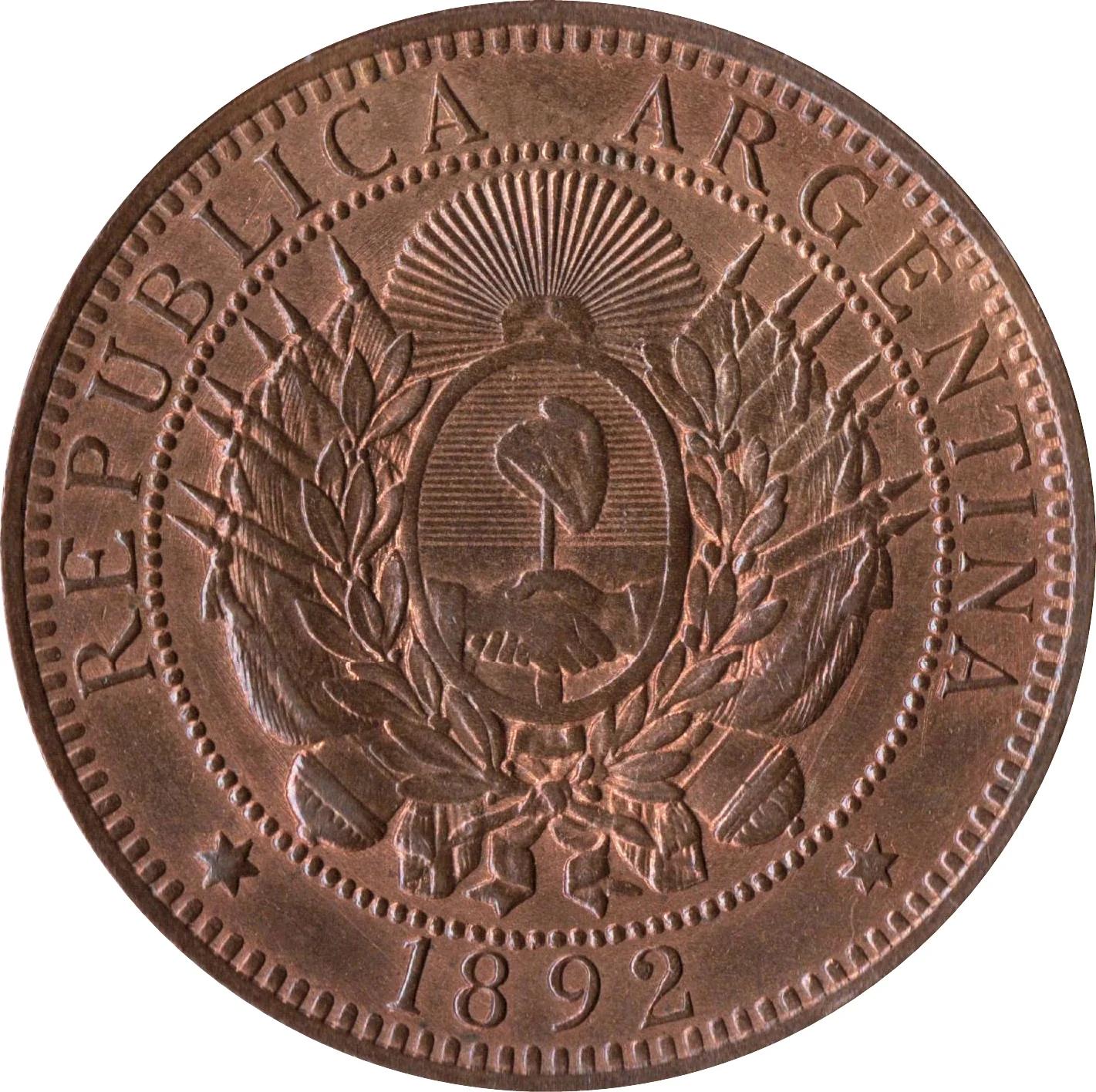
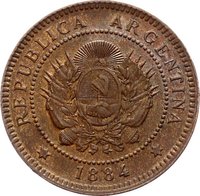
Argentine arms and date.
Inscription:
REPUBLICA ARGENTINA
*1892*
*1892*
Translation:
Argentine Republic
*1892*
*1892*
Script: Latin
Engraver: Eugène-André Oudiné
Reverse
Description:
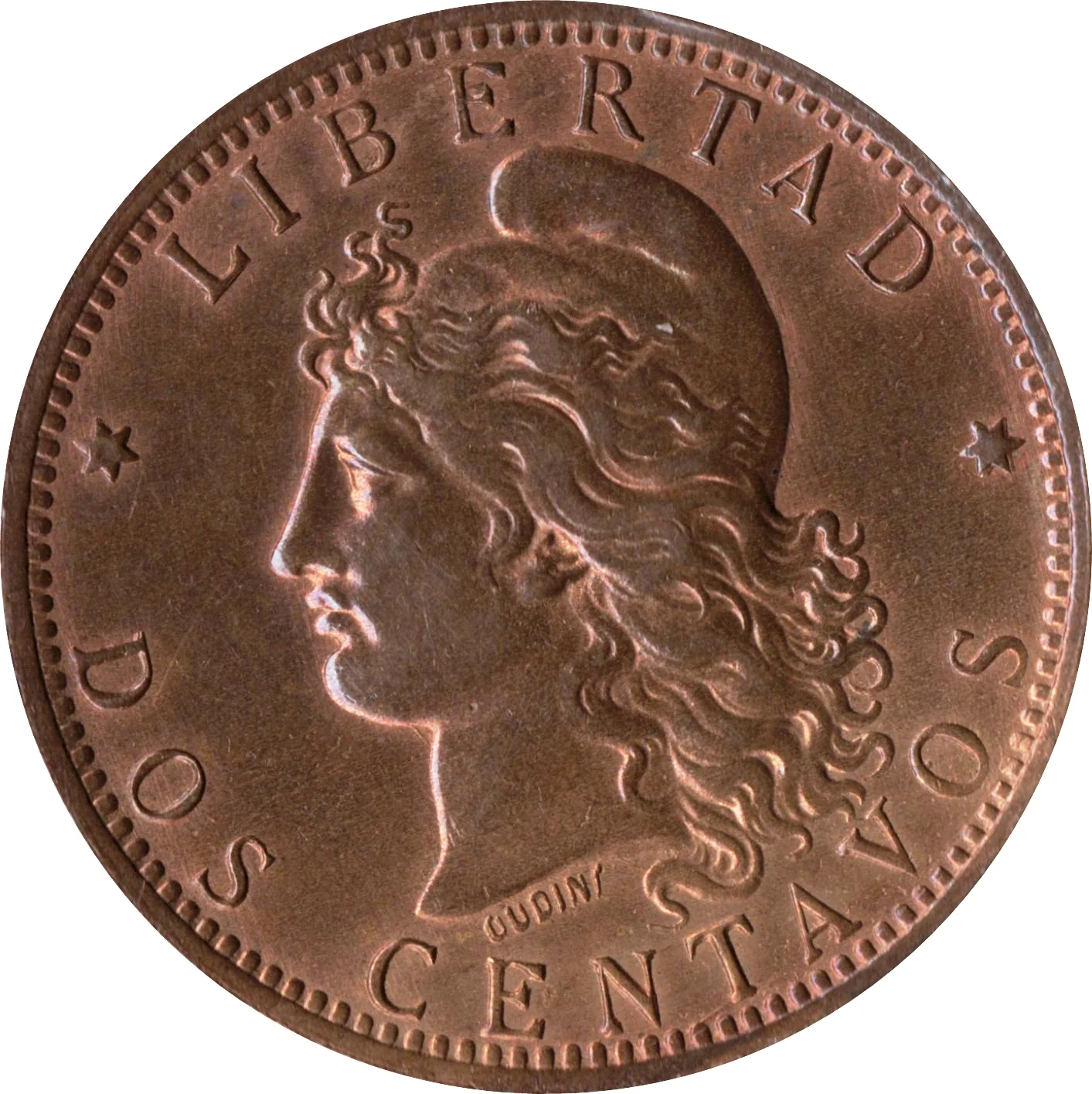
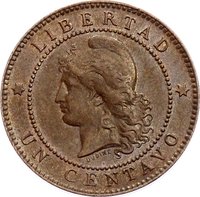
Oudine's Liberty head in Phrygian cap, left. Value below.
Inscription:
LIBERTAD
OUDINÉ
* DOS CENTAVOS *
OUDINÉ
* DOS CENTAVOS *
Translation:
LIBERTY
OUDINÉ
* TWO CENTS *
OUDINÉ
* TWO CENTS *
Script: Latin
Engraver: Eugène-André Oudiné
Edge
Plain
Categories
| Symbol> Allegory |
| Symbols> Coat of Arms |
| Symbol> Phrygian cap |
Mintings
| Year | Mint Mark | Mintage | Quality | Collection |
|---|---|---|---|---|
| 1882 | — | 88,000 | ||
| 1883 | — | 1,389,000 | ||
| 1884 | — | 5,667,000 | ||
| 1885 | — | 3,065,000 | ||
| 1887 | — | 363,000 | ||
| 1888 | — | 659,000 | ||
| 1889 | — | 2,391,000 | ||
| 1890 | — | 3,609,000 | ||
| 1891 | — | 8,050,000 | ||
| 1892 | — | 3,497,000 | ||
| 1893 | — | 5,473,000 | ||
| 1894 | — | 2,233,000 | ||
| 1895 | — | 593,000 | ||
| 1896 | — | 596,000 |
Historical background
In 1882, Argentina was in the midst of a profound monetary experiment and crisis, primarily driven by the policies of President Julio Argentino Roca's government. The nation was struggling with a severe shortage of hard currency (specie) and a proliferation of inconvertible paper money, largely issued by the Banco Nacional and provincial banks to finance public spending and private expansion. This period followed the "Conquest of the Desert," which had opened vast territories for development but at great fiscal cost, leading to heavy borrowing and money printing. The result was a complex and chaotic monetary landscape with multiple currencies circulating at fluctuating values, undermining domestic commerce and foreign trade confidence.
The central policy of the era was the establishment of the Law of National Guaranteed Banks (Ley de Bancos Garantidos) in 1881, which took full effect in 1882. This law attempted to unify the currency by creating a new national currency, the peso moneda nacional, and mandated the conversion of all existing paper into this new unit. Crucially, it also authorized private banks to issue their own notes, provided they were backed by gold or national bonds deposited with the government. In theory, this would create a uniform, convertible currency system. However, in practice, oversight was lax, and many banks issued notes far beyond their reserves, flooding the economy with even more unbacked paper money.
Consequently, 1882 was a year of fragile and artificial stability that sowed the seeds for future disaster. While the law created a temporary semblance of order by unifying the monetary unit, the fundamental issue of excess paper currency without sufficient metallic backing remained unresolved. The massive expansion of credit and money supply fueled a speculative economic bubble, particularly in land and public works, setting the stage for the devastating financial crash of 1890 and the ensuing decade-long crisis, the Panic of 1890. Thus, the currency situation of 1882 represents a critical prelude to one of Argentina's most severe economic collapses.
The central policy of the era was the establishment of the Law of National Guaranteed Banks (Ley de Bancos Garantidos) in 1881, which took full effect in 1882. This law attempted to unify the currency by creating a new national currency, the peso moneda nacional, and mandated the conversion of all existing paper into this new unit. Crucially, it also authorized private banks to issue their own notes, provided they were backed by gold or national bonds deposited with the government. In theory, this would create a uniform, convertible currency system. However, in practice, oversight was lax, and many banks issued notes far beyond their reserves, flooding the economy with even more unbacked paper money.
Consequently, 1882 was a year of fragile and artificial stability that sowed the seeds for future disaster. While the law created a temporary semblance of order by unifying the monetary unit, the fundamental issue of excess paper currency without sufficient metallic backing remained unresolved. The massive expansion of credit and money supply fueled a speculative economic bubble, particularly in land and public works, setting the stage for the devastating financial crash of 1890 and the ensuing decade-long crisis, the Panic of 1890. Thus, the currency situation of 1882 represents a critical prelude to one of Argentina's most severe economic collapses.
🌱 Very Common