

¼ skilling – Sweden
Add to wishlist
Sweden
Context
Year: 1817
Issuer: Sweden
Ruler: Charles XIII
Currency:
(1798—1830)
Demonetized: Yes
Total mintage: 1,152,000
Material
References
KM: #
Numista: #22199
Obverse
Reverse
Description:
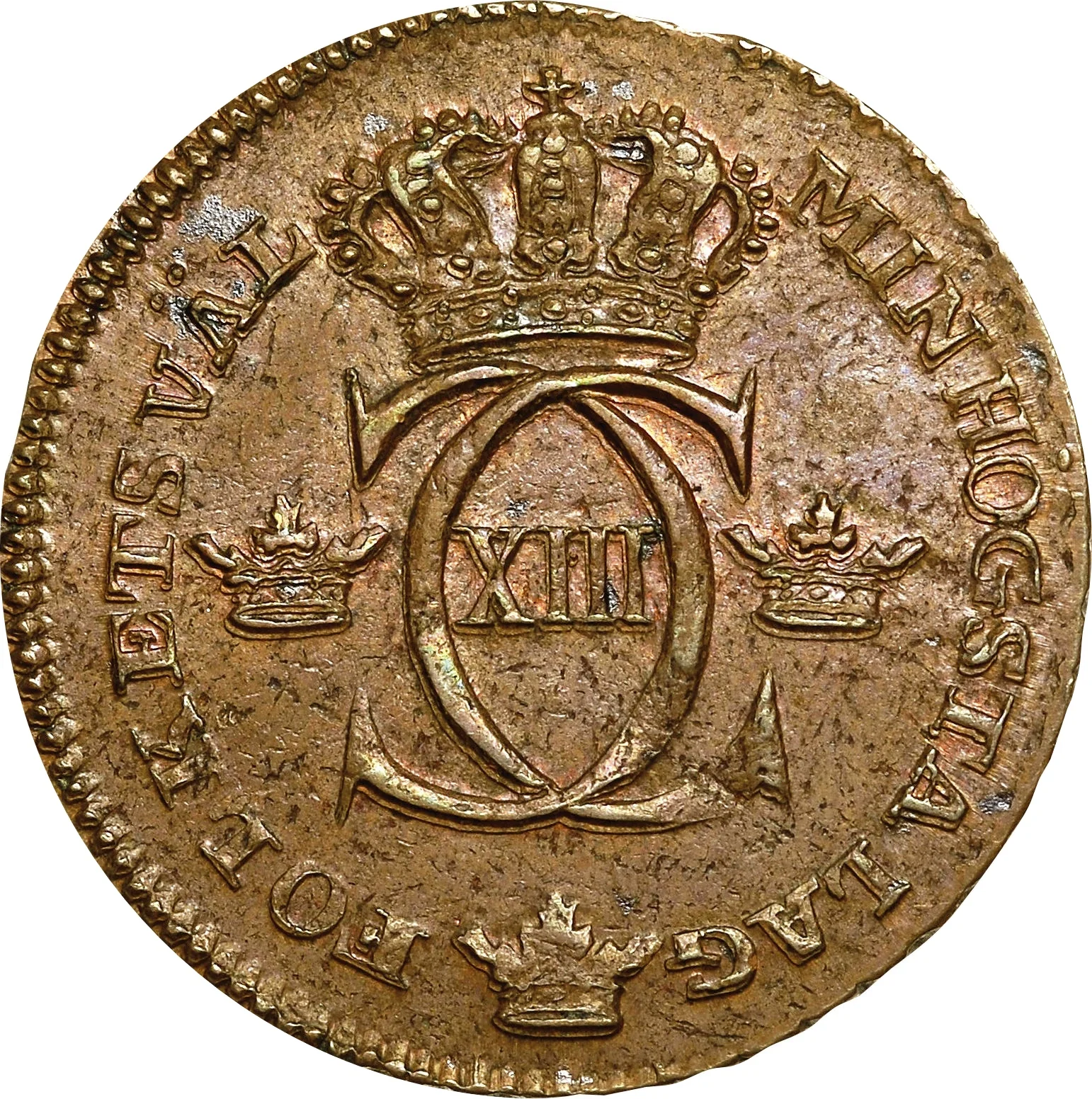
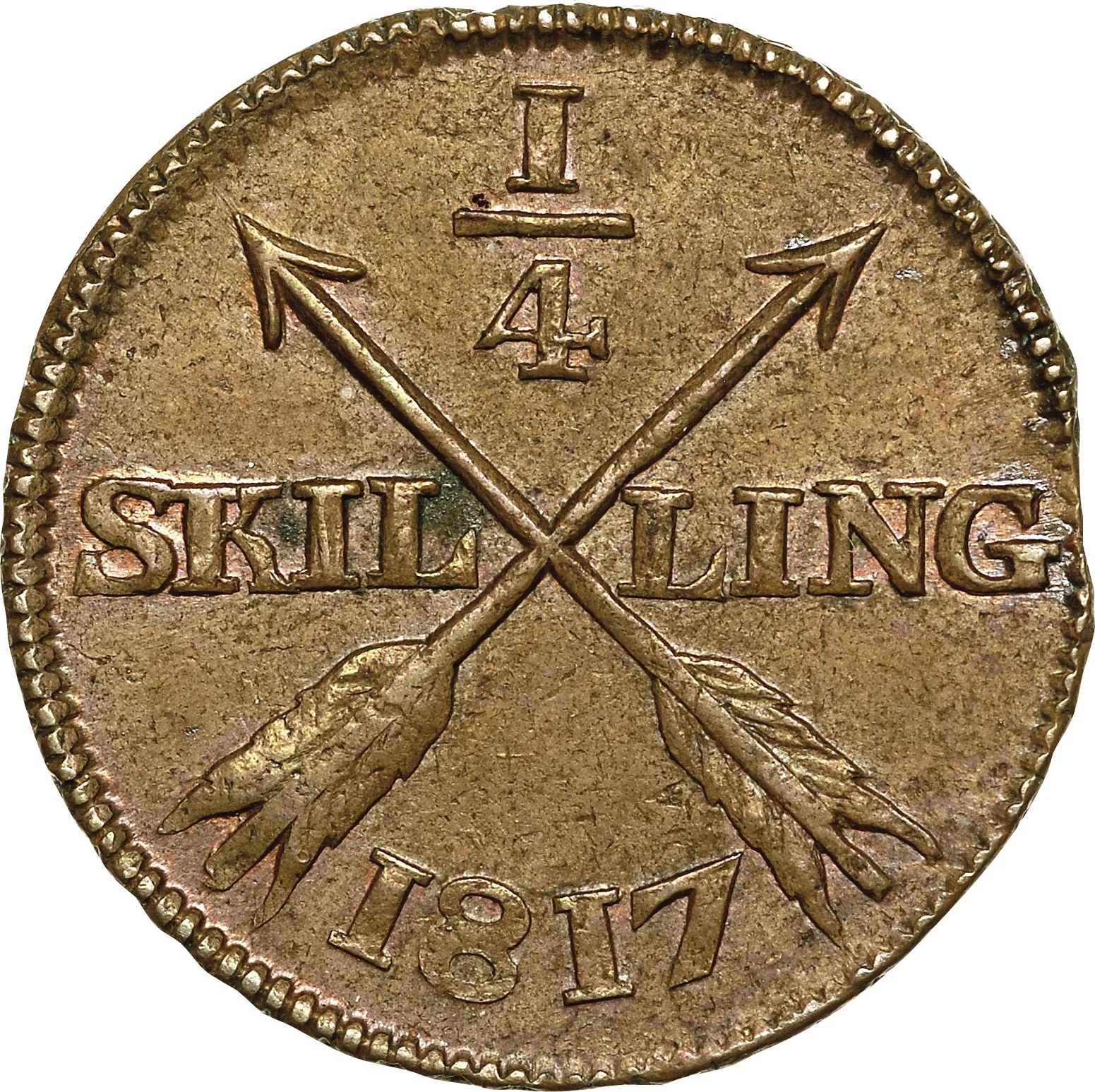
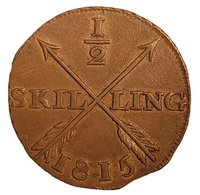
Crossed arrows flank the value; date below.
Inscription:
1
-
4
SKIL LING
1817
-
4
SKIL LING
1817
Script: Latin
Edge
Mintings
| Year | Mint Mark | Mintage | Quality | Collection |
|---|---|---|---|---|
| 1817 | — | 1,152,000 |
Historical background
In 1817, Sweden was in a period of significant monetary transition and consolidation following the Napoleonic Wars. The national finances were strained by the war's costs and the loss of Finland to Russia in 1809, which had created a complex and unstable currency system. Since 1789, the Riksbank had issued paper money known as riksdaler riksmynt, but these notes had depreciated heavily due to over-issuance to fund state expenditures, leading to a severe loss of public confidence and a wide gap between the value of paper money and silver.
The critical reform of 1817 was the establishment of the new Sveriges Riksbank under King Karl XIV Johan, separating it from the Riksdag of the Estates to restore credibility. The foundational act, the Riksgälds Kontoret ordinance of 1817, aimed to stabilize the currency by promising eventual convertibility to silver. While full convertibility was not immediately achieved, the reform laid the legal and institutional groundwork by committing to a policy that would gradually retire the old devalued notes and establish a new, more secure monetary standard.
Thus, the currency situation in 1817 was one of cautious hope amidst lingering instability. The year marked a decisive shift from an era of inflationary paper finance toward a modern, silver-based monetary system. This institutional reboot was essential for Sweden's future economic development, setting the stage for the eventual introduction of the riksdaler riksmynt as a fully convertible silver currency in the 1830s, which would bring lasting stability to the Swedish economy.
The critical reform of 1817 was the establishment of the new Sveriges Riksbank under King Karl XIV Johan, separating it from the Riksdag of the Estates to restore credibility. The foundational act, the Riksgälds Kontoret ordinance of 1817, aimed to stabilize the currency by promising eventual convertibility to silver. While full convertibility was not immediately achieved, the reform laid the legal and institutional groundwork by committing to a policy that would gradually retire the old devalued notes and establish a new, more secure monetary standard.
Thus, the currency situation in 1817 was one of cautious hope amidst lingering instability. The year marked a decisive shift from an era of inflationary paper finance toward a modern, silver-based monetary system. This institutional reboot was essential for Sweden's future economic development, setting the stage for the eventual introduction of the riksdaler riksmynt as a fully convertible silver currency in the 1830s, which would bring lasting stability to the Swedish economy.
💎 Very Rare