

½ Sovereign – South Africa
South Africa
Context
Years: 1923–1926
Issuer: South Africa 
Ruler: George V
Currency:
(1825—1961)
Demonetization: 31 March 1961
Total mintage: 1,755,810
Material
References
KM: #Click to copy to clipboard20
Numista: #22168
Value
Bullion value: $611.07
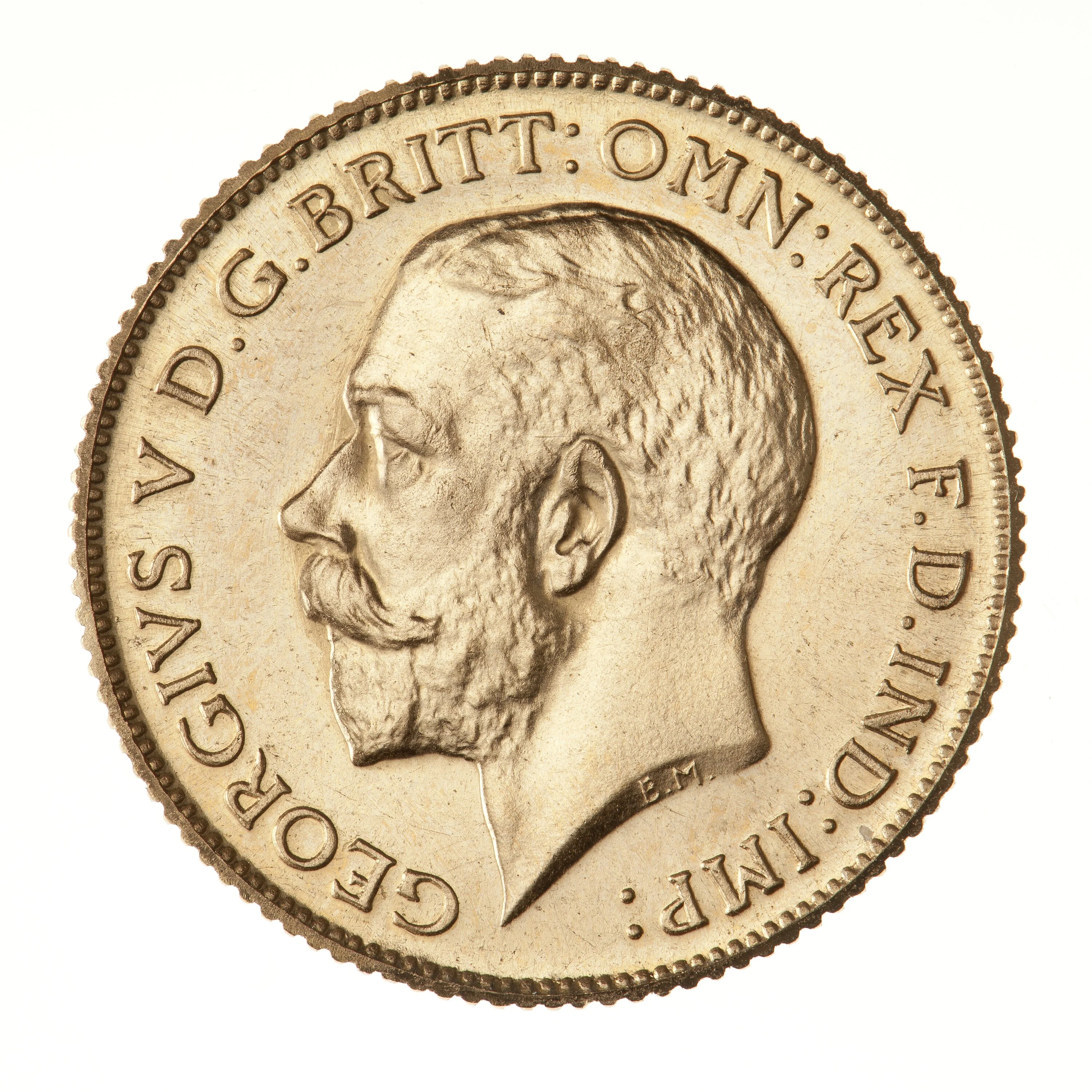
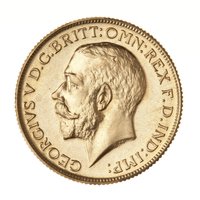
Obverse
Description:
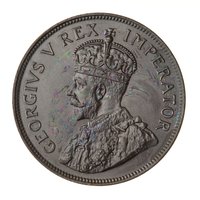
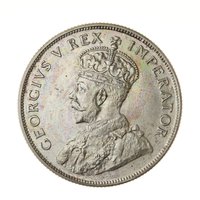
King George V left profile, legend encircling, engraver's initials on truncation.
Inscription:
GEORGIVS V D.G.BRITT:OMN:REX F.D.IND:IMP:
B.M.
B.M.
Translation:
George V, by the Grace of God, King of all the Britains, Defender of the Faith, Emperor of India.
Script: Latin
Language: Latin
Engraver: Edgar Bertram MacKennal
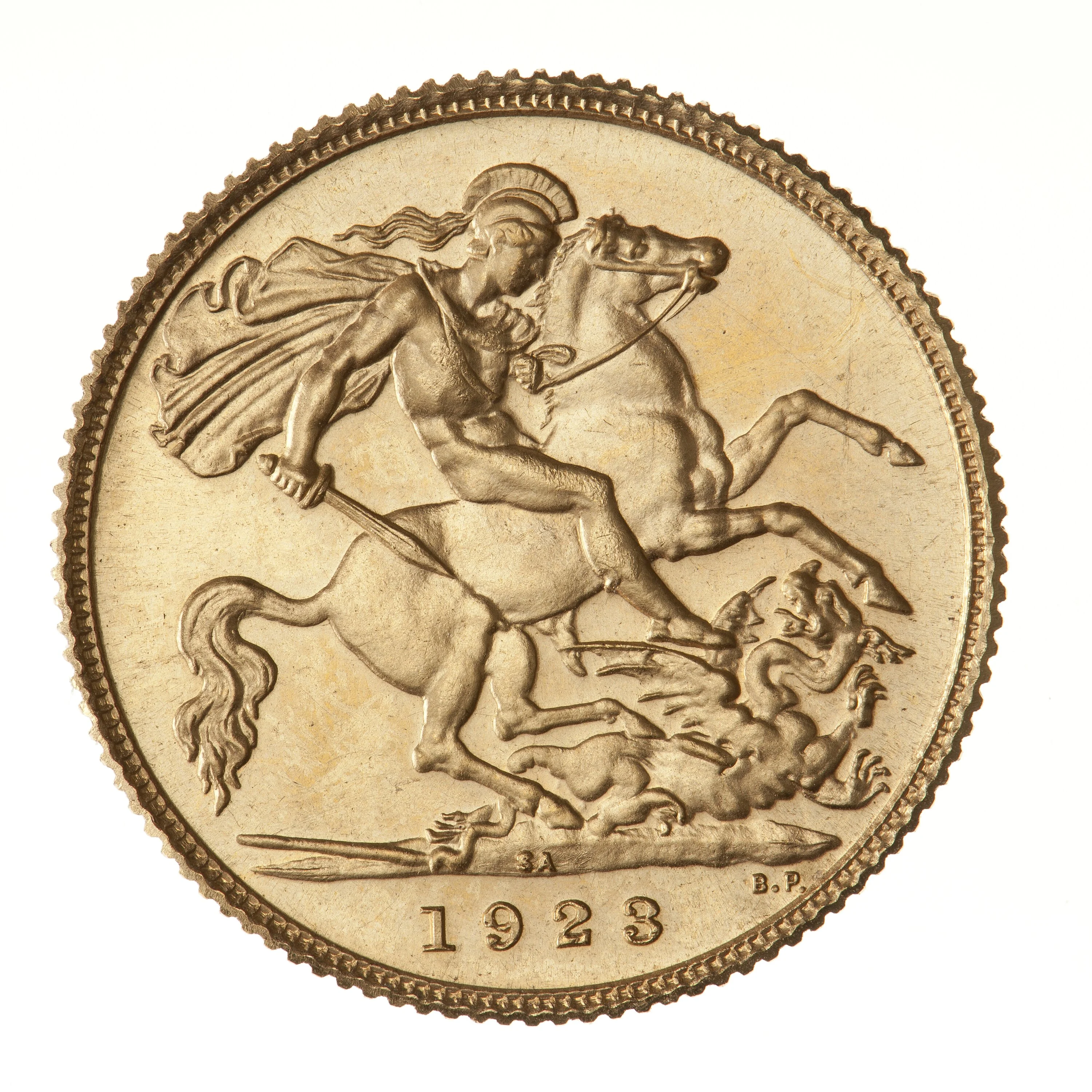
Reverse
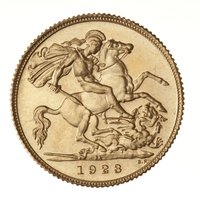
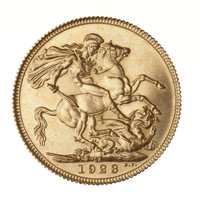
Description:
St. George slaying dragon right, date and engraver's initials in exergue, mintmark under hooves.
Inscription:
SA B.P.
1923
1923
Script: Latin
Engraver: Benedetto Pistrucci
Edge
Reeded
Categories
| Mythology> Fantastic animal |
| Animal> Horse |
| Person> Religious figure |
| Mustache/Beard |
| Object> Armour |
| Person> Monarch |
| Object> Cold weapons |
Mints
| Name | Mark |
|---|---|
| Pretoria | SA |
Historical background
In 1923, South Africa's currency situation was defined by its recent transition to the Sterling Exchange Standard, a system formalised with the Currency and Banking Act of 1920. This Act established the South African Reserve Bank (SARB) in 1921 as the sole issuer of banknotes and placed the country firmly within the British sterling area. The core principle was that the South African pound (£) was fixed at parity with the British pound sterling, and its value was maintained by the SARB's commitment to buy and sell gold at a fixed price in London, ensuring full convertibility.
This monetary framework was a direct response to the financial instability experienced during and after World War I, including inflation and exchange rate volatility. The pre-war system, where commercial banks issued notes backed by gold, had proven inadequate. The new regime aimed to centralise control, stabilise the currency, and facilitate trade and capital flows with Britain, South Africa's dominant economic partner. The system effectively outsourced the gold standard mechanism to London, as the SARB held its key reserves in sterling balances and British government securities rather than physical gold domestically.
Consequently, South Africa's currency was not an independent instrument of monetary policy but a satellite of the British system. The economy's health and the currency's stability were therefore heavily influenced by Britain's own post-war economic conditions and the broader performance of the sterling bloc. This arrangement underscored South Africa's deep economic and political ties to the British Empire, while providing a stable, predictable monetary environment crucial for the country's primary economic engine: the gold mining industry.
This monetary framework was a direct response to the financial instability experienced during and after World War I, including inflation and exchange rate volatility. The pre-war system, where commercial banks issued notes backed by gold, had proven inadequate. The new regime aimed to centralise control, stabilise the currency, and facilitate trade and capital flows with Britain, South Africa's dominant economic partner. The system effectively outsourced the gold standard mechanism to London, as the SARB held its key reserves in sterling balances and British government securities rather than physical gold domestically.
Consequently, South Africa's currency was not an independent instrument of monetary policy but a satellite of the British system. The economy's health and the currency's stability were therefore heavily influenced by Britain's own post-war economic conditions and the broader performance of the sterling bloc. This arrangement underscored South Africa's deep economic and political ties to the British Empire, while providing a stable, predictable monetary environment crucial for the country's primary economic engine: the gold mining industry.
⭐ Somewhat Rare