

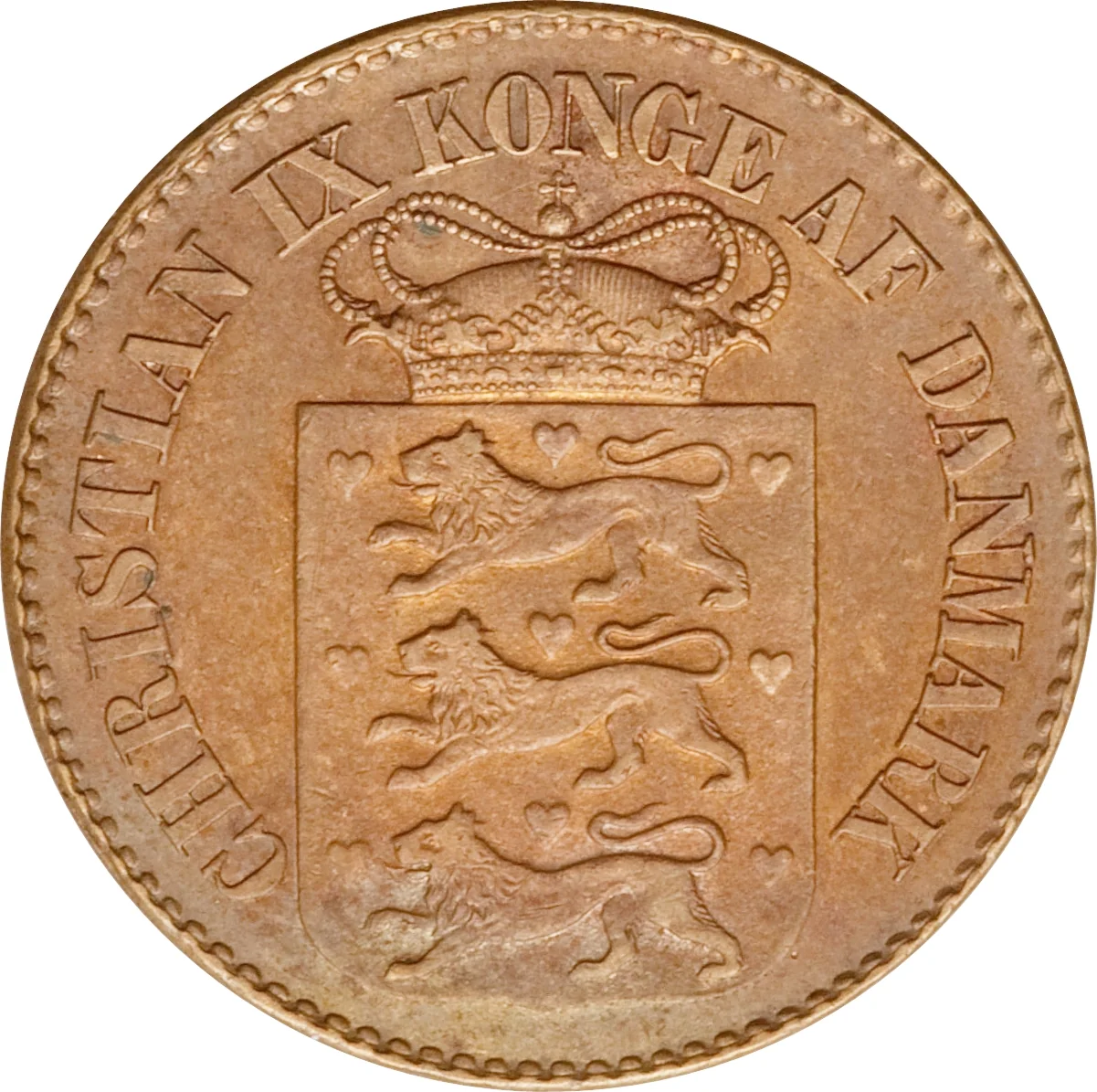
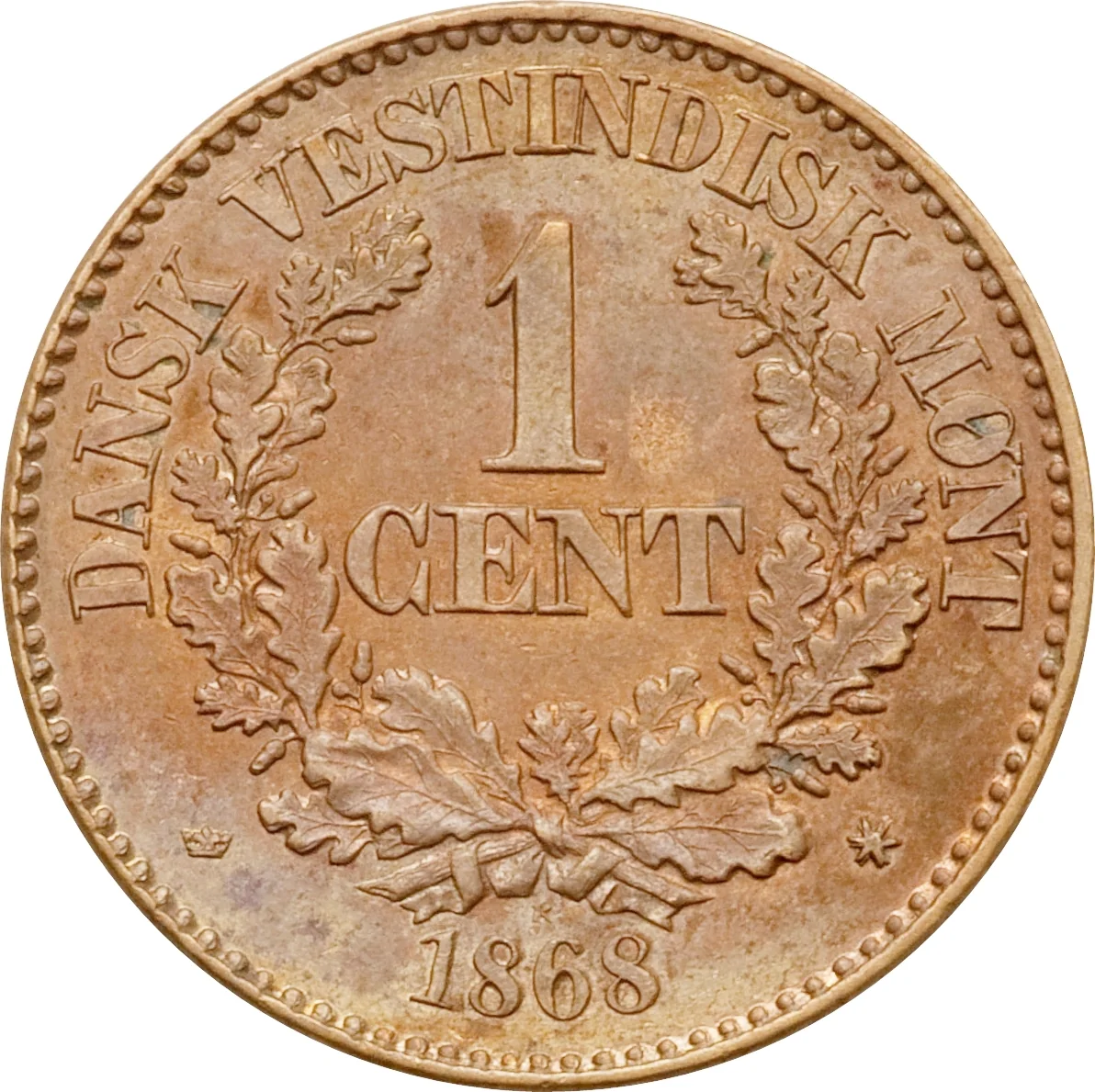
1 Cent – Danish West Indies
Context
Years: 1868–1883
Issuer: Danish West Indies
Ruler: Christian IX
Currency:
(1849—1905)
Demonetized: Yes
Total mintage: 510,000
Material
References
KM: #Click to copy to clipboard68
Numista: #22096
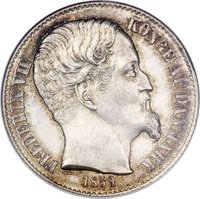
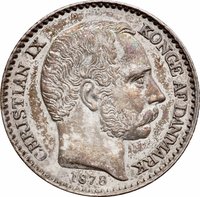
Obverse
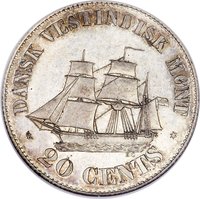
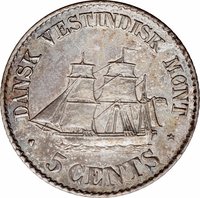
Reverse
Edge
Plain
Mints
| Name | Mark |
|---|---|
| Royal Danish Mint | — |
Mintings
| Year | Mint Mark | Mintage | Quality | Collection |
|---|---|---|---|---|
| 1868 | — | — | Proof | |
| 1868 | — | — | Prooflike | |
| 1868 | — | 240,000 | ||
| 1878 | — | 20,000 | ||
| 1879 | — | 40,000 | ||
| 1883 | — | 210,000 |
Historical background
In 1868, the currency situation in the Danish West Indies (present-day U.S. Virgin Islands) was a complex and problematic system characterized by a chronic shortage of official coinage and a reliance on a chaotic mix of foreign currencies. The official currency was the Danish rigsdaler, divided into 96 skilling, but these coins were scarce in everyday circulation. Instead, the economy functioned primarily on a motley assortment of Spanish, Mexican, British, French, and United States coins, which merchants and planters were forced to accept at fluctuating and often arbitrary exchange rates. This created significant confusion and facilitated exploitation, as the value of a coin depended heavily on its metallic content and the discretion of the individual accepting it.
The root of this monetary instability lay in the colony's position as a minor Danish possession within a major Caribbean economic sphere dominated by the trade and currencies of larger powers, particularly Britain and the United States. Furthermore, the local economy, heavily dependent on the sugar trade, was in a prolonged period of decline due to falling global prices and competition from European beet sugar. This economic stagnation reduced the flow of official currency from Denmark, which had little incentive to export large quantities of coin to an unprofitable colony. Consequently, everyday transactions, especially among the enslaved and free Black populations, often relied on barter or small-denomination "cut" pieces of Spanish silver coins.
Recognizing the untenable nature of this system, the Danish colonial administration had been attempting reform. A significant step came in 1849 with the introduction of the daler, pegged to the French franc system, but this did not solve the physical shortage of coins. By 1868, the situation remained dire, prompting ongoing discussions about more substantive monetary reform. These debates would eventually lead to the pivotal Currency Act of 1904, which finally abolished the old system and officially adopted the U.S. dollar as the colony's sole legal tender, a clear acknowledgment of the islands' de facto economic orbit around the United States long before the territory's formal purchase in 1917.
The root of this monetary instability lay in the colony's position as a minor Danish possession within a major Caribbean economic sphere dominated by the trade and currencies of larger powers, particularly Britain and the United States. Furthermore, the local economy, heavily dependent on the sugar trade, was in a prolonged period of decline due to falling global prices and competition from European beet sugar. This economic stagnation reduced the flow of official currency from Denmark, which had little incentive to export large quantities of coin to an unprofitable colony. Consequently, everyday transactions, especially among the enslaved and free Black populations, often relied on barter or small-denomination "cut" pieces of Spanish silver coins.
Recognizing the untenable nature of this system, the Danish colonial administration had been attempting reform. A significant step came in 1849 with the introduction of the daler, pegged to the French franc system, but this did not solve the physical shortage of coins. By 1868, the situation remained dire, prompting ongoing discussions about more substantive monetary reform. These debates would eventually lead to the pivotal Currency Act of 1904, which finally abolished the old system and officially adopted the U.S. dollar as the colony's sole legal tender, a clear acknowledgment of the islands' de facto economic orbit around the United States long before the territory's formal purchase in 1917.
🌱 Fairly Common