

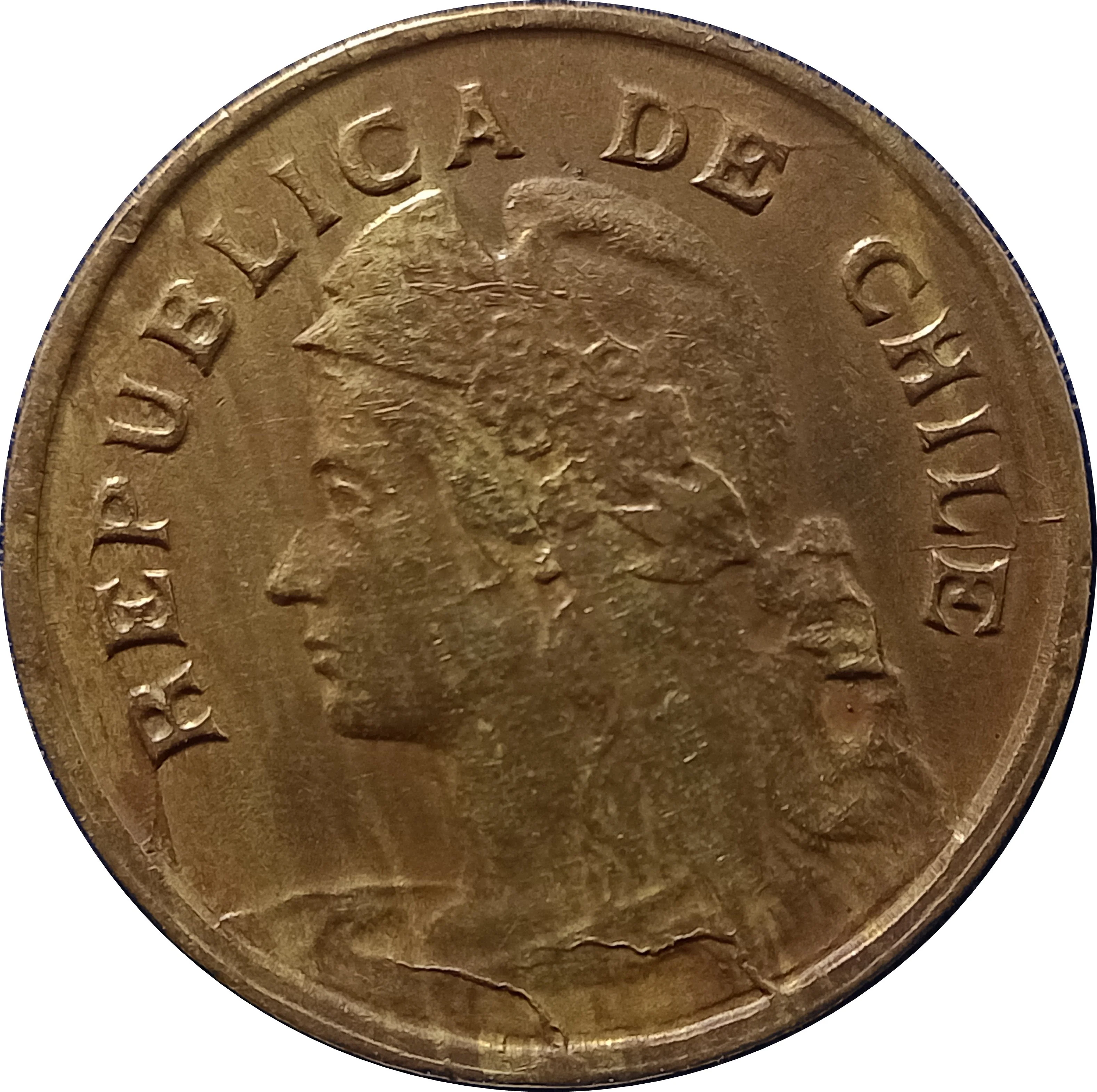
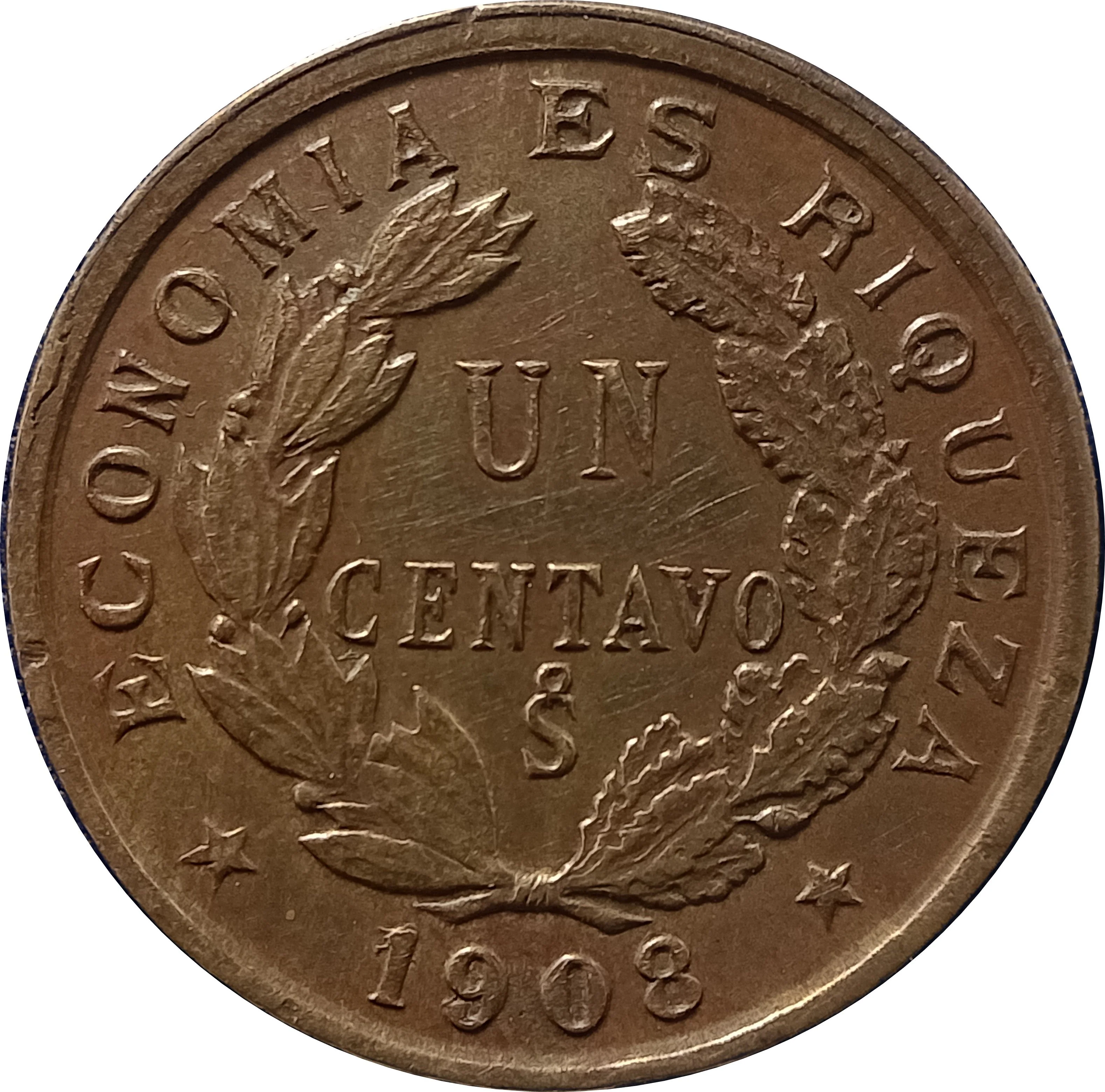
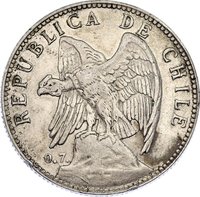
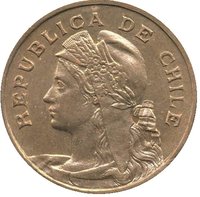
Obverse
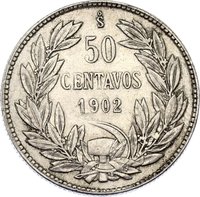
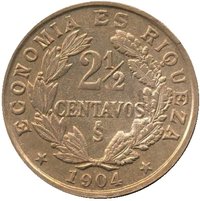
Reverse
Edge
Plain
Categories
| Symbol> Allegory |
| Symbol> Phrygian cap |
Mints
| Name | Mark |
|---|---|
| Casa de Moneda de Chile | (So) |
Mintings
| Year | Mint Mark | Mintage | Quality | Collection |
|---|---|---|---|---|
| 1904 | So | 970,000 | ||
| 1908 | So | 174,000 | ||
| 1919 | So | 173,000 |
Historical background
In 1904, Chile's currency situation was defined by the gold standard, which had been formally adopted in 1895. The system was anchored by the "peso oro" (gold peso), a unit of account equivalent to 0.549175 grams of fine gold, though physical gold coins rarely circulated in everyday transactions. Instead, the monetary system operated on a gold-exchange standard, where the paper currency issued by private banks and the state-backed Caja de Emisión was legally convertible into gold or stable foreign currencies like the British pound sterling. This structure aimed to ensure monetary stability, control inflation, and integrate Chile into the global financial system, which was crucial for a nation heavily dependent on nitrate exports.
The system's stability, however, was under constant pressure due to fiscal deficits and the government's reliance on foreign loans. Public spending, particularly on infrastructure and military modernization following the War of the Pacific, often outpaced revenues. To finance these deficits, the government and banks frequently suspended gold convertibility and increased paper money issuance, leading to periods of depreciation of the paper peso against the gold standard. The year 1904 fell within a period of such strain, as the economy was still absorbing the financial impacts of the 1891 Civil War and managing the costs of its new territories in the north.
Consequently, while the gold standard provided a formal framework, the practical reality in 1904 was a managed and sometimes fragile monetary environment. The authorities, particularly under the advice of foreign financial missions, engaged in active "gold operations" — buying and selling gold and foreign exchange — to defend the parity and manage the value of the paper peso. This delicate balancing act sought to maintain international creditworthiness and domestic price stability, but it left the economy vulnerable to external shocks and the volatile cycles of the nitrate industry, upon which much of the nation's gold reserves ultimately depended.
The system's stability, however, was under constant pressure due to fiscal deficits and the government's reliance on foreign loans. Public spending, particularly on infrastructure and military modernization following the War of the Pacific, often outpaced revenues. To finance these deficits, the government and banks frequently suspended gold convertibility and increased paper money issuance, leading to periods of depreciation of the paper peso against the gold standard. The year 1904 fell within a period of such strain, as the economy was still absorbing the financial impacts of the 1891 Civil War and managing the costs of its new territories in the north.
Consequently, while the gold standard provided a formal framework, the practical reality in 1904 was a managed and sometimes fragile monetary environment. The authorities, particularly under the advice of foreign financial missions, engaged in active "gold operations" — buying and selling gold and foreign exchange — to defend the parity and manage the value of the paper peso. This delicate balancing act sought to maintain international creditworthiness and domestic price stability, but it left the economy vulnerable to external shocks and the volatile cycles of the nitrate industry, upon which much of the nation's gold reserves ultimately depended.
🌟 Uncommon