

1 Tamlung (Rama IV) – Thailand
Non-circulating coins
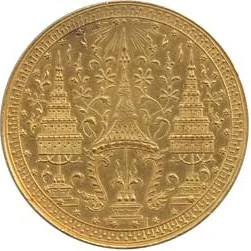
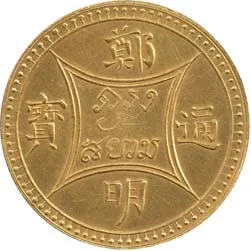
Commemoration: 60th birthday of Rama IV
Thailand
Context
Year: 1864
Issuer: Thailand 
Ruler: Phra Chom Klao
Currency:
(1869—1897)
Subdivision: 1 Tamlung = 4 Bahts
Demonetized: Yes
References
Numista: #219035
Obverse
Description:
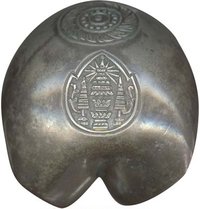
Mongkut, emblem of Rama IV.
Reverse
Edge
Mintings
| Year | Mint Mark | Mintage | Quality | Collection |
|---|---|---|---|---|
| 1864 | — | — |
Historical background
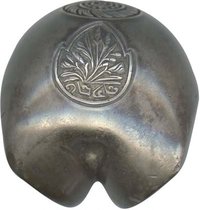
In 1864, the currency situation in Siam (modern-day Thailand) was characterized by a complex and fragmented monetary system, a legacy of its pre-modern economy and extensive foreign trade. The primary unit was the baht, a unit of weight for silver, but the actual circulating medium was a bewildering array of physical objects. These included bullet-shaped silver bullet coins (known as photduang), cowrie shells, baked clay tokens, and a multitude of foreign coins from neighboring regions and colonial powers, particularly Mexican and Spanish silver dollars. The value of these currencies was not fixed by a central authority but fluctuated based on weight, purity, and local demand, leading to inefficiency and hindering both domestic administration and international commerce.
This monetary heterogeneity was a growing concern for King Mongkut (Rama IV) and his modernizing government. The expansion of trade with Western nations following the Bowring Treaty of 1855 had intensified the need for a standardized, decimalized currency to simplify transactions and bolster state authority. In response, 1864 marked a pivotal year of transition: Siam established its first modern mint and began planning for the introduction of flat, machine-struck coinage. While the iconic photduang would remain in circulation for decades, the first government-issued decimal coins—the satang and baht—would enter production by the end of the decade.
Thus, the currency situation in 1864 was at a crossroads between tradition and modernization. It was the final chapter of an ancient, weight-based system and the foundational year for a centralized, decimal currency under royal prerogative. This reform was not merely economic but also a political act, designed to project Siam's sovereignty and administrative unity in an era of increasing colonial pressure in Southeast Asia.
This monetary heterogeneity was a growing concern for King Mongkut (Rama IV) and his modernizing government. The expansion of trade with Western nations following the Bowring Treaty of 1855 had intensified the need for a standardized, decimalized currency to simplify transactions and bolster state authority. In response, 1864 marked a pivotal year of transition: Siam established its first modern mint and began planning for the introduction of flat, machine-struck coinage. While the iconic photduang would remain in circulation for decades, the first government-issued decimal coins—the satang and baht—would enter production by the end of the decade.
Thus, the currency situation in 1864 was at a crossroads between tradition and modernization. It was the final chapter of an ancient, weight-based system and the foundational year for a centralized, decimal currency under royal prerogative. This reform was not merely economic but also a political act, designed to project Siam's sovereignty and administrative unity in an era of increasing colonial pressure in Southeast Asia.
✨ Legendary