

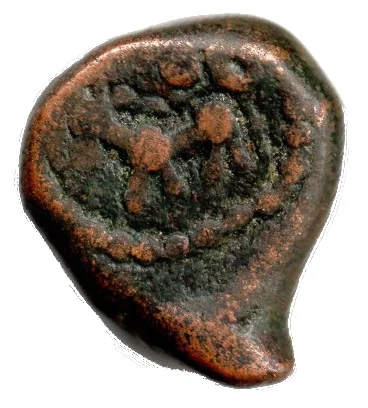

Obverse
Description:
A horse-riding deity amid dotted circles.
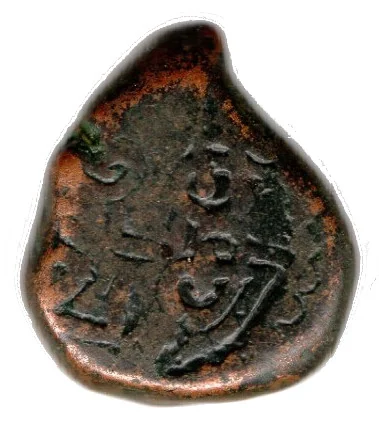
Reverse
Description:
சேதுபதி (Sethupathi) letters in dotted circles.
Inscription:
சேதுபதி
Translation:
Sethupathi
Language: Tamil
Edge
Plain
Mintings
| Year | Mint Mark | Mintage | Quality | Collection |
|---|---|---|---|---|
| — | — | — |
Historical background
In the early 1800s, Ramanathapuram (also known as Ramnad), under the rule of the Setupati kings, operated within a complex and multi-layered monetary system characteristic of late pre-colonial South India. The region was not yet integrated into a standardized currency zone, leading to the simultaneous circulation of various coins. The most prominent were the gold pagodas (often the Varaha pagoda of the Vijayanagara tradition) and silver fanams, which were used for larger transactions, revenue payments, and state treasuries. These coins were often stamped with the symbols of local rulers or deities, asserting a degree of political and economic sovereignty.
Alongside these, a plethora of lower-value copper coins, such as kasu, facilitated everyday local trade in bazaars and for petty goods. Crucially, the monetary landscape was also flooded with foreign currencies due to Ramanathapuram’s coastal position and trade links. Arcot rupees (from the Nawab of Arcot), East India Company rupees, and various European coins like Spanish dollars circulated widely, especially in the port towns like Kilakkarai and Devipattinam. This created a dynamic but chaotic environment where exchange rates fluctuated based on metal purity, weight, and the political fortunes of the issuing authority.
The period saw a decisive shift as the British East India Company, following the Anglo-Mysore and Anglo-Maratha wars, consolidated its political control over the region. After assuming direct revenue collection through the ryotwari system, the Company began aggressively standardizing the currency to facilitate tax payment and administration. While local chieftains continued to mint some coins for a few decades, the Company’s silver rupee and its fractional coins increasingly became the legal and practical standard. Thus, by the dawn of the 19th century, Ramanathapuram was in transition from a fragmented, multi-currency system to one increasingly dominated by British Indian currency, marking the beginning of its integration into a colonial economic order.
Alongside these, a plethora of lower-value copper coins, such as kasu, facilitated everyday local trade in bazaars and for petty goods. Crucially, the monetary landscape was also flooded with foreign currencies due to Ramanathapuram’s coastal position and trade links. Arcot rupees (from the Nawab of Arcot), East India Company rupees, and various European coins like Spanish dollars circulated widely, especially in the port towns like Kilakkarai and Devipattinam. This created a dynamic but chaotic environment where exchange rates fluctuated based on metal purity, weight, and the political fortunes of the issuing authority.
The period saw a decisive shift as the British East India Company, following the Anglo-Mysore and Anglo-Maratha wars, consolidated its political control over the region. After assuming direct revenue collection through the ryotwari system, the Company began aggressively standardizing the currency to facilitate tax payment and administration. While local chieftains continued to mint some coins for a few decades, the Company’s silver rupee and its fractional coins increasingly became the legal and practical standard. Thus, by the dawn of the 19th century, Ramanathapuram was in transition from a fragmented, multi-currency system to one increasingly dominated by British Indian currency, marking the beginning of its integration into a colonial economic order.
✨ Legendary