

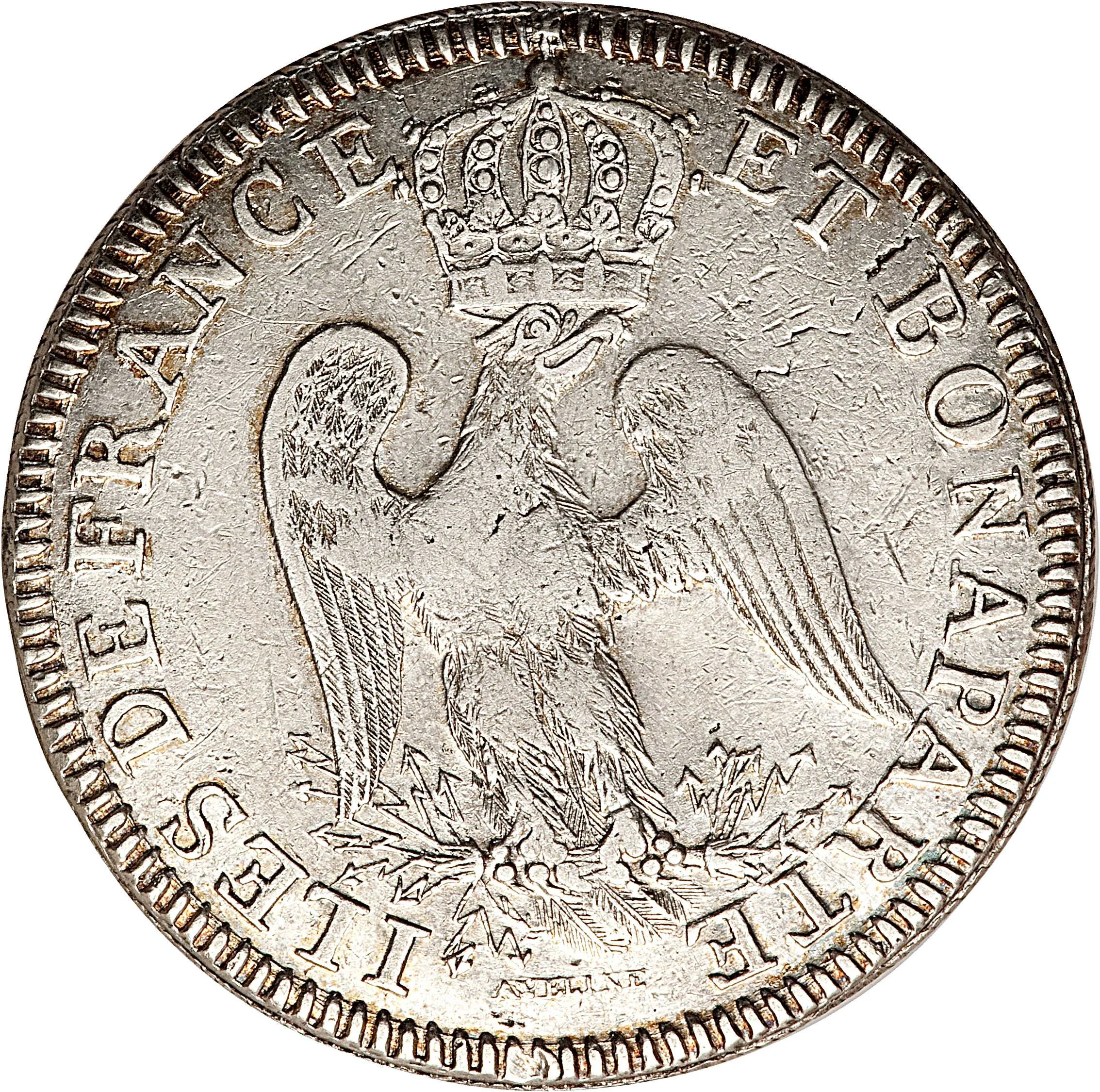
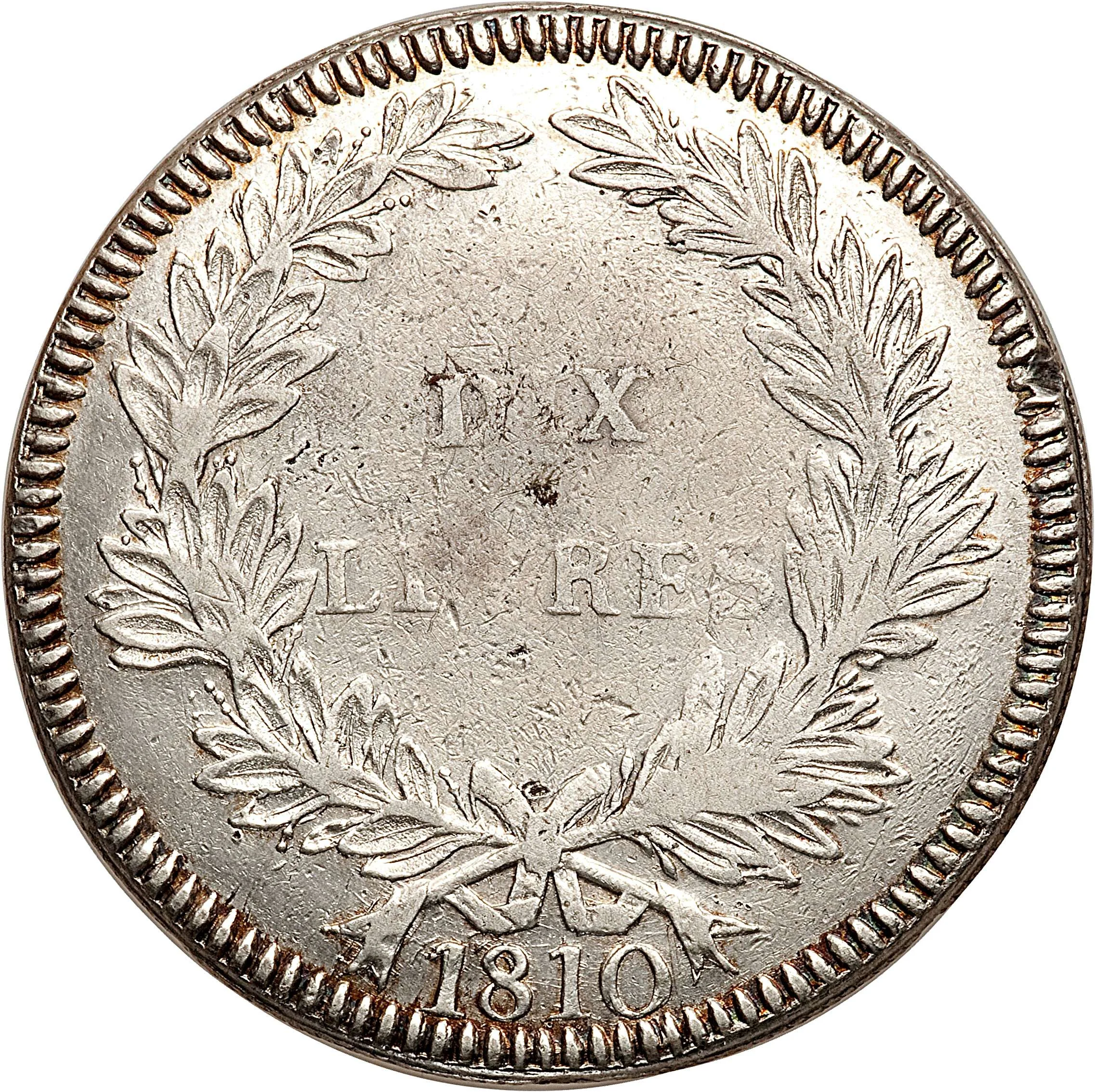
10 livres tournois – Isles de France and de Bonaparte
Add to wishlist
France
Context
Year: 1810
Country: France
Issuer: Isles de France and de Bonaparte
Ruler: Napoleon I
Currency:
(1721—1810)
Demonetized: Yes
Total mintage: 200,000
Material
References
KM: #
Numista: #21727
Value
Bullion value: $56.25
Obverse
Reverse
Edge
Reeded
Mints
| Name | Mark |
|---|---|
| Port Louis | — |
Mintings
| Year | Mint Mark | Mintage | Quality | Collection |
|---|---|---|---|---|
| 1810 | — | 200,000 |
Historical background
In 1810, the Indian Ocean islands of Isle de France (Mauritius) and Isle de Bonaparte (Réunion) faced a severe and complex currency crisis, a direct consequence of their isolation under the British naval blockade during the Napoleonic Wars. As French colonies, they were cut off from metropolitan specie (gold and silver coin) and official supplies of currency. This led to a chronic shortage of sound money, forcing authorities and merchants to rely on a chaotic mix of foreign coins. Spanish dollars, Portuguese joes, Indian rupees, and coins from other European empires circulated simultaneously, their values fluctuating wildly based on availability and dubious assessments of precious metal content.
To address the shortage, local authorities repeatedly resorted to issuing paper money, known as billets de caisse (cash notes). However, these were not backed by sufficient reserves of specie, leading to rapid depreciation and a severe loss of public confidence. The situation was exacerbated by the actions of private merchants and even the colonial treasury itself, which issued promissory notes and tokens as makeshift currency. This created a multi-layered monetary system where the value of a transaction depended heavily on the specific medium of exchange being used, stifling trade and creating widespread economic uncertainty.
The currency anarchy was a critical vulnerability for the islands, particularly for Isle de France, which served as a base for French privateers raiding British shipping. The economic strain weakened the colony's defences and its ability to provision itself. This financial disarray contributed directly to the British capture of Isle de France in December 1810, after which the British authorities immediately moved to impose their own sterling-based currency system to restore monetary order.
To address the shortage, local authorities repeatedly resorted to issuing paper money, known as billets de caisse (cash notes). However, these were not backed by sufficient reserves of specie, leading to rapid depreciation and a severe loss of public confidence. The situation was exacerbated by the actions of private merchants and even the colonial treasury itself, which issued promissory notes and tokens as makeshift currency. This created a multi-layered monetary system where the value of a transaction depended heavily on the specific medium of exchange being used, stifling trade and creating widespread economic uncertainty.
The currency anarchy was a critical vulnerability for the islands, particularly for Isle de France, which served as a base for French privateers raiding British shipping. The economic strain weakened the colony's defences and its ability to provision itself. This financial disarray contributed directly to the British capture of Isle de France in December 1810, after which the British authorities immediately moved to impose their own sterling-based currency system to restore monetary order.
💎 Extremely Rare