

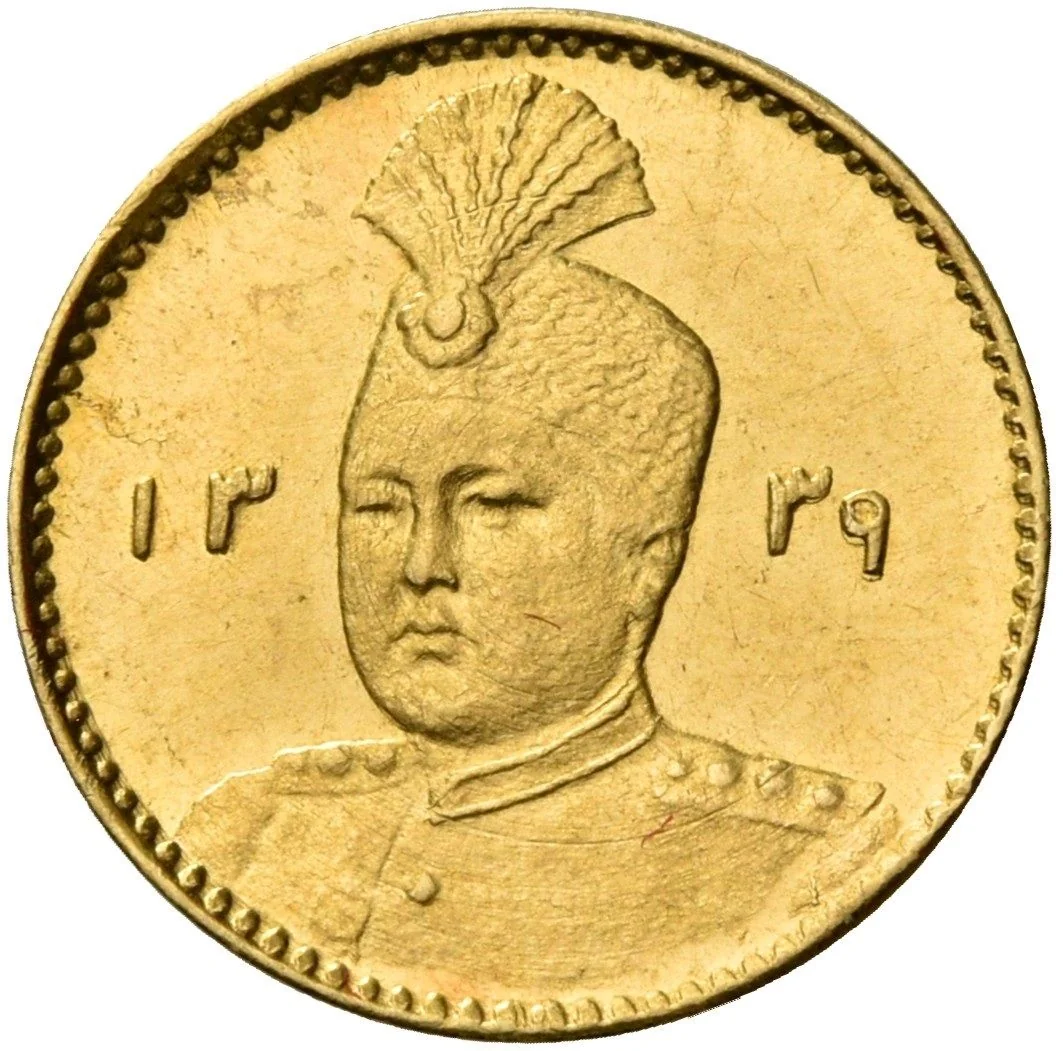
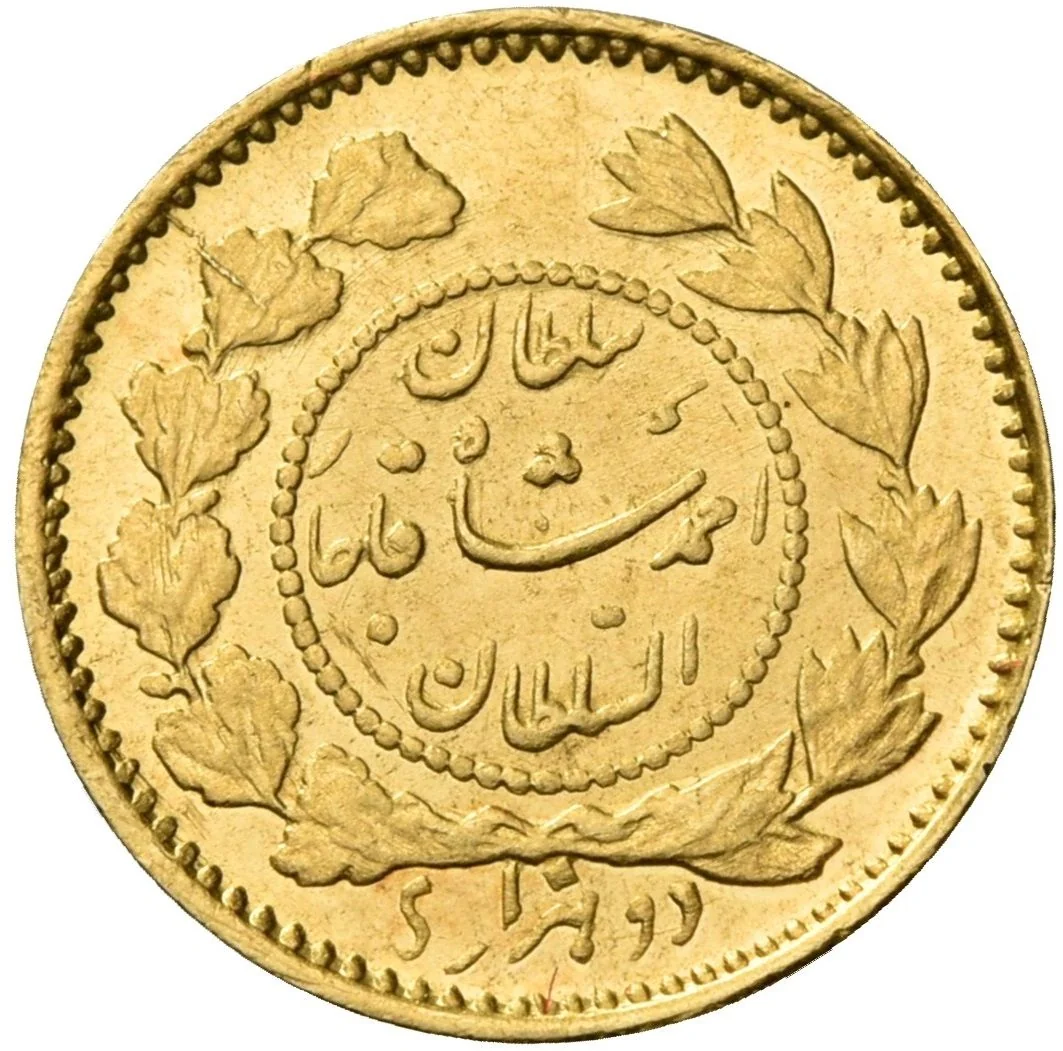
2000 dinars – Iran
Add to wishlist
Iran
Context
Year: 1921
Islamic (Hijri) Year:: 1339
Issuer: Iran
Ruler: Ahmad Shah
Currency:
(1825—1932)
Demonetized: Yes
Material
References
Numista: #217259
Value
Bullion value: $230.48
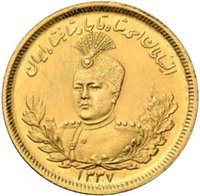
Obverse
Description:
Bust in plumed hat, facing left, flanking date.
Inscription:
۱۳۳۹
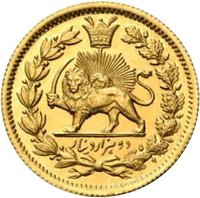
Reverse
Description:
Beaded circle with royal titles, framed by oak and olive wreaths.
Inscription:
السّلطان سلطان احمد شاه قاجار
دو هزاری
دو هزاری
Translation:
The Sultan Sultan Ahmad Shah Qajar
Two thousand
Two thousand
Script: Persian (nastaliq)
Language: Persian
Edge
Mints
| Name | Mark |
|---|---|
| Tehran | — |
Mintings
| Year | Mint Mark | Mintage | Quality | Collection |
|---|---|---|---|---|
| 1921 | — | — |
Historical background
In 1921, Iran's currency system was in a state of profound disarray, a legacy of the late Qajar era marked by foreign intervention, fiscal mismanagement, and economic fragmentation. The primary unit, the qiran (also kran), was a silver coin, but its value had severely depreciated due to decades of the government debasing its silver content to finance deficits. The country lacked a central bank, and currency issuance was chaotic, with both the government and numerous private banks issuing their own, often unbacked, banknotes (banknotes). This resulted in a wide variety of notes of questionable value circulating alongside a mix of foreign currencies, particularly Russian rubles and British pounds in their respective spheres of influence, further undermining national monetary sovereignty.
The economic turmoil of World War I had exacerbated these problems. The occupation of Iran by Russian, British, and Ottoman forces had drained resources and disrupted trade. By 1921, the government treasury was virtually empty, and the currency had lost public trust, leading to widespread hoarding of specie (gold and silver coins). The value of the qiran fluctuated wildly, and different regions of the country often used different monetary standards, hindering internal commerce. Inflation was a serious concern, as the flood of unsecured paper money created a significant disconnect between the nominal and real value of the currency.
This chaotic monetary background set the stage for critical reforms following the 1921 coup that brought Reza Khan (later Reza Shah Pahlavi) to prominence. Recognizing that a stable and unified currency was essential for modern state-building and economic independence, one of the new government's early priorities was monetary reform. The foundational step came in 1922 with the hiring of American financial advisor Arthur Millspaugh, whose mission was to reorganize Iran's finances, leading directly to the establishment of the Imperial Bank of Persia as a state bank with exclusive note-issuing authority, and the eventual introduction of a new national currency, the rial, in 1932. Thus, the situation in 1921 represented the low point from which a centralized, modern monetary system would begin to emerge.
The economic turmoil of World War I had exacerbated these problems. The occupation of Iran by Russian, British, and Ottoman forces had drained resources and disrupted trade. By 1921, the government treasury was virtually empty, and the currency had lost public trust, leading to widespread hoarding of specie (gold and silver coins). The value of the qiran fluctuated wildly, and different regions of the country often used different monetary standards, hindering internal commerce. Inflation was a serious concern, as the flood of unsecured paper money created a significant disconnect between the nominal and real value of the currency.
This chaotic monetary background set the stage for critical reforms following the 1921 coup that brought Reza Khan (later Reza Shah Pahlavi) to prominence. Recognizing that a stable and unified currency was essential for modern state-building and economic independence, one of the new government's early priorities was monetary reform. The foundational step came in 1922 with the hiring of American financial advisor Arthur Millspaugh, whose mission was to reorganize Iran's finances, leading directly to the establishment of the Imperial Bank of Persia as a state bank with exclusive note-issuing authority, and the eventual introduction of a new national currency, the rial, in 1932. Thus, the situation in 1921 represented the low point from which a centralized, modern monetary system would begin to emerge.
✨ Legendary