

50 Zlotys (Consecration of St. Mary’s Basilica in Kraków) – Poland
Non-circulating coins
Commemoration: 700th Anniversary of the Consecration of St. Mary’s Basilica in Kraków
Poland

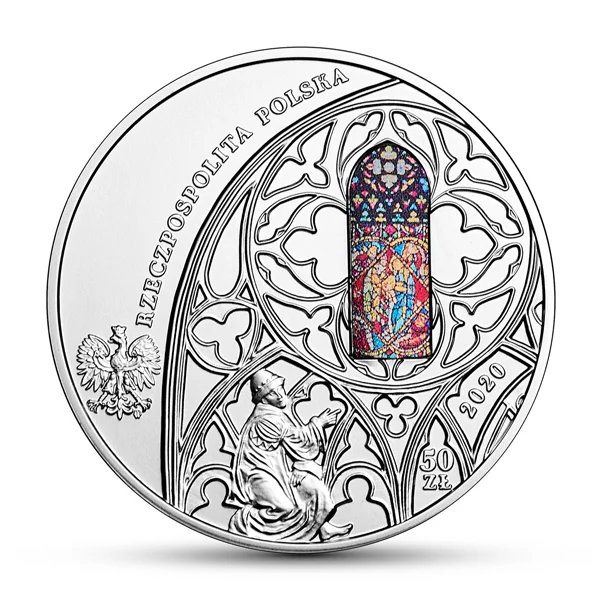
Obverse
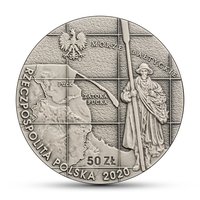
Inscription:
RZECZPOSPOLITA POLSKA
mw
2020
50
ZŁ
mw
2020
50
ZŁ
Translation:
REPUBLIC OF POLAND
mw
2020
50
ZLOTY
mw
2020
50
ZLOTY
Script: Latin
Language: Polish
Designer: Sebastian Mikołajczak
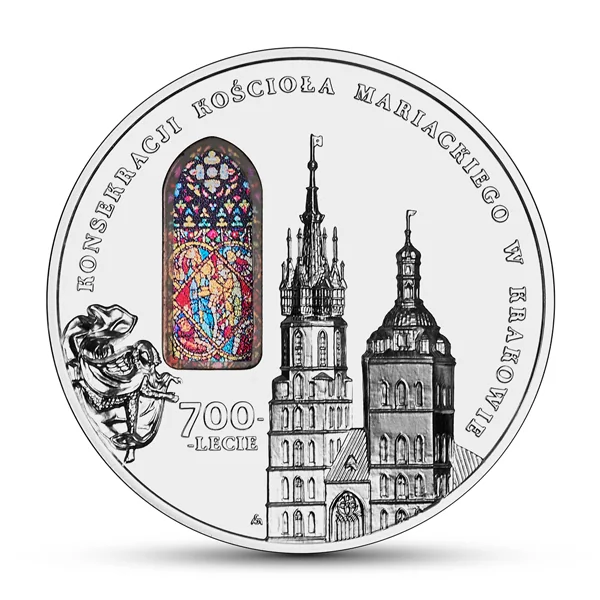
Reverse
Inscription:
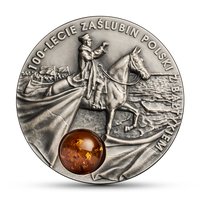
KONSEKRACJI KOŚCIOŁA MARIACKIEGO W KRAKOWIE
700-
-LECIE
700-
-LECIE
Translation:
On the 700th anniversary of the consecration of St. Mary's Church in Krakow
Script: Latin
Language: Polish
Designer: Sebastian Mikołajczak
Edge
Plain
Categories
| Building> Religious building |
Mints
| Name | Mark |
|---|---|
| Mint of Poland | (MW) |
Mintings
| Year | Mint Mark | Mintage | Quality | Collection |
|---|---|---|---|---|
| 2020 | MW | 6,000 |
Historical background
In 2020, the Polish złoty (PLN) experienced significant volatility, primarily driven by the global economic shock of the COVID-19 pandemic. The initial phase of the crisis in March saw a classic "dash for cash," with investors fleeing emerging market currencies for the safety of the US dollar. This led to a sharp depreciation of the złoty, which weakened to nearly 4.70 against the euro and over 4.30 against the US dollar, levels not seen in many years. The currency's fall was exacerbated by a sudden drop in economic activity, concerns over the health of the Polish economy, and global risk aversion.
The situation was stabilized by decisive interventions from Polish institutions. The National Bank of Poland (NBP) played a crucial role, implementing a series of interest rate cuts (bringing the reference rate to a historic low of 0.1% by May) and launching a large-scale quantitative easing program to provide liquidity and support the government's fiscal measures. Furthermore, the central bank conducted direct foreign exchange interventions, selling reserves to support the złoty. These actions, combined with a massive government fiscal package ("Anti-Crisis Shield") and the gradual reopening of the economy, helped restore confidence and triggered a recovery in the currency through the second half of the year.
By the end of 2020, the złoty had recouped most of its early losses, emerging as one of the region's more resilient currencies. This recovery was supported by the relatively contained economic contraction compared to Western Europe, the scale of domestic policy support, and the inflow of EU recovery funds. However, the year highlighted the złoty's sensitivity to global risk sentiment and set the stage for future challenges, including rising inflation, which would become the dominant concern for the central bank in the following years.
The situation was stabilized by decisive interventions from Polish institutions. The National Bank of Poland (NBP) played a crucial role, implementing a series of interest rate cuts (bringing the reference rate to a historic low of 0.1% by May) and launching a large-scale quantitative easing program to provide liquidity and support the government's fiscal measures. Furthermore, the central bank conducted direct foreign exchange interventions, selling reserves to support the złoty. These actions, combined with a massive government fiscal package ("Anti-Crisis Shield") and the gradual reopening of the economy, helped restore confidence and triggered a recovery in the currency through the second half of the year.
By the end of 2020, the złoty had recouped most of its early losses, emerging as one of the region's more resilient currencies. This recovery was supported by the relatively contained economic contraction compared to Western Europe, the scale of domestic policy support, and the inflow of EU recovery funds. However, the year highlighted the złoty's sensitivity to global risk sentiment and set the stage for future challenges, including rising inflation, which would become the dominant concern for the central bank in the following years.

✨ Legendary