

50 Centimes – Belgium
Belgium
Context
Years: 1907–1909
Issuer: Belgium 
Ruler: Leopold II
Currency:
(1832—2001)
Demonetization: 30 July 1932
Total mintage: 3,055,000
Material
References
KM: #Click to copy to clipboard61
Numista: #2139
Value
Exchange value: 0.50 BEF
Bullion value: $5.93
Obverse
Description:
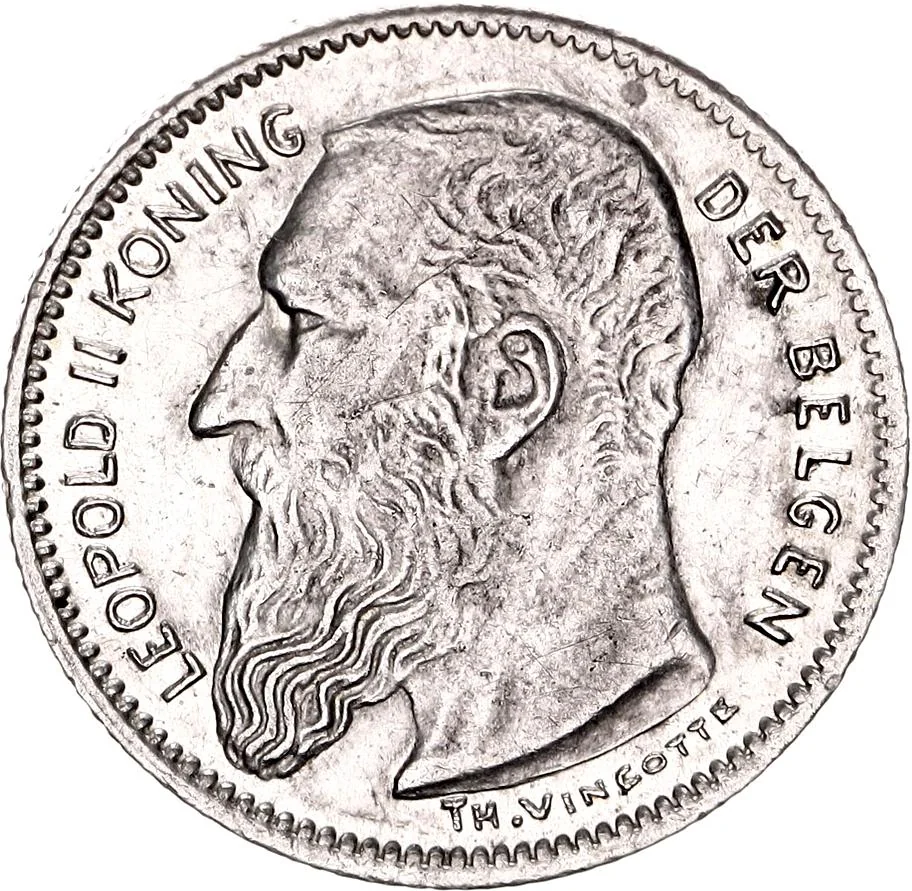
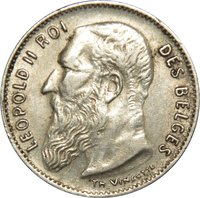
Leopold II of Belgium in left profile, Dutch motto encircling. Designer below.
Inscription:
LEOPOLD II KONING DER BELGEN
TH. VINÇOTTE
TH. VINÇOTTE
Translation:
LEOPOLD II KING OF THE BELGIANS
TH. VINÇOTTE
TH. VINÇOTTE
Script: Latin
Language: Dutch
Engraver: Thomas Vinçotte
Reverse
Description:
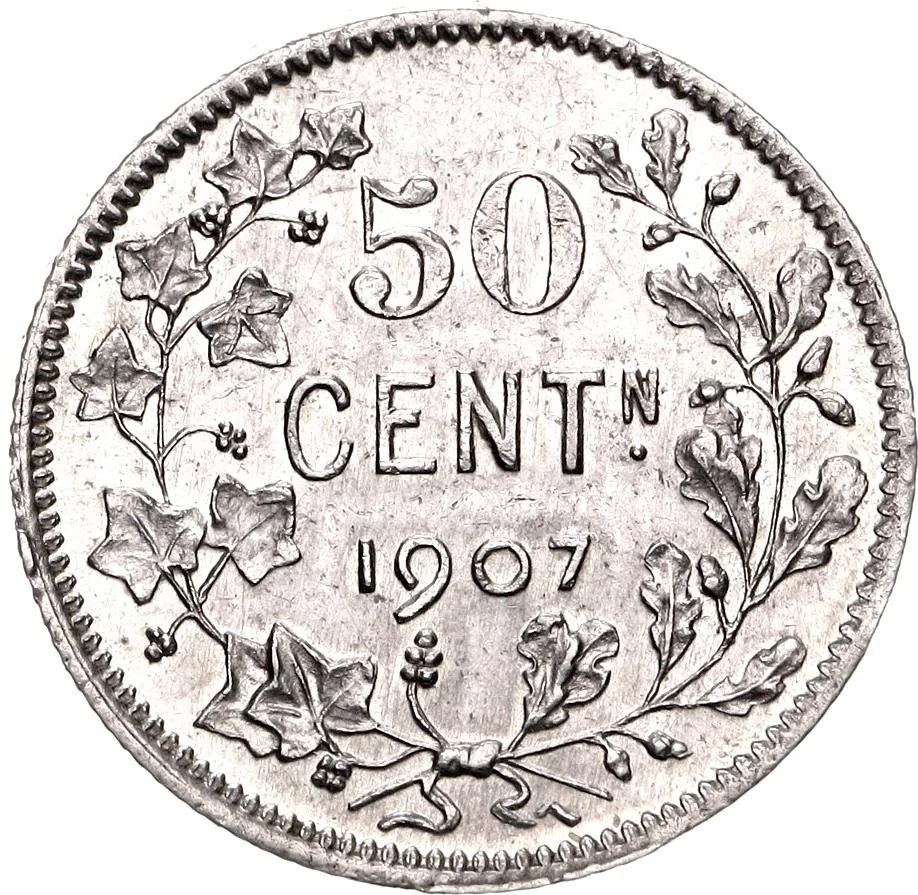
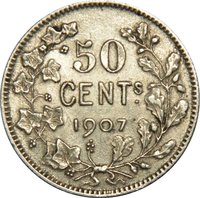
Value and date framed by ivy and oak.
Inscription:
50
CENTn
1909
CENTn
1909
Script: Latin
Engraver: Thomas Vinçotte
Edge
Reeded
Mints
| Name | Mark |
|---|---|
| Royal Mint of Belgium | — |
Mintings
| Year | Mint Mark | Mintage | Quality | Collection |
|---|---|---|---|---|
| 1907 | — | 545,000 | ||
| 1909 | — | 2,510,000 |
Historical background
In 1907, Belgium operated under a well-established gold standard, having officially adopted it in 1873. The national currency was the Belgian franc, which was legally defined as a fixed quantity of fine gold and was fully convertible. This placed Belgium within the core of the Latin Monetary Union (LMU), a treaty established in 1865 with France, Italy, Switzerland, and later Greece, which aimed to create a uniform currency area by standardizing gold and silver coin specifications. While each nation retained its own currency, the coins circulated freely across borders, facilitating trade and financial stability within the bloc.
However, the system faced underlying strains by 1907. The LMU's bimetallic origins had become practically a gold standard, but the treaty obligated member states to accept each other's silver coins, which created vulnerability. A major concern was the influx of lower-value silver coins from other member states, particularly Italy, which had issued them in excess. This led to a situation where Belgian creditors were legally obliged to accept these often-overvalued silver coins at face value, causing practical inconveniences and fears of monetary inflation. While not yet a crisis, this "silver question" was a topic of ongoing diplomatic and economic discussion.
Domestically, the Belgian economy was strong and industrialized, and the gold-backed franc enjoyed full public confidence. The National Bank of Belgium, founded in 1850, effectively managed the currency and gold reserves. Therefore, the currency situation in 1907 was one of surface-level stability underpinned by the gold standard, but with growing institutional pressure from the flaws in the Latin Monetary Union agreement. These tensions would eventually contribute to the Union's de facto collapse with the outbreak of World War I.
However, the system faced underlying strains by 1907. The LMU's bimetallic origins had become practically a gold standard, but the treaty obligated member states to accept each other's silver coins, which created vulnerability. A major concern was the influx of lower-value silver coins from other member states, particularly Italy, which had issued them in excess. This led to a situation where Belgian creditors were legally obliged to accept these often-overvalued silver coins at face value, causing practical inconveniences and fears of monetary inflation. While not yet a crisis, this "silver question" was a topic of ongoing diplomatic and economic discussion.
Domestically, the Belgian economy was strong and industrialized, and the gold-backed franc enjoyed full public confidence. The National Bank of Belgium, founded in 1850, effectively managed the currency and gold reserves. Therefore, the currency situation in 1907 was one of surface-level stability underpinned by the gold standard, but with growing institutional pressure from the flaws in the Latin Monetary Union agreement. These tensions would eventually contribute to the Union's de facto collapse with the outbreak of World War I.
🌱 Common