

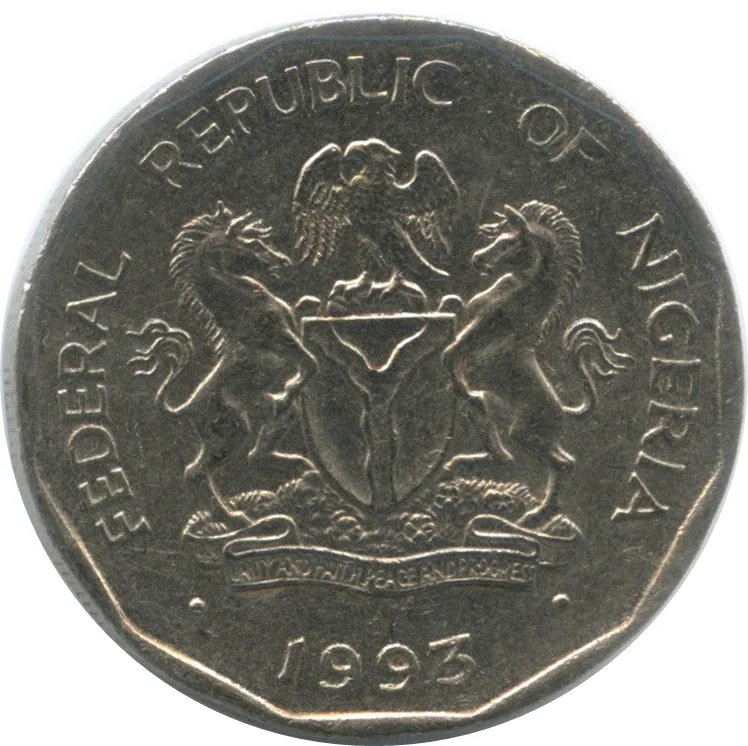
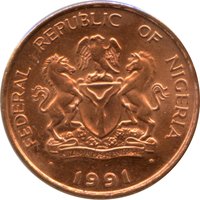
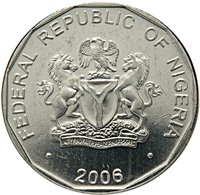
Obverse
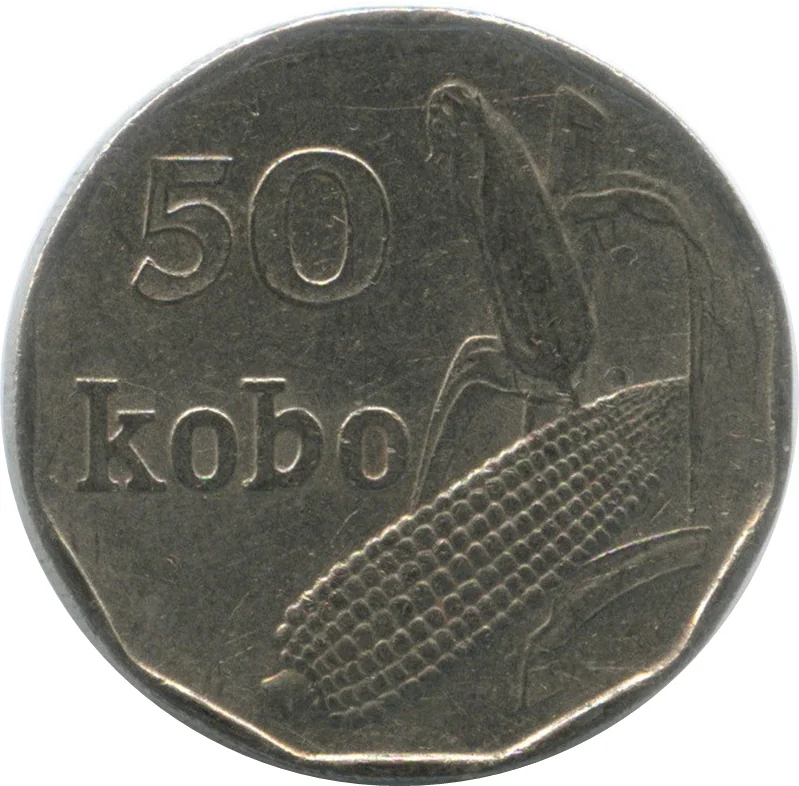
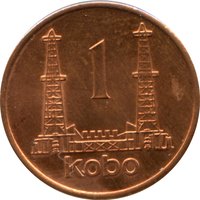
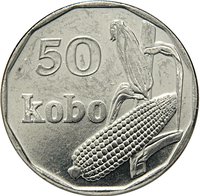
Reverse
Edge
Reeded and plain alternating
Categories
| Symbols> Coat of Arms |
Mintings
| Year | Mint Mark | Mintage | Quality | Collection |
|---|---|---|---|---|
| 1993 | — | — |
Historical background
In 1993, Nigeria's currency situation was dominated by the political and economic crisis following the annulment of the June 12 presidential election, widely believed to have been won by Moshood Abiola. This constitutional rupture triggered international condemnation and led to severe economic sanctions, which drastically reduced foreign investment and crippled the country's access to foreign exchange. Consequently, the value of the Nigerian Naira plummeted on the parallel market, creating a vast and damaging gap between the official fixed exchange rate and the black-market rate, which fueled inflation, scarcity of imported goods, and widespread economic uncertainty.
The structural heart of the currency crisis was the government's rigid adherence to a fixed exchange rate regime through the Central Bank of Nigeria (CBN), which pegged the Naira at an artificially high value. This overvaluation, combined with dwindling foreign reserves due to falling oil prices and mismanagement, made the official rate unsustainable. The result was a severe foreign exchange shortage, where legitimate businesses could not access dollars through official channels, forcing them to turn to the thriving parallel market (known as the "black market"), where the Naira traded for significantly less. This dual system bred corruption, rent-seeking, and a collapse in productive economic activity.
By the end of 1993, under the interim government of Ernest Shonekan and then the military regime of General Sani Abacha, stopgap measures failed to address the core issues. The economic dislocation eroded public confidence in the currency and the financial system. The period solidified the chronic problems of currency overvaluation, forex scarcity, and a powerful parallel market—a toxic triad that would define Nigeria's foreign exchange challenges for decades to come, with the roots of this persistent crisis deeply embedded in the political shocks of 1993.
The structural heart of the currency crisis was the government's rigid adherence to a fixed exchange rate regime through the Central Bank of Nigeria (CBN), which pegged the Naira at an artificially high value. This overvaluation, combined with dwindling foreign reserves due to falling oil prices and mismanagement, made the official rate unsustainable. The result was a severe foreign exchange shortage, where legitimate businesses could not access dollars through official channels, forcing them to turn to the thriving parallel market (known as the "black market"), where the Naira traded for significantly less. This dual system bred corruption, rent-seeking, and a collapse in productive economic activity.
By the end of 1993, under the interim government of Ernest Shonekan and then the military regime of General Sani Abacha, stopgap measures failed to address the core issues. The economic dislocation eroded public confidence in the currency and the financial system. The period solidified the chronic problems of currency overvaluation, forex scarcity, and a powerful parallel market—a toxic triad that would define Nigeria's foreign exchange challenges for decades to come, with the roots of this persistent crisis deeply embedded in the political shocks of 1993.
🌱 Fairly Common