

100 lire – Italy
Add to wishlist
Italy
Context
Years: 1931–1933
Issuer: Italy
Ruler: Vittorio Emanuele III
Currency:
(1861—2001)
Demonetized: Yes
Total mintage: 38,470
Material
References
KM: #
Numista: #21256
Value
Exchange value: 100 ITL
Bullion value: $1219.19
Obverse
Description:
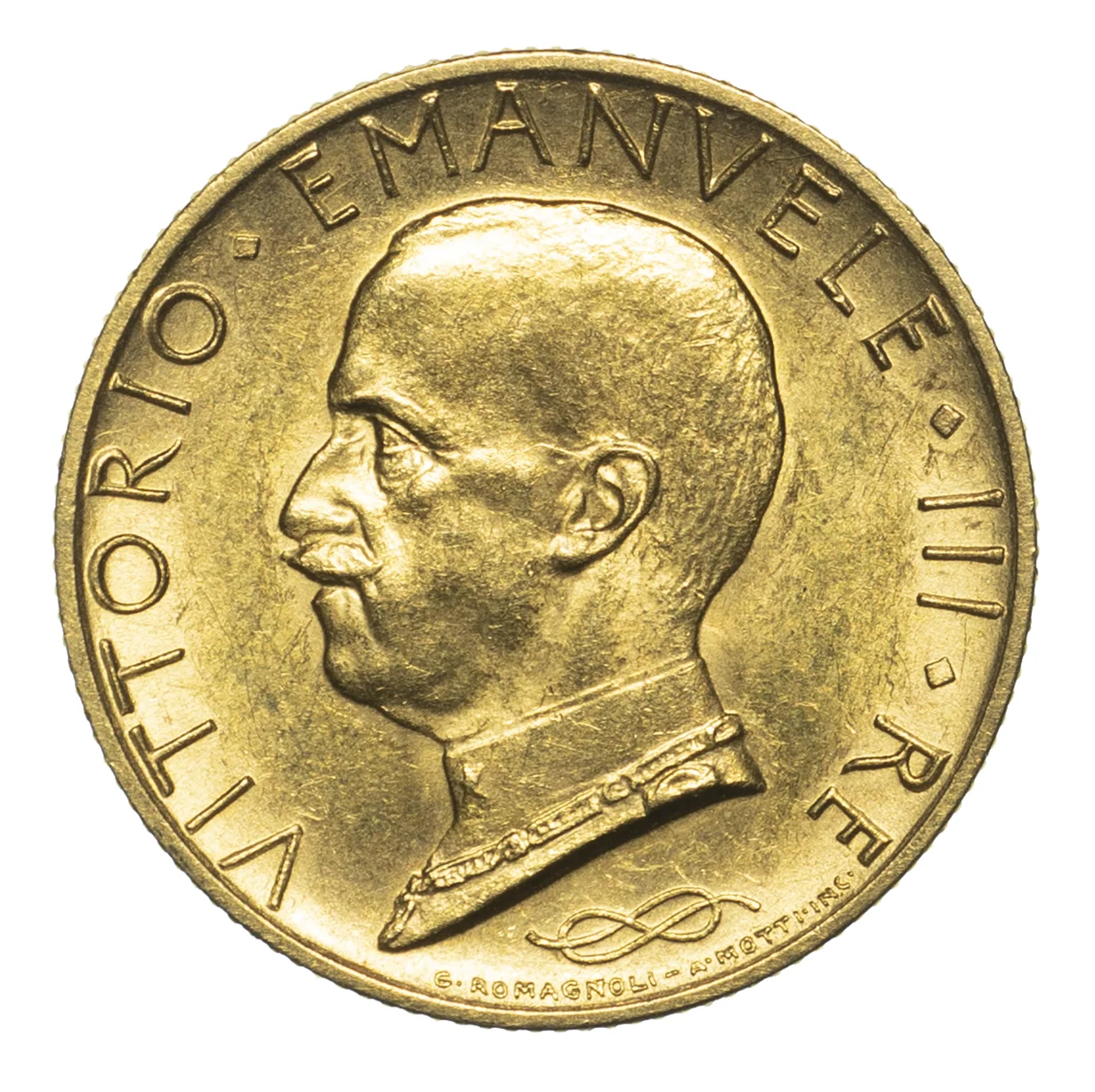
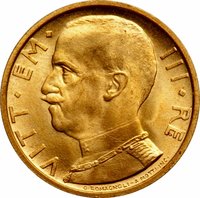
Bust of King Vittorio Emanuele III facing left, above the Savoy Knot and the names Romagnoli (author) and Motti (engraver).
Inscription:
VITTORIO EMANUELE III RE
G. ROMAGNOLI A. MOTTI INC.
G. ROMAGNOLI A. MOTTI INC.
Script: Latin
Engraver: Giuseppe Romagnoli
Reverse
Description:
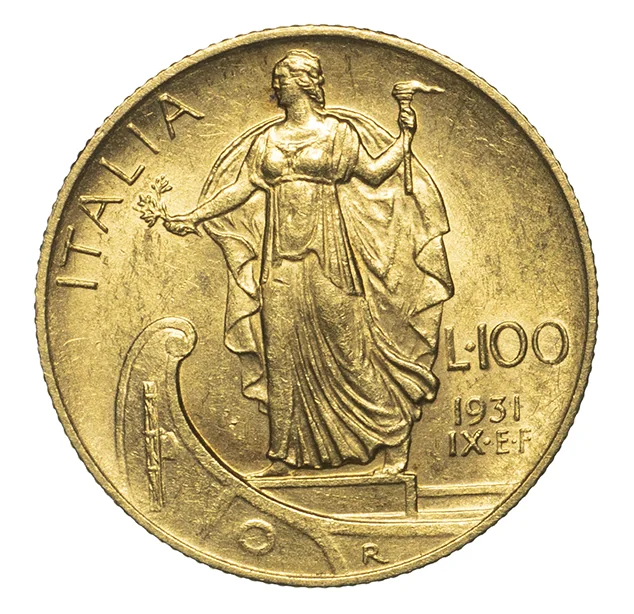
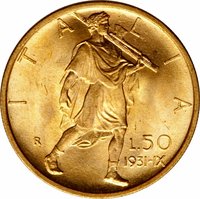
Italy as a woman, holding a torch and an olive branch, standing on a ship's bow adorned with fasces. The right side shows the value, date, and Fascist era year.
Inscription:
ITALIA
L·100
1931
IX·E·F
R
L·100
1931
IX·E·F
R
Script: Latin
Engraver: Giuseppe Romagnoli
Edge
Reeded
Mints
| Name | Mark |
|---|---|
| Rome | R |
Historical background
In 1931, Italy’s currency situation was defined by its struggle within the global Great Depression and the fascist regime's political imperative to defend the lira at all costs. Benito Mussolini had staked his personal prestige on the 1926 "Quota 90" policy, which pegged the lira at an artificially high 90 to the British pound. This overvaluation was a symbol of national strength, but it severely damaged Italian exports by making them more expensive abroad, exacerbating a growing trade deficit and straining the country's gold and foreign currency reserves.
The international financial crisis of 1931, triggered by the collapse of the Austrian Creditanstalt bank, placed immense pressure on Italy's banking system. Capital flight intensified as investors lost confidence, draining Italy's reserves and threatening the lira's fixed parity. To avert a devaluation—which Mussolini viewed as a political humiliation—the regime enacted severe deflationary measures, including drastic cuts to wages and public spending. This "internal devaluation" transferred the crisis to the Italian populace, deepening unemployment and reducing domestic consumption.
Ultimately, the government resorted to direct control to protect the currency. In 1931, it established the Istituto Mobiliare Italiano (IMI) to provide long-term credit to struggling industries and banks, effectively socializing private losses. More crucially, in 1933, it would create the Istituto per la Ricostruzione Industriale (IRI), which took ownership of major failing banks and industries, marking a permanent shift toward a state-controlled economy. Thus, while the lira's official exchange rate was technically maintained, it was achieved only through authoritarian economic intervention, a weakened private sector, and significant hardship for ordinary Italians.
The international financial crisis of 1931, triggered by the collapse of the Austrian Creditanstalt bank, placed immense pressure on Italy's banking system. Capital flight intensified as investors lost confidence, draining Italy's reserves and threatening the lira's fixed parity. To avert a devaluation—which Mussolini viewed as a political humiliation—the regime enacted severe deflationary measures, including drastic cuts to wages and public spending. This "internal devaluation" transferred the crisis to the Italian populace, deepening unemployment and reducing domestic consumption.
Ultimately, the government resorted to direct control to protect the currency. In 1931, it established the Istituto Mobiliare Italiano (IMI) to provide long-term credit to struggling industries and banks, effectively socializing private losses. More crucially, in 1933, it would create the Istituto per la Ricostruzione Industriale (IRI), which took ownership of major failing banks and industries, marking a permanent shift toward a state-controlled economy. Thus, while the lira's official exchange rate was technically maintained, it was achieved only through authoritarian economic intervention, a weakened private sector, and significant hardship for ordinary Italians.
💎 Very Rare