

Iran
Context

Material
References
Numista: #212234
Value
Bullion value: $14.17
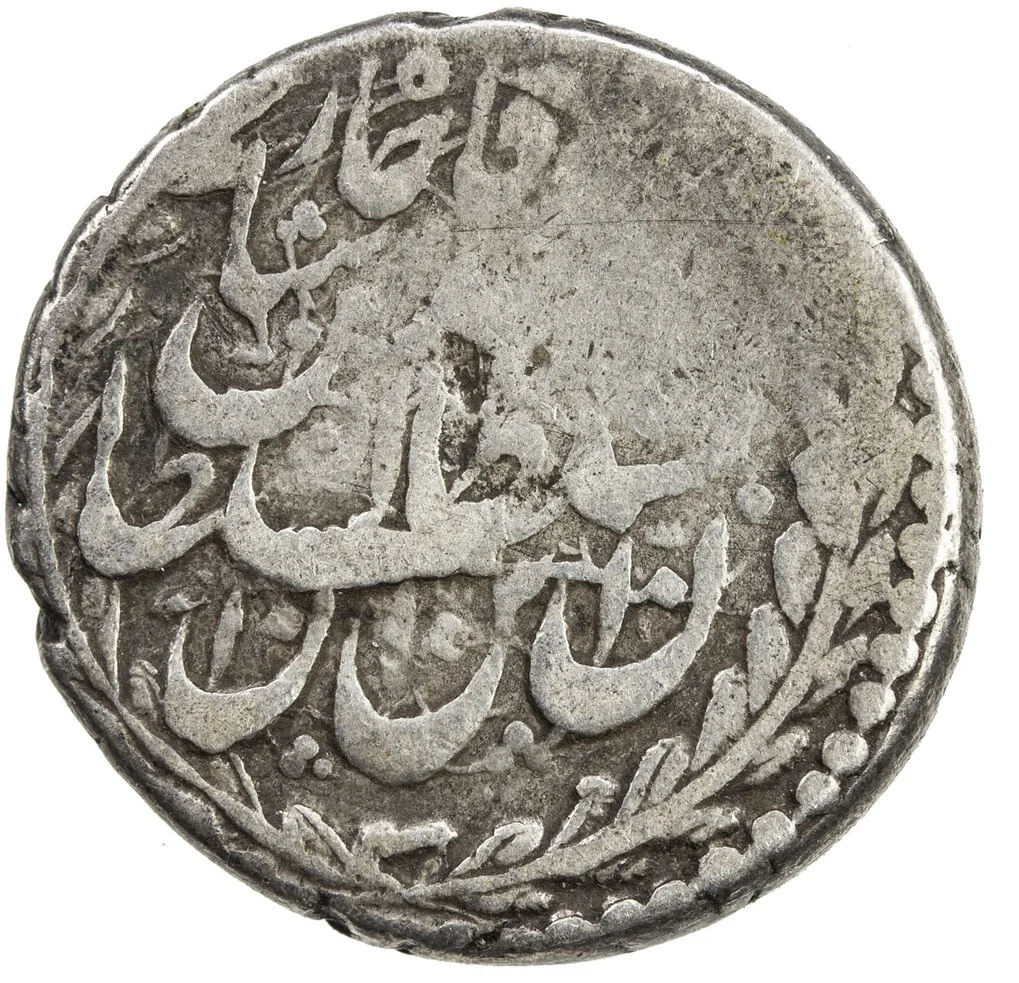
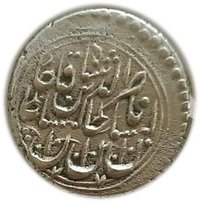
Obverse
Inscription:
السلطان ابن السلطان
ناصرالدین شاه قاجار
ناصرالدین شاه قاجار
Translation:
The Sultan, Son of the Sultan
Nasir al-Din Shah Qajar
Nasir al-Din Shah Qajar
Language: Arabic
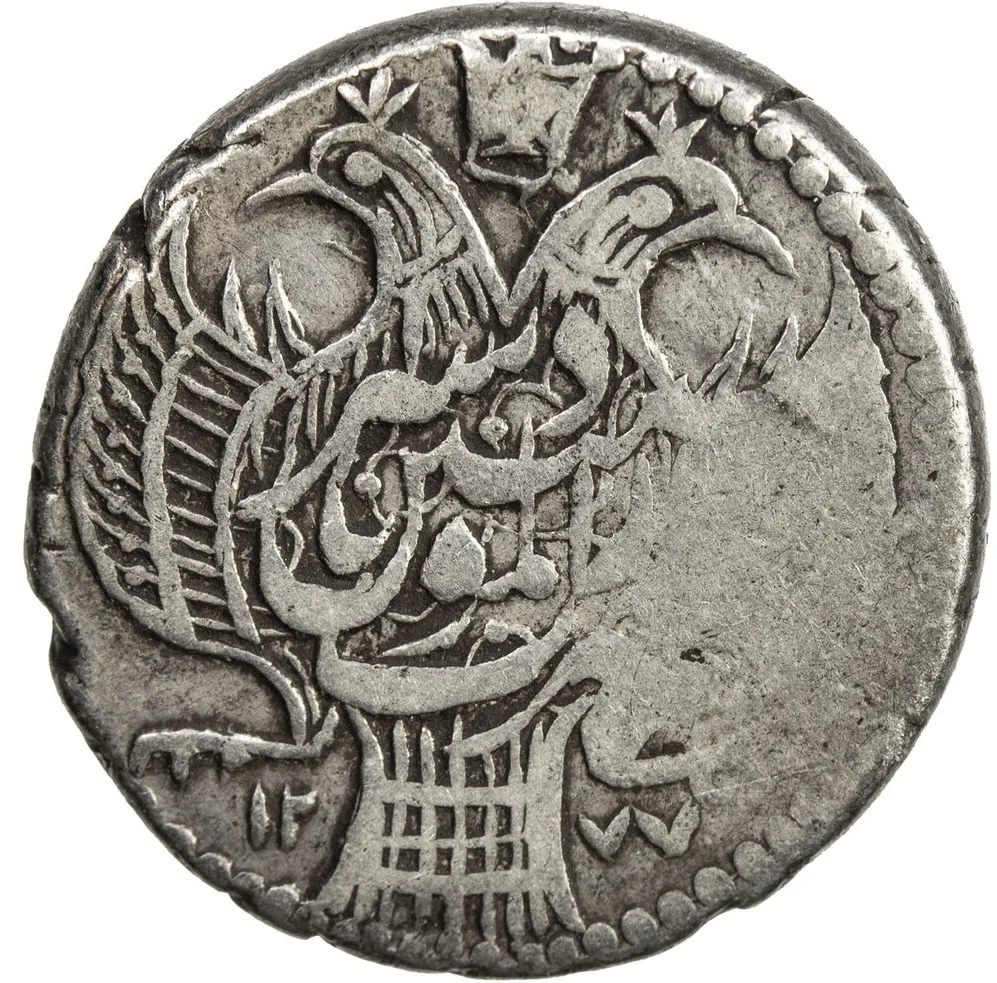
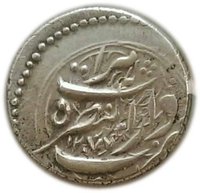
Reverse
Description:
Special issue, double-headed spread pigeon with mint name on breast.
Inscription:
ضرب دارالمومنـــین استراباد
۱۲۷۷
۱۲۷۷
Translation:
Struck in Dar al-Mu'minin Astarabad 1277 [AH]
Language: Persian
Edge
Plain
Mints
| Name | Mark |
|---|---|
| Astarabad | — |
Mintings
| Year | Mint Mark | Mintage | Quality | Collection |
|---|---|---|---|---|
| 1861 | — | — | ||
| 1862 | — | — |
Historical background
In 1861, Iran’s currency system was in a state of profound disarray, a legacy of the Qajar dynasty’s weak central control and chronic fiscal deficits. The monetary landscape was a complex and fragmented patchwork of domestic and foreign coins. The primary unit was the silver qiran (also spelled kran), but its value and silver content were unstable. Alongside it circulated copper shahis and dinars for small transactions, and gold tomans (a unit of account worth 10 qirans). Crucially, there was no standardized national coinage; mints in major cities like Tehran, Tabriz, and Isfahan produced coins of varying weight and purity, leading to widespread confusion and regional valuation differences.
This instability was severely exacerbated by the massive influx of depreciated foreign currencies, particularly Russian copper coins from the Caucasus and British Indian rupees. These foreign coins, often of inferior intrinsic value, flooded Iranian markets due to trade imbalances and were legally recognized for payments, further driving sound Iranian silver money out of circulation (Gresham’s Law). The government, frequently nearing bankruptcy, resorted to debasement—reducing the silver content in newly minted qirans to generate short-term revenue. This practice destroyed public trust in the currency, fueled inflation in bazaars, and created a chaotic exchange environment where daily exchange rates fluctuated wildly.
The currency crisis of 1861 was both a symptom and a cause of Iran’s deepening integration into the global economy and its subsequent vulnerability. European powers, especially Russia and Britain, exerted significant economic and political influence, and their currencies’ circulation physically manifested this dominance. The inability to reform the monetary system highlighted the Qajar state’s administrative weakness and its failure to centralize economic policy. This persistent financial chaos stifled domestic trade, complicated taxation, and eroded state legitimacy, setting the stage for later, though still unsuccessful, reform attempts in the late 19th century.
This instability was severely exacerbated by the massive influx of depreciated foreign currencies, particularly Russian copper coins from the Caucasus and British Indian rupees. These foreign coins, often of inferior intrinsic value, flooded Iranian markets due to trade imbalances and were legally recognized for payments, further driving sound Iranian silver money out of circulation (Gresham’s Law). The government, frequently nearing bankruptcy, resorted to debasement—reducing the silver content in newly minted qirans to generate short-term revenue. This practice destroyed public trust in the currency, fueled inflation in bazaars, and created a chaotic exchange environment where daily exchange rates fluctuated wildly.
The currency crisis of 1861 was both a symptom and a cause of Iran’s deepening integration into the global economy and its subsequent vulnerability. European powers, especially Russia and Britain, exerted significant economic and political influence, and their currencies’ circulation physically manifested this dominance. The inability to reform the monetary system highlighted the Qajar state’s administrative weakness and its failure to centralize economic policy. This persistent financial chaos stifled domestic trade, complicated taxation, and eroded state legitimacy, setting the stage for later, though still unsuccessful, reform attempts in the late 19th century.
✨ Legendary