

1000 rials – Iran
Add to wishlist
Circulating commemorative coins
Commemoration: World Statistics Day
Iran
Context
Material
Diameter: 23.6 mm
Weight: 5.75 g
Thickness: 1.93 mm
Shape: Round
Composition: Aluminium bronze
Magnetic: No
Technique: Milled
Alignment: Coin alignment
flip
References
KM: #
Numista: #21214
Value
Exchange value: 1000 IRR
Obverse
Description:
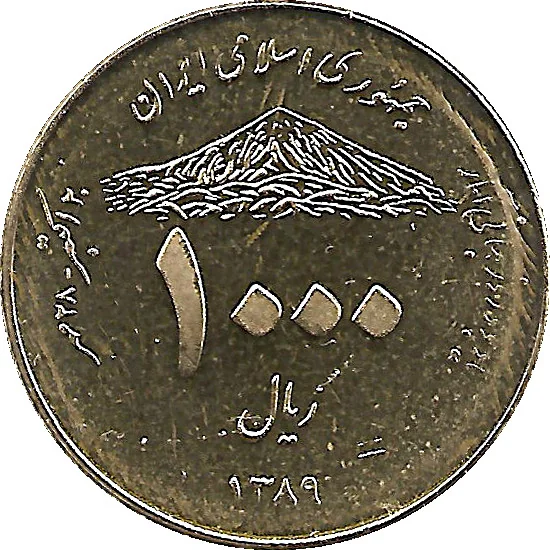
Denomination and symbol in center, with "Islamic Republic of Iran" and Mount Damavand above, mint year below. "Commemoration of World Statistics Day" on right edge, "20 October - 28 Mehr" on left.
Inscription:
جُمهوری اسلامی ایران
یادبود روز جهانی آمار
۲۰ اکتبر- ۲۸ مهر
۱۰۰۰
ریال
۱۳۸۹
یادبود روز جهانی آمار
۲۰ اکتبر- ۲۸ مهر
۱۰۰۰
ریال
۱۳۸۹
Translation:
Islamic Republic of Iran
Commemoration of World Statistics Day
20 October - 28 Mehr
1000
Rials
1389
Commemoration of World Statistics Day
20 October - 28 Mehr
1000
Rials
1389
Language: Persian
Reverse
Description:
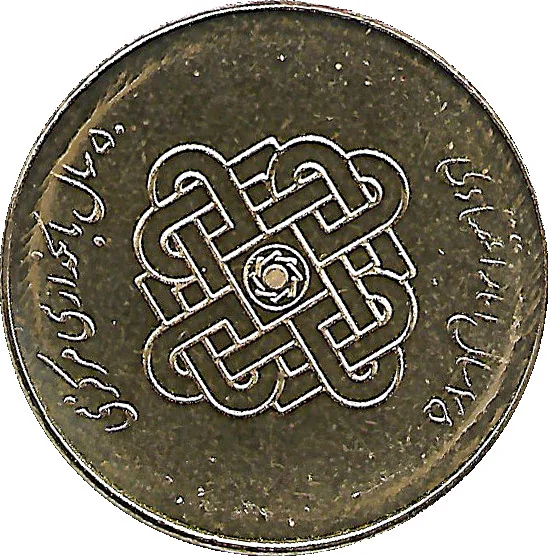
Central Bank of Iran's 50th Anniversary symbol in center, "75 Years of Economic Statistics" on right, "50 Years of Central Banking" on left.
Inscription:
٧۵سال آمار اقتصادی
۵۰ سال بانکداری مرکزی
۵۰ سال بانکداری مرکزی
Translation:
75 Years of Economic Statistics
50 Years of Central Banking
50 Years of Central Banking
Language: Persian
Edge
Reeded
Mintings
| Year | Mint Mark | Mintage | Quality | Collection |
|---|---|---|---|---|
| 2010 | — | — |
Historical background
In 2010, Iran's currency situation was defined by the severe and compounding pressures of international sanctions and profound domestic economic mismanagement. The most significant external factor was the tightening of multilateral sanctions, particularly those imposed by the United Nations and unilaterally by the United States and the European Union, which targeted Iran's crucial energy and financial sectors. These measures restricted Iran's ability to sell oil, access the global banking system (SWIFT), and engage in international trade, leading to a critical shortage of foreign currency reserves. Internally, populist fiscal policies, including massive subsidies on fuel and food, drained government coffers and distorted the economy, while President Mahmoud Ahmadinejad's administration printed money to cover deficits, fueling inflation.
The primary manifestation of this crisis was a sharp and sustained devaluation of the Iranian rial (IRR) on the unofficial market, alongside a widening gap with the government's official, overvalued exchange rate. The Central Bank of Iran maintained an official rate (around 10,000 IRR per USD) for imports of essential goods, but the vast majority of transactions occurred in the open market, where the rial's value was far weaker and increasingly volatile. This dual-rate system created a lucrative opportunity for corruption, as those with political connections could access cheap dollars at the official rate and sell them at the market rate for enormous profit. For ordinary Iranians and businesses, however, accessing foreign currency became difficult and expensive, driving up the cost of all imported goods and materials.
Consequently, the economy suffered from rampant inflation, officially reported at around 10% but widely believed by economists and citizens to be significantly higher, likely exceeding 20%. The erosion of purchasing power led to widespread public discontent and a growing sense of economic insecurity. The government's response in late 2010 was the announcement of a controversial subsidy reform plan, aimed at phasing out expensive price controls and providing direct cash payments to households. While intended as a necessary structural adjustment, it risked triggering further short-term inflation. Thus, by the end of 2010, Iran's currency woes had set the stage for deeper economic turmoil in the years to follow, as sanctions intensified and structural weaknesses remained unaddressed.
The primary manifestation of this crisis was a sharp and sustained devaluation of the Iranian rial (IRR) on the unofficial market, alongside a widening gap with the government's official, overvalued exchange rate. The Central Bank of Iran maintained an official rate (around 10,000 IRR per USD) for imports of essential goods, but the vast majority of transactions occurred in the open market, where the rial's value was far weaker and increasingly volatile. This dual-rate system created a lucrative opportunity for corruption, as those with political connections could access cheap dollars at the official rate and sell them at the market rate for enormous profit. For ordinary Iranians and businesses, however, accessing foreign currency became difficult and expensive, driving up the cost of all imported goods and materials.
Consequently, the economy suffered from rampant inflation, officially reported at around 10% but widely believed by economists and citizens to be significantly higher, likely exceeding 20%. The erosion of purchasing power led to widespread public discontent and a growing sense of economic insecurity. The government's response in late 2010 was the announcement of a controversial subsidy reform plan, aimed at phasing out expensive price controls and providing direct cash payments to households. While intended as a necessary structural adjustment, it risked triggering further short-term inflation. Thus, by the end of 2010, Iran's currency woes had set the stage for deeper economic turmoil in the years to follow, as sanctions intensified and structural weaknesses remained unaddressed.
🌟 Uncommon