

½ Heller – German East Africa
Tanzania
Context
Years: 1904–1906
Country: Tanzania 
Issuer: German East Africa
Ruler: William II
Currency:
(1904—1916)
Demonetized: Yes
Total mintage: 18,393,410
Material
References
KM: #Click to copy to clipboard6
Numista: #21155
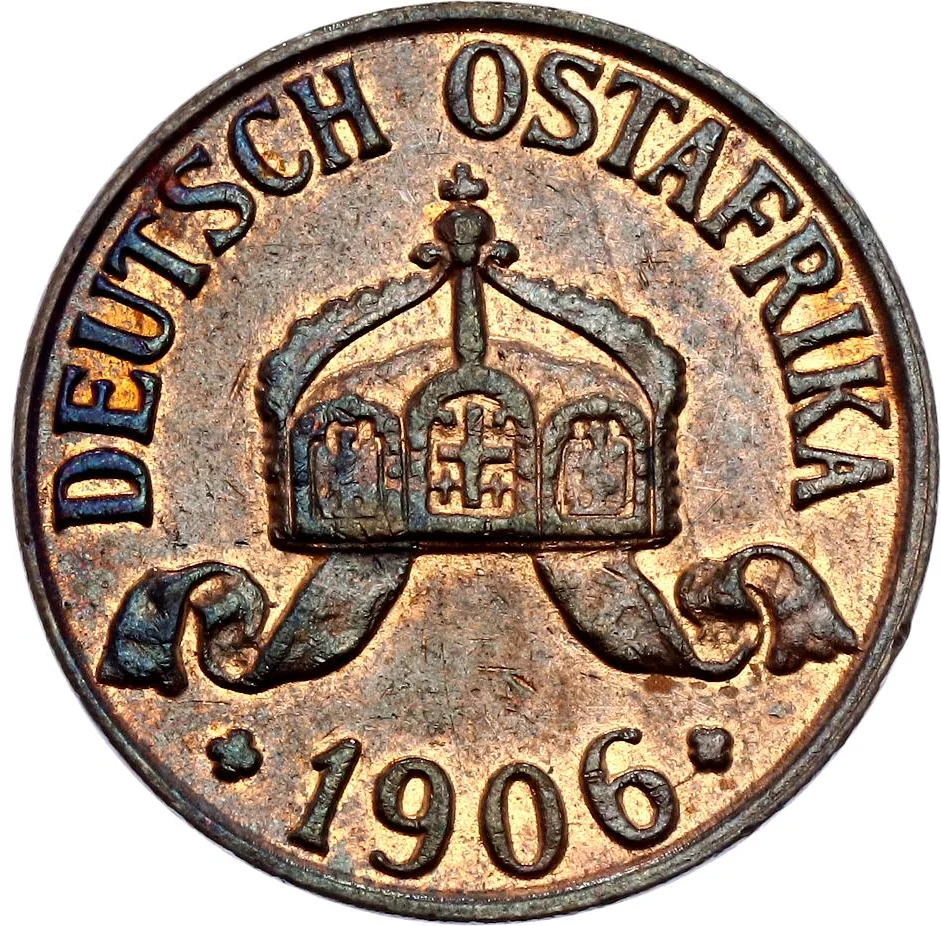
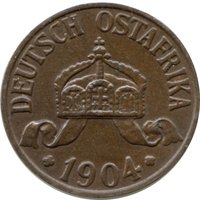
Obverse
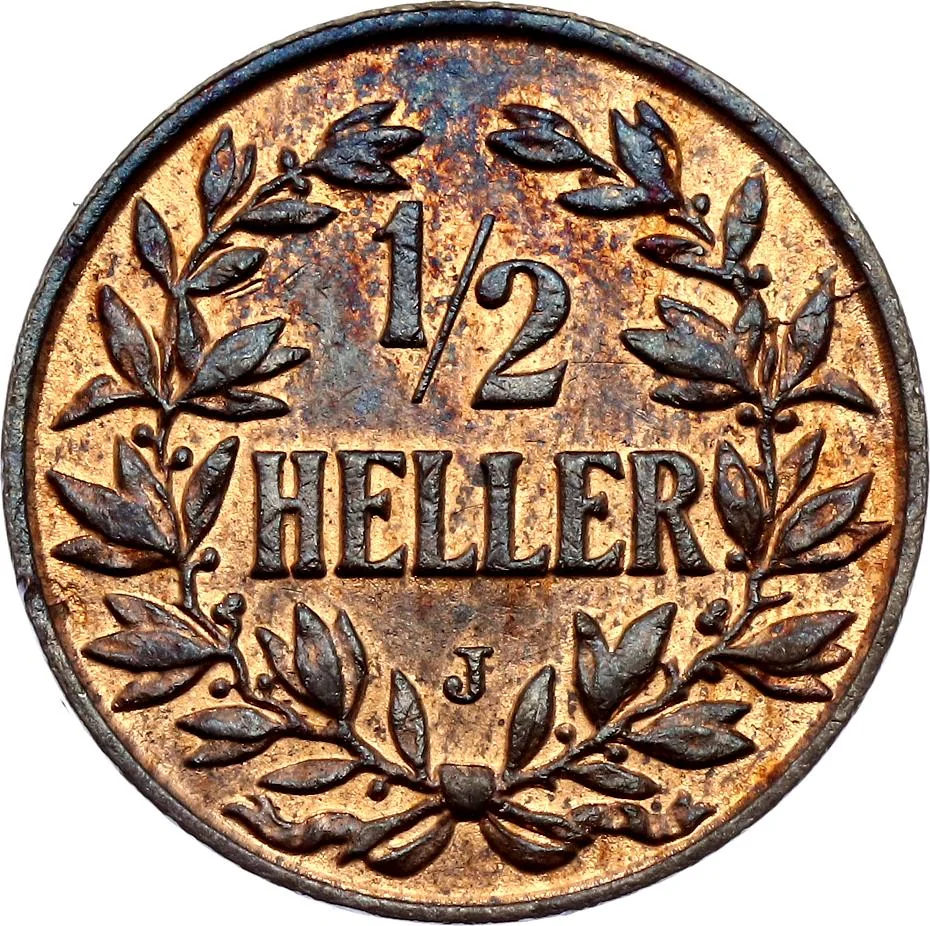
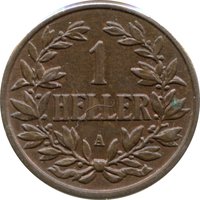
Reverse
Edge
Plain
Mints
| Name | Mark |
|---|---|
| Berlin | A |
| Hamburgische Münze | J |
Mintings
Historical background
In 1904, the currency situation in German East Africa was characterized by a complex and often chaotic dual system of official and indigenous money. The official currency, as decreed by the colonial government, was the German Mark, introduced to facilitate administration, tax collection, and trade with the metropole. However, the reach of this coinage was limited primarily to coastal urban centers, government stations, and European enterprises, failing to penetrate the vast interior where traditional economies persisted.
Alongside the Mark, the historic rupee currency of the Indian Ocean trade remained deeply entrenched, particularly along the coast and caravan routes. More significantly, across the inland regions, pre-colonial forms of money continued as the primary media of exchange. The most important of these was the Heller or Hila (mitadi), strands of coiled brass or copper wire, often measured by length. Cloth bolts, especially the ubiquitous merikani (unbleached cotton), and cowrie shells also served as key commodity currencies, their values fluctuating based on supply, demand, and local custom.
This monetary fragmentation posed significant challenges for the colonial administration. It hindered efficient taxation and economic integration, as officials constantly dealt with complex conversions. The situation also reflected the limited reach of colonial power in 1904, a year marked by the ongoing and devastating Maji Maji Rebellion, which further disrupted economic life. The government's ultimate goal was to impose the Mark uniformly, but in 1904, the reality was a contested monetary landscape where imported coinage coexisted uneasily with centuries-old indigenous systems of value.
Alongside the Mark, the historic rupee currency of the Indian Ocean trade remained deeply entrenched, particularly along the coast and caravan routes. More significantly, across the inland regions, pre-colonial forms of money continued as the primary media of exchange. The most important of these was the Heller or Hila (mitadi), strands of coiled brass or copper wire, often measured by length. Cloth bolts, especially the ubiquitous merikani (unbleached cotton), and cowrie shells also served as key commodity currencies, their values fluctuating based on supply, demand, and local custom.
This monetary fragmentation posed significant challenges for the colonial administration. It hindered efficient taxation and economic integration, as officials constantly dealt with complex conversions. The situation also reflected the limited reach of colonial power in 1904, a year marked by the ongoing and devastating Maji Maji Rebellion, which further disrupted economic life. The government's ultimate goal was to impose the Mark uniformly, but in 1904, the reality was a contested monetary landscape where imported coinage coexisted uneasily with centuries-old indigenous systems of value.
🌱 Common