

5 Gulden – Netherlands Antilles
Non-circulating coins
Commemoration: Accession of Queen Beatrix
Netherlands
Context
Year: 1980
Country: Netherlands 
Issuer: Netherlands Antilles
Ruler: Beatrix
Currency:
(since 1828)
Demonetization: 31 March 2025
Total mintage: 16,000
Material
References
KM: #Click to copy to clipboard26
Numista: #210658
Value
Exchange value: 5 ANG
Bullion value: $504.20
Inflation-adjusted value: 14.81 ANG
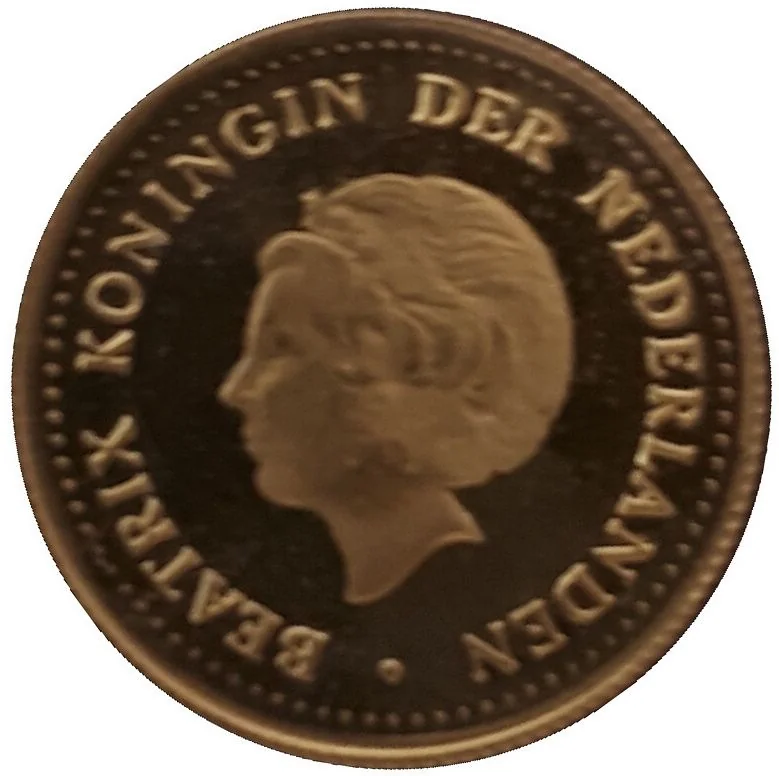
Obverse
Description:
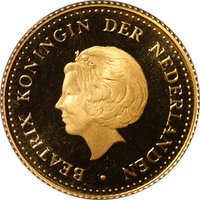
Queen Beatrix facing left
Inscription:
BEATRIX KONINGIN DER NEDERLANDEN •
Translation:
Beatrix Queen of the Netherlands •
Script: Latin
Language: Dutch
Engraver: Johan Christiaan Hekman
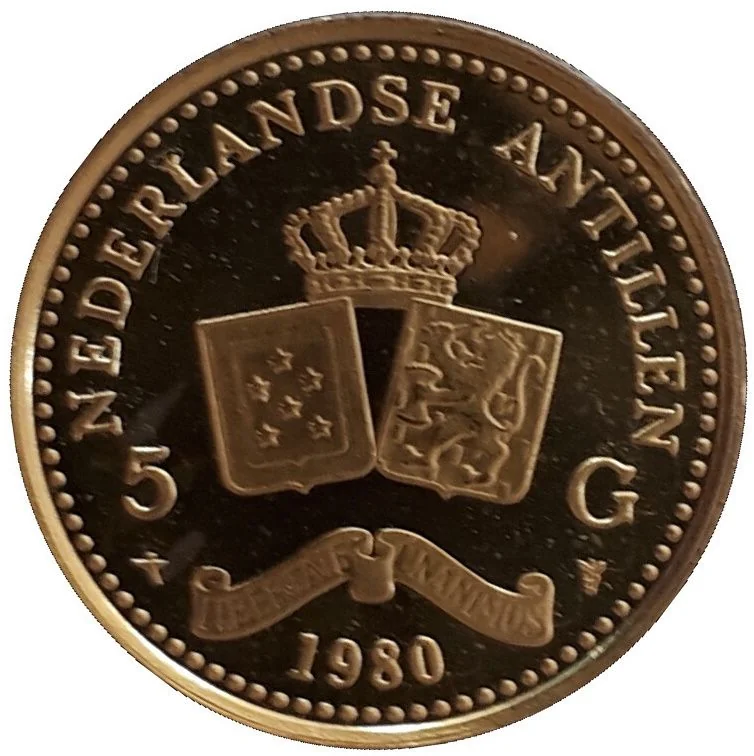
Reverse
Edge
Reeded
Categories
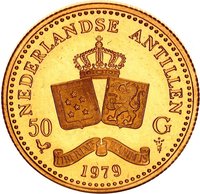
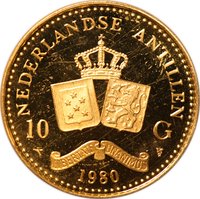
| Symbol> Crown |
| Symbols> Coat of Arms |
Mints
| Name | Mark |
|---|---|
| Royal Dutch Mint | — |
Mintings
| Year | Mint Mark | Mintage | Quality | Collection |
|---|---|---|---|---|
| 1980 | — | 16,000 |
Historical background
In 1980, the currency situation in the Netherlands Antilles was defined by the Antillean guilder (ANG), which had been pegged to the U.S. dollar at a fixed rate of 1.79 ANG = 1 USD since 1971. This peg was a cornerstone of monetary policy, managed by the central bank of the Netherlands Antilles (the Bank van de Nederlandse Antillen), and was designed to provide stability for the islands' open, tourism-dependent economy and its vital oil refining sector. The arrangement was supported by a legal requirement for commercial banks to hold significant foreign exchange reserves, ensuring confidence in the currency's convertibility.
However, this stability existed within a complex political framework. The Netherlands Antilles was an autonomous country within the Kingdom of the Netherlands, and its currency was technically a separate entity from the Dutch guilder used in the European Netherlands. A key feature was the "foreign exchange rationing" system, in place since the early 1970s, which controlled the outflow of capital to prevent destabilizing flights of money. This was necessary because, despite the dollar peg, the economy faced persistent challenges including trade deficits and public debt, which pressured the currency's fixed parity.
The year 1980 itself was not marked by a dramatic monetary crisis, but it fell within a period of growing economic strain that would intensify later in the decade. The islands' economy was adjusting to the global oil shocks of the 1970s, which impacted the profitability of the Curaçao oil refinery, a major employer and source of foreign income. Consequently, the currency regime, while outwardly stable, operated under a system of controls designed to shield fixed exchange rates from underlying fiscal and balance-of-payments pressures, setting the stage for future economic adjustments.
However, this stability existed within a complex political framework. The Netherlands Antilles was an autonomous country within the Kingdom of the Netherlands, and its currency was technically a separate entity from the Dutch guilder used in the European Netherlands. A key feature was the "foreign exchange rationing" system, in place since the early 1970s, which controlled the outflow of capital to prevent destabilizing flights of money. This was necessary because, despite the dollar peg, the economy faced persistent challenges including trade deficits and public debt, which pressured the currency's fixed parity.
The year 1980 itself was not marked by a dramatic monetary crisis, but it fell within a period of growing economic strain that would intensify later in the decade. The islands' economy was adjusting to the global oil shocks of the 1970s, which impacted the profitability of the Curaçao oil refinery, a major employer and source of foreign income. Consequently, the currency regime, while outwardly stable, operated under a system of controls designed to shield fixed exchange rates from underlying fiscal and balance-of-payments pressures, setting the stage for future economic adjustments.
✨ Legendary