

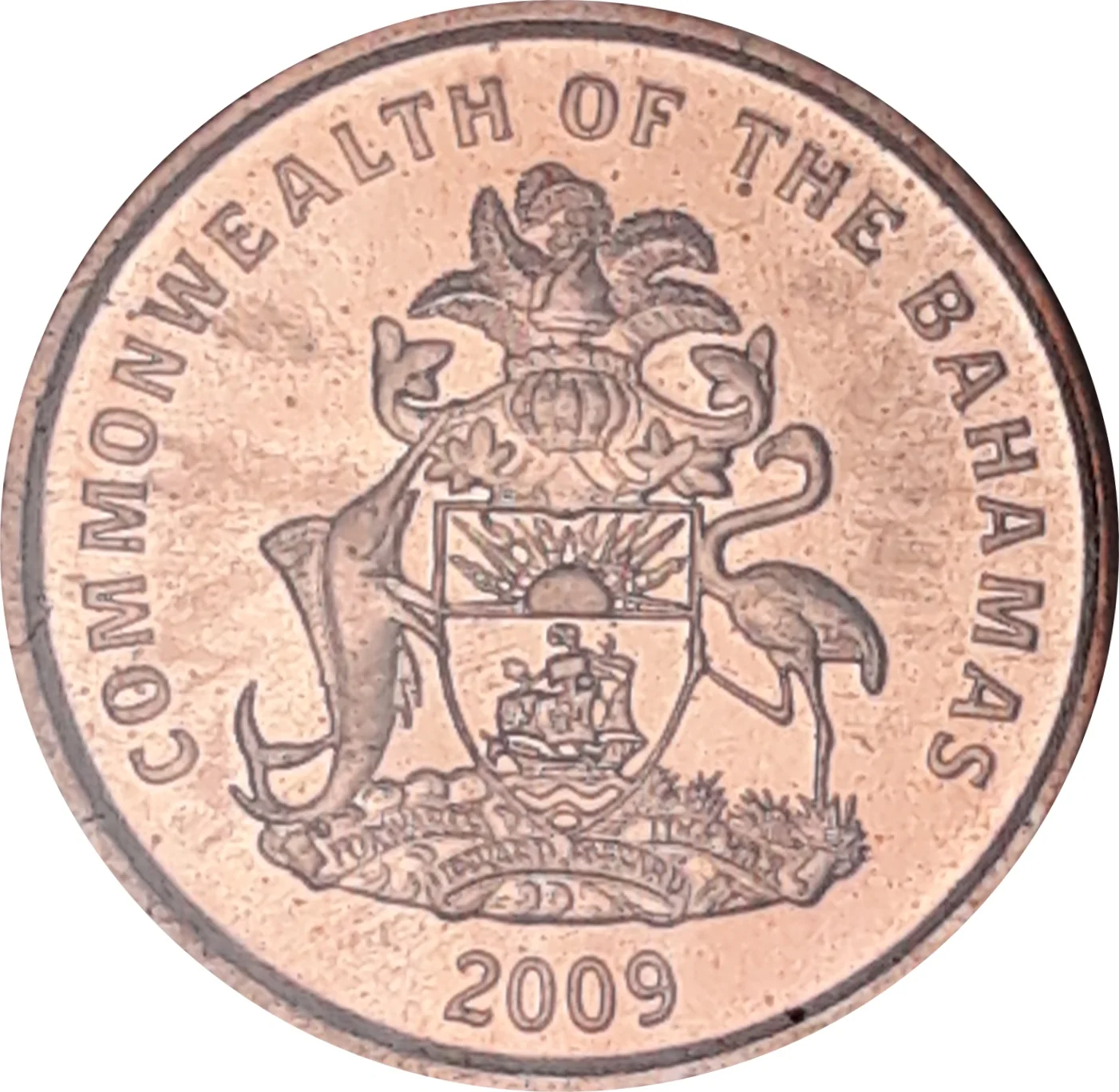
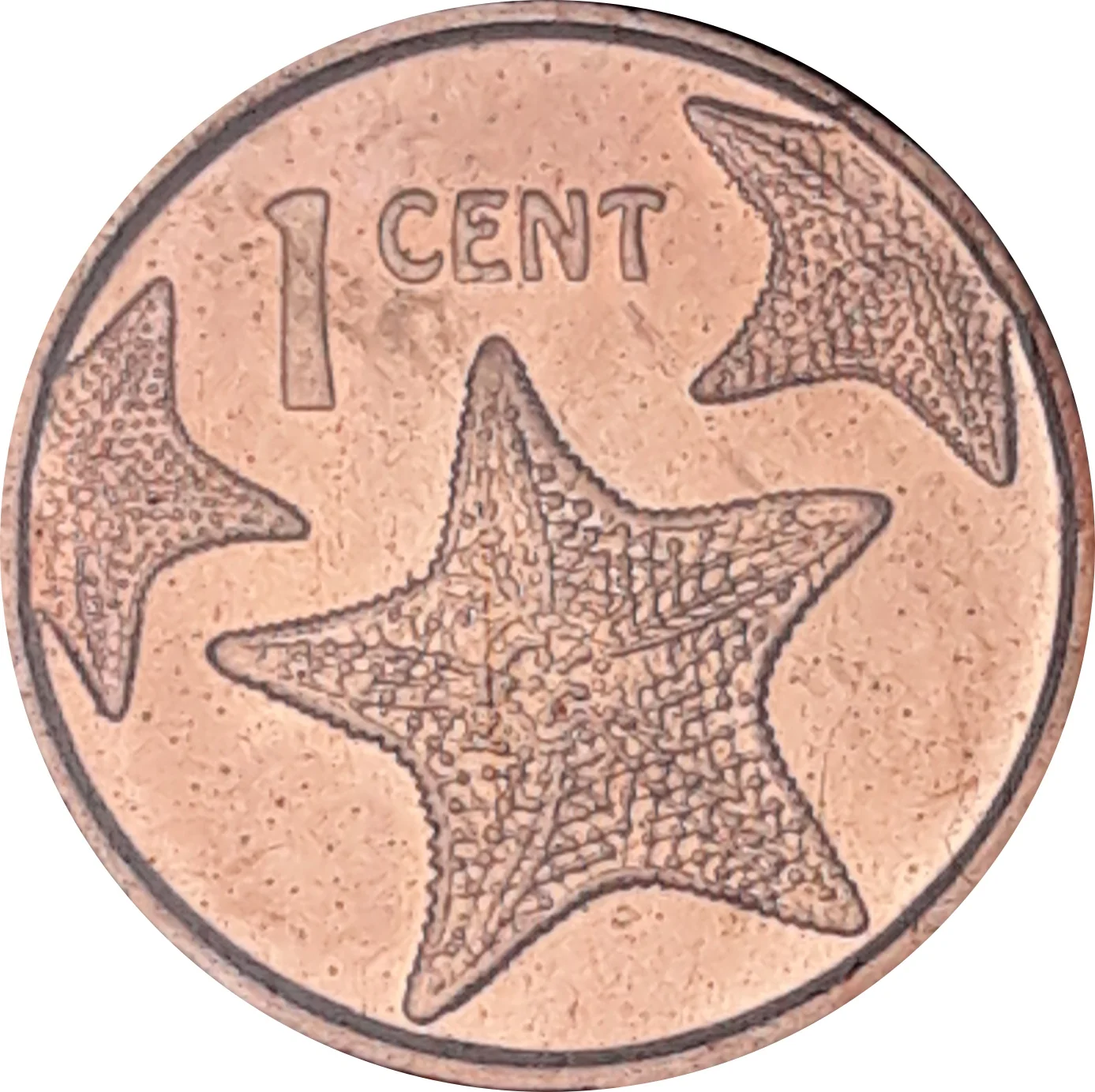
1 cent – The Bahamas
Add to wishlist
Bahamas
Context
Years: 2009–2015
Country: Bahamas
Issuer: The Bahamas
Ruler: Elizabeth II
Currency:
(since 1966)
Demonetization: 31 December 2020
Material
References
KM: #
Numista: #20937
Value
Exchange value: 0.01 BSD
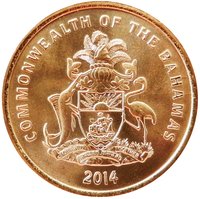
Obverse
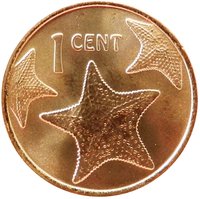
Reverse
Edge
Plain
Categories
| Animal> Bird |
| Animal> Marine invertebrate |
| Symbol> Shell |
| Animal> Fish |
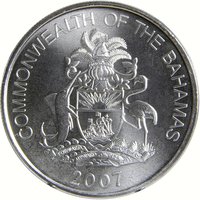
| Symbols> Coat of Arms |
Mints
| Name | Mark |
|---|---|
| Royal Canadian Mint of Winnipeg | — |
Mintings
| Year | Mint Mark | Mintage | Quality | Collection |
|---|---|---|---|---|
| 2009 | — | — | ||
| 2015 | — | — |
Historical background
In 2009, The Bahamas, like much of the world, was navigating the severe economic fallout of the global financial crisis. The nation's economy, heavily dependent on tourism and foreign direct investment, contracted sharply. Tourist arrivals and spending declined, while key projects like the Baha Mar mega-resort stalled, exacerbating unemployment and reducing government revenue. This economic stress placed significant pressure on the Bahamian dollar (BSD), which is pegged at a 1:1 parity with the U.S. dollar, a fixed exchange rate regime maintained by The Central Bank of The Bahamas since 1973.
Despite the economic downturn, the currency peg itself remained stable and was not in immediate danger of devaluation. The Central Bank's foreign reserves, while under pressure from reduced foreign currency inflows, were bolstered by strategic borrowing. Notably, the government secured a $100 million loan from the Inter-American Development Bank specifically to shore up reserves and maintain confidence in the peg. This action underscored the government's primary policy objective: defending the fixed exchange rate, which is seen as a critical anchor for price stability and economic confidence in an import-dependent nation.
Consequently, the dominant "currency situation" in 2009 was not a crisis of the peg's collapse, but one of managing its sustainability amid a deep recession. Policy discussions focused on the trade-offs involved, as maintaining the peg required strict fiscal discipline and limited the government's ability to use monetary policy for stimulus. The successful defense of the parity came at the cost of a prolonged economic slump and growing national debt, setting the stage for subsequent years of slow recovery and ongoing debates about economic diversification to reduce vulnerability to external shocks.
Despite the economic downturn, the currency peg itself remained stable and was not in immediate danger of devaluation. The Central Bank's foreign reserves, while under pressure from reduced foreign currency inflows, were bolstered by strategic borrowing. Notably, the government secured a $100 million loan from the Inter-American Development Bank specifically to shore up reserves and maintain confidence in the peg. This action underscored the government's primary policy objective: defending the fixed exchange rate, which is seen as a critical anchor for price stability and economic confidence in an import-dependent nation.
Consequently, the dominant "currency situation" in 2009 was not a crisis of the peg's collapse, but one of managing its sustainability amid a deep recession. Policy discussions focused on the trade-offs involved, as maintaining the peg required strict fiscal discipline and limited the government's ability to use monetary policy for stimulus. The successful defense of the parity came at the cost of a prolonged economic slump and growing national debt, setting the stage for subsequent years of slow recovery and ongoing debates about economic diversification to reduce vulnerability to external shocks.
🌱 Very Common