

2 euro (Giotto) – San Marino
Add to wishlist
Non-circulating coins
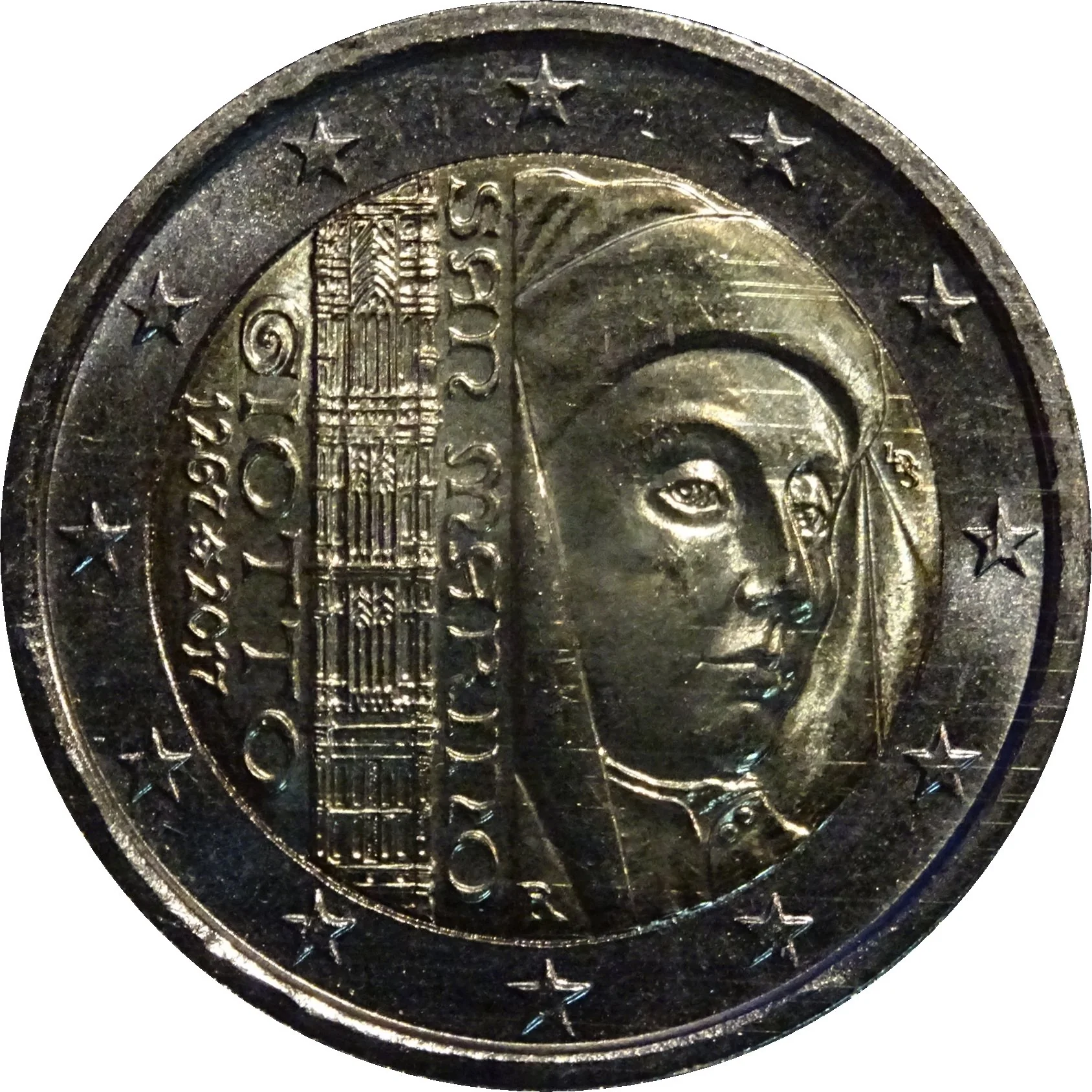
Commemoration: 750th Anniversary of the Birth of Giotto
San Marino
Context
Material
References
KM: #
Numista: #109247
Value
Exchange value: 2 EUR
Obverse
Description:
Left: Detail from Giotto's Florence clock tower. Center: Text "SAN MARINO, GIOTTO 1267-2017". Right: Detail from a Giotto portrait and artist initials "LDS". Bottom: Mint mark "R" for Rome. Outer ring: 12 EU stars.
Inscription:
1267*2017
GIOTTO
SAN MARINO
R
LDS
GIOTTO
SAN MARINO
R
LDS
Translation:
GIOTTO
SAN MARINO
750
SAN MARINO
750
Script: Latin
Language: Italian
Engraver: Luciana De Simoni
Reverse
Edge
Legend:
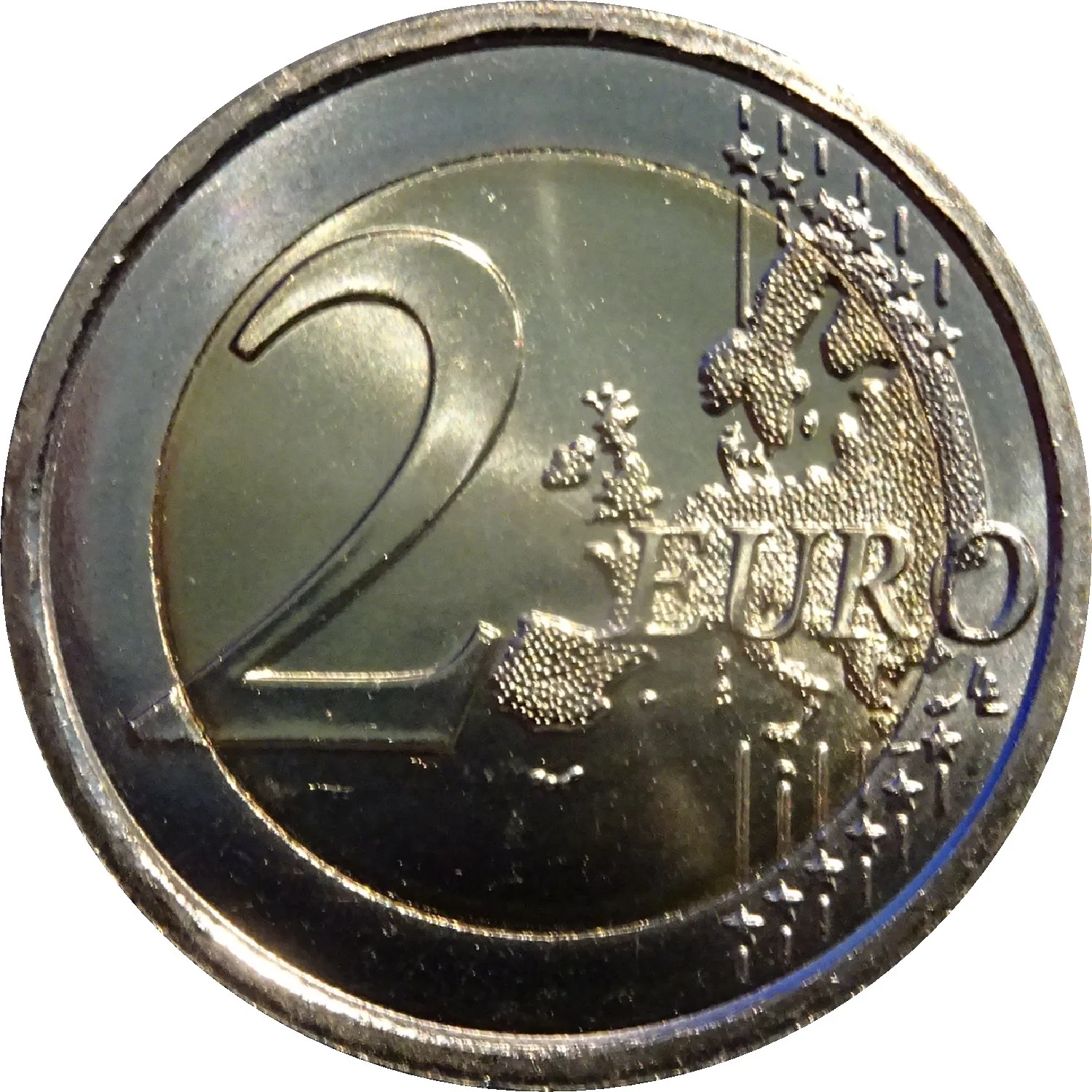
2 * 2 * 2 * 2 * 2 * 2 *
Mints
| Name | Mark |
|---|---|
| Rome | R |
Historical background
In 2017, San Marino's currency situation remained intrinsically tied to the Euro, despite not being a formal member of the European Union. Since a monetary agreement with the EU came into force in 2012, the euro had served as the country's official legal tender. This arrangement provided San Marino with the right to issue its own limited quantity of Sammarinese euro coins, which featured national designs and were legal tender throughout the eurozone. This provided a degree of monetary stability and facilitated seamless trade and financial transactions with its much larger neighbor, Italy, and the broader European single market.
However, this stability existed within a context of ongoing economic and financial challenges. The republic was still navigating the aftermath of the 2008 global financial crisis and the subsequent European debt crisis, which had severely impacted its traditionally secretive banking sector. A key pressure point was San Marino's continued struggle to be removed from the EU's list of non-cooperative tax jurisdictions (a "grey list"), a status that hindered foreign investment and banking relations. The country's financial system was under significant pressure to increase transparency and comply with international standards to improve its global standing and economic prospects.
Consequently, while the day-to-day currency circulation was unremarkable and stable due to the euro, the broader financial landscape in 2017 was one of transition. The government's focus was less on currency policy—which was effectively outsourced to the European Central Bank—and more on broader fiscal and structural reforms. These reforms aimed to diversify the economy away from over-reliance on banking, address high levels of non-performing loans, and rehabilitate its international reputation to secure long-term economic sustainability within the euro framework.
However, this stability existed within a context of ongoing economic and financial challenges. The republic was still navigating the aftermath of the 2008 global financial crisis and the subsequent European debt crisis, which had severely impacted its traditionally secretive banking sector. A key pressure point was San Marino's continued struggle to be removed from the EU's list of non-cooperative tax jurisdictions (a "grey list"), a status that hindered foreign investment and banking relations. The country's financial system was under significant pressure to increase transparency and comply with international standards to improve its global standing and economic prospects.
Consequently, while the day-to-day currency circulation was unremarkable and stable due to the euro, the broader financial landscape in 2017 was one of transition. The government's focus was less on currency policy—which was effectively outsourced to the European Central Bank—and more on broader fiscal and structural reforms. These reforms aimed to diversify the economy away from over-reliance on banking, address high levels of non-performing loans, and rehabilitate its international reputation to secure long-term economic sustainability within the euro framework.
🌱 Fairly Common