

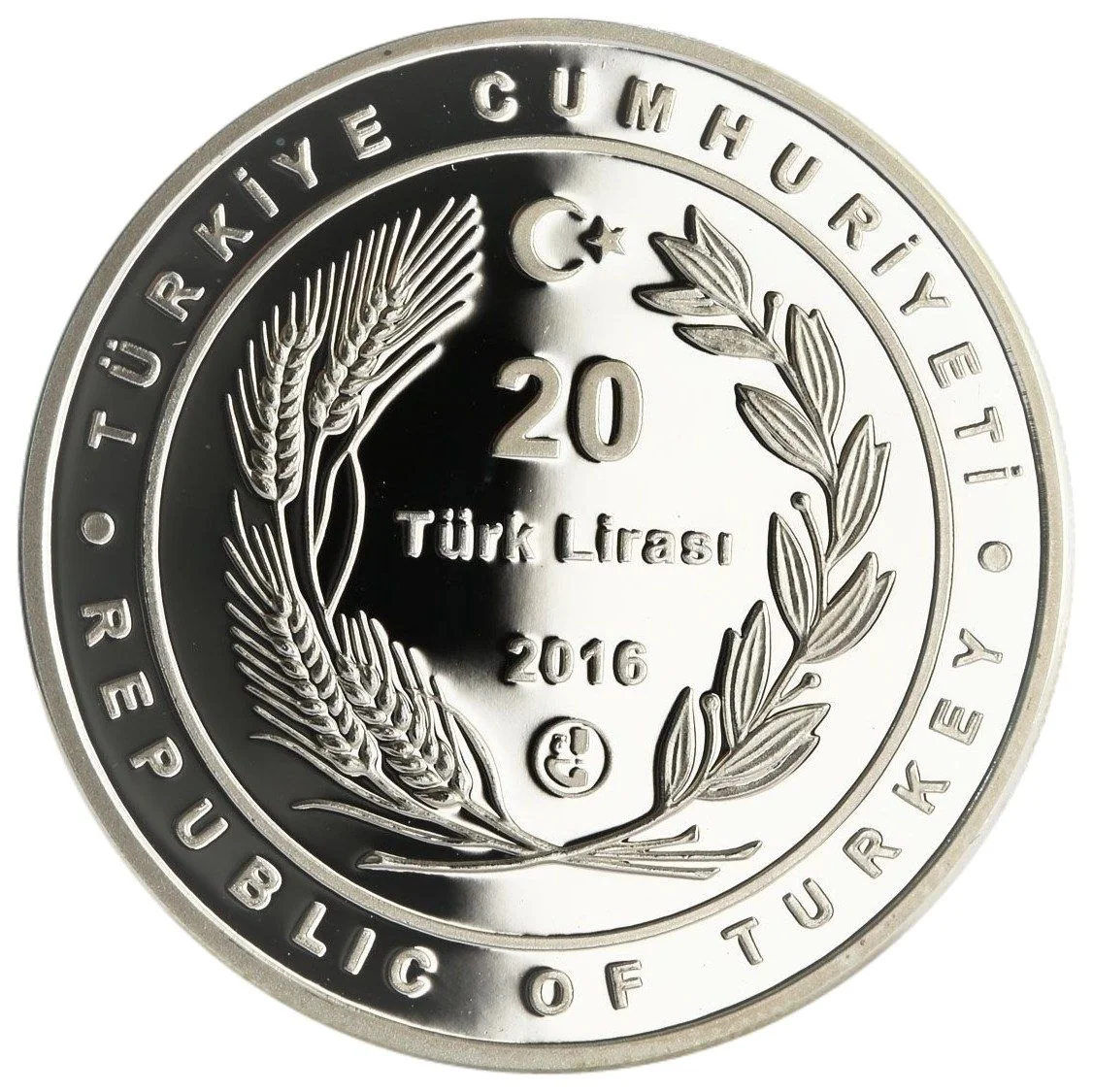
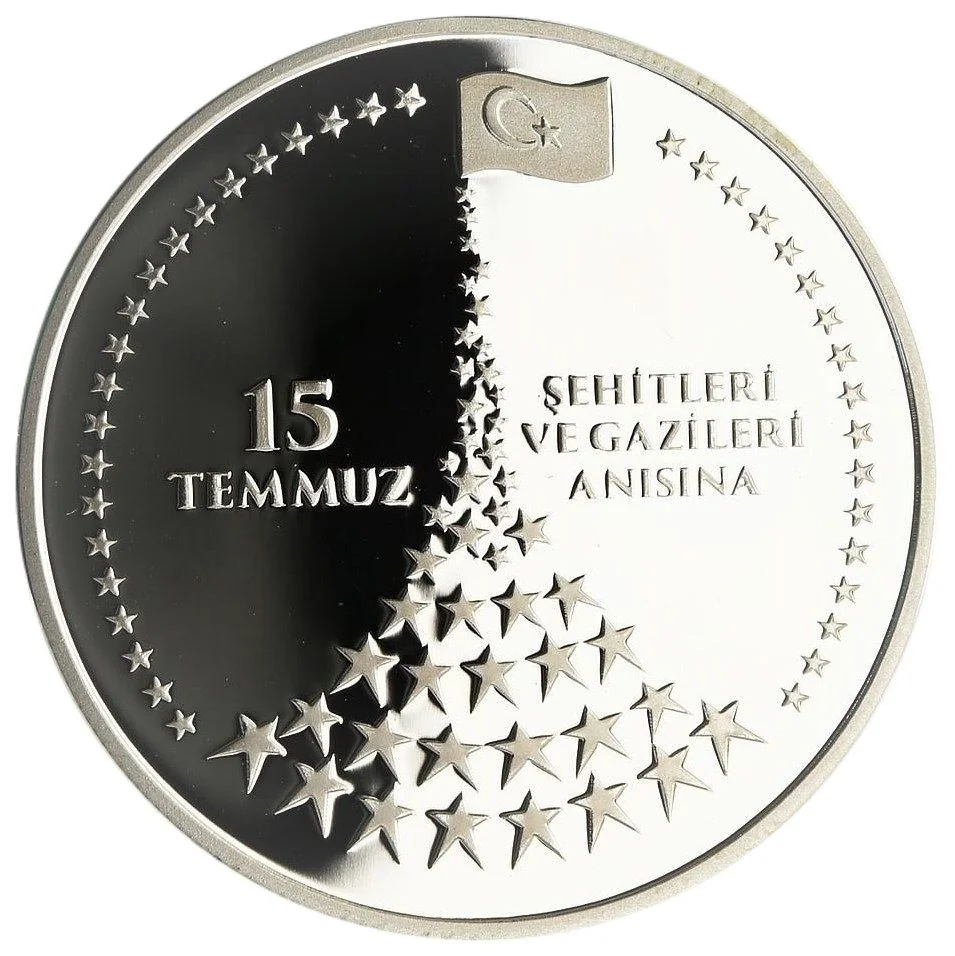
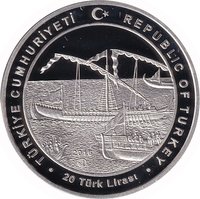
20 lira – Turkey
Add to wishlist
Non-circulating coins
Commemoration: In memory of 15th July martyrs and veterans
Turkey
Context
Material
Diameter: 38.61 mm
Weight: 31.1 g
Silver Weight:: 28.77 g
Thickness: 3 mm
Shape: Round
Composition: 92.5% Silver
Standard: Silver ounce
Magnetic: No
Technique: Milled
Alignment: Coin alignment
flip
References
Numista: #208927
Value
Exchange value: 20 TRY
Bullion value: $71.72
Inflation-adjusted value: 198.36 TRY
Obverse
Reverse
Edge
Milled
Mints
| Name | Mark |
|---|---|
| Turkish State Mint | — |
Mintings
| Year | Mint Mark | Mintage | Quality | Collection |
|---|---|---|---|---|
| 2016 | — | 5,000 | Proof |
Historical background
In 2016, Turkey's currency, the lira, faced significant and sustained pressure, depreciating nearly 20% against the US dollar over the course of the year. This decline was driven by a confluence of domestic political instability and external security threats. Domestically, a failed coup attempt in July created profound uncertainty, damaging investor confidence and leading to credit rating downgrades. Externally, the nation grappled with spillover from the Syrian conflict, including terrorist attacks and a breakdown in relations with Russia, which harmed tourism and trade.
The economic backdrop was already fragile, with the currency having lost value for several consecutive years. Core issues included a widening current account deficit, high inflation, and a reliance on short-term foreign capital inflows to finance growth. The Central Bank of the Republic of Turkey (CBRT) faced a difficult policy dilemma: raising interest rates to support the lira and curb inflation would slow the economy, while cutting rates to stimulate growth risked further currency depreciation. Throughout 2016, the CBRT was often perceived as reluctant to hike rates decisively, partly due to political pressure from President Recep Tayyip Erdoğan, who publicly advocated for lower borrowing costs.
By year's end, the lira's sharp fall had become a major economic vulnerability, increasing the cost of servicing Turkey's substantial foreign-currency-denominated debt for both the government and private corporations. The depreciation also fueled inflation, eroding household purchasing power. The events of 2016 set the stage for a more severe currency crisis in the coming years, as the underlying tensions between political priorities, monetary policy independence, and investor confidence remained unresolved.
The economic backdrop was already fragile, with the currency having lost value for several consecutive years. Core issues included a widening current account deficit, high inflation, and a reliance on short-term foreign capital inflows to finance growth. The Central Bank of the Republic of Turkey (CBRT) faced a difficult policy dilemma: raising interest rates to support the lira and curb inflation would slow the economy, while cutting rates to stimulate growth risked further currency depreciation. Throughout 2016, the CBRT was often perceived as reluctant to hike rates decisively, partly due to political pressure from President Recep Tayyip Erdoğan, who publicly advocated for lower borrowing costs.
By year's end, the lira's sharp fall had become a major economic vulnerability, increasing the cost of servicing Turkey's substantial foreign-currency-denominated debt for both the government and private corporations. The depreciation also fueled inflation, eroding household purchasing power. The events of 2016 set the stage for a more severe currency crisis in the coming years, as the underlying tensions between political priorities, monetary policy independence, and investor confidence remained unresolved.

✨ Legendary