

1 dollar (Independence) – Trinidad and Tobago
Add to wishlist
Non-circulating coins
Commemoration: 10th Anniversary of Independence
Trinidad and Tobago
Context
Year: 1972
Issuer: Trinidad and Tobago
Ruler: Elizabeth II
Currency:
(since 1964)
Total mintage: 26,950
Material
Diameter: 36 mm
Weight: 18.4 g
Thickness: 2.5 mm
Shape: Round
Composition: Copper-nickel
Technique: Milled
Alignment: Medal alignment
flip
References
KM: #
Numista: #20842
Value
Exchange value: 1 TTD
Obverse
Description:
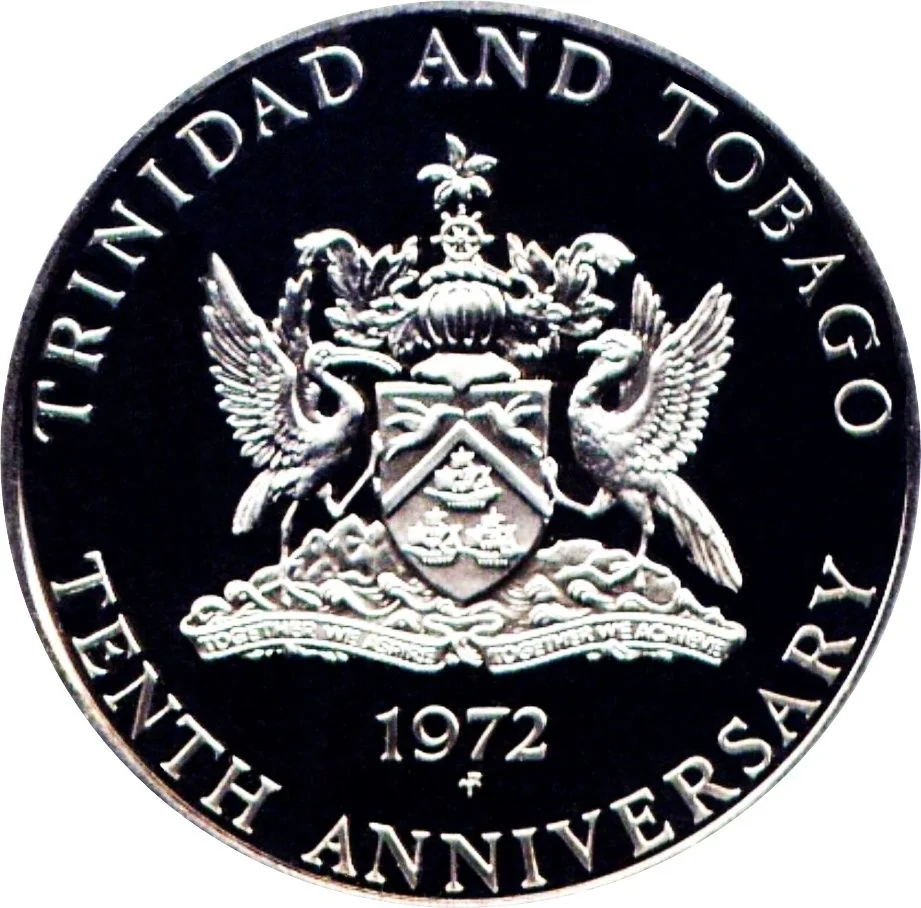
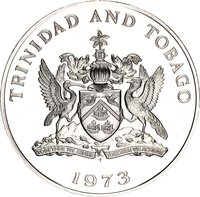
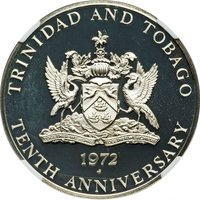
Coat of arms with date.
Inscription:
TRINIDAD AND TOBAGO
TOGETHER WE ASPIRE TOGETHER WE ACHIEVE
1972
FM
TENTH ANNIVERSARY
TOGETHER WE ASPIRE TOGETHER WE ACHIEVE
1972
FM
TENTH ANNIVERSARY
Script: Latin
Reverse
Description:
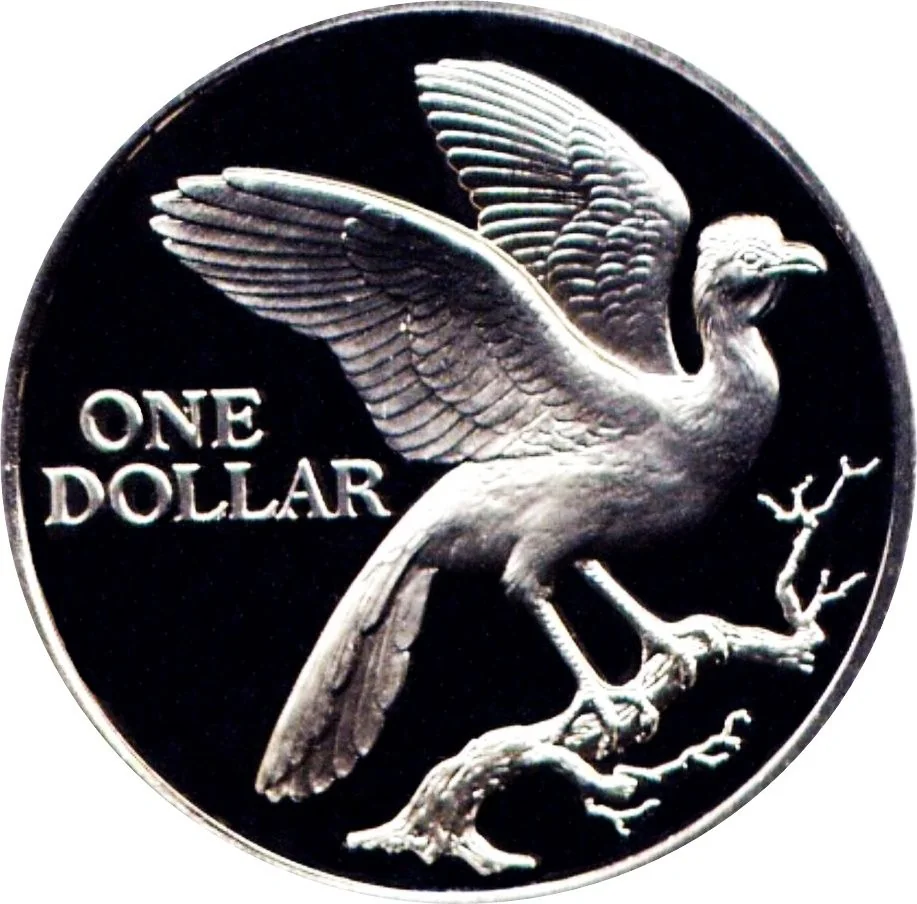
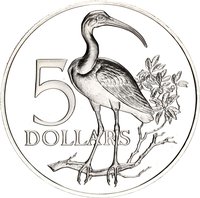
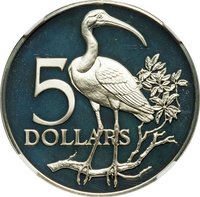
Rufous-vented Chachalaca (Cocrico) on a branch.
Inscription:
ONE
DOLLAR
DOLLAR
Script: Latin
Designer: Ernest Lauser
Edge
Reeded
Categories
| Animal> Bird |
| Event> Independence |
| Symbols> Coat of Arms |
Mints
| Name | Mark |
|---|---|
| Royal Canadian Mint of Ottawa | — |
| Franklin Mint | (FM) |
Mintings
| Year | Mint Mark | Mintage | Quality | Collection |
|---|---|---|---|---|
| 1972 | — | 9,700 | ||
| 1972 | FM | 1,250 | Matte | |
| 1972 | FM | 16,000 | Proof |
Historical background
In 1972, Trinidad and Tobago's currency situation was defined by its recent transition to a decimalized system and its continued peg to the sterling area. Just two years prior, in 1970, the country had introduced the Trinidad and Tobago dollar (TTD), replacing the British West Indies dollar at a rate of 2 TT dollars to 1 BWIS dollar. This new currency was subdivided into 100 cents, moving away from the old pounds, shillings, and pence system. Importantly, the TT dollar remained pegged to the British pound sterling at a fixed rate of TT$4.80 to £1, a legacy of its colonial economic ties.
This period was one of significant economic optimism and transformation, driven by the burgeoning oil and natural gas sector. The early 1970s saw rising global oil prices, which began to substantially increase government revenues and foreign exchange reserves. This hydrocarbon wealth provided a strong foundation for the currency's stability under its sterling peg. However, the economy was still in a phase of transitioning from an agricultural base (centered on sugar and cocoa) to an industrial one, and the fixed exchange rate regime was managed by the Central Bank, established just a decade earlier in 1964.
The stability of the currency peg in 1972, however, existed against a backdrop of looming global monetary shifts. The Bretton Woods system was collapsing, and the United States had suspended the gold convertibility of the US dollar in 1971, leading to international currency instability. While the TT dollar's direct link to sterling provided short-term stability, the pound itself was fluctuating. This foreshadowed a major change: in 1976, Trinidad and Tobago would decisively shift its peg from the weakening sterling to the US dollar at a rate of TT$2.40 to US$1, a move fundamentally influenced by the economic currents and petrodollar flows of the early 1970s.
This period was one of significant economic optimism and transformation, driven by the burgeoning oil and natural gas sector. The early 1970s saw rising global oil prices, which began to substantially increase government revenues and foreign exchange reserves. This hydrocarbon wealth provided a strong foundation for the currency's stability under its sterling peg. However, the economy was still in a phase of transitioning from an agricultural base (centered on sugar and cocoa) to an industrial one, and the fixed exchange rate regime was managed by the Central Bank, established just a decade earlier in 1964.
The stability of the currency peg in 1972, however, existed against a backdrop of looming global monetary shifts. The Bretton Woods system was collapsing, and the United States had suspended the gold convertibility of the US dollar in 1971, leading to international currency instability. While the TT dollar's direct link to sterling provided short-term stability, the pound itself was fluctuating. This foreshadowed a major change: in 1976, Trinidad and Tobago would decisively shift its peg from the weakening sterling to the US dollar at a rate of TT$2.40 to US$1, a move fundamentally influenced by the economic currents and petrodollar flows of the early 1970s.
🌟 Uncommon