

20 Zlotys – Poland
Poland
Context
Years: 1973–1976
Issuer: Poland 
Period:
(1952—1989)
Currency:
(1949—1994)
Demonetization: 1 January 1995
Total mintage: 57,000,000
Material
Diameter: 29 mm
Weight: 10.15 g
Thickness: 1.95 mm
Shape: Round
Composition: Copper-nickel
Technique: Milled
Alignment: Medal alignment
flip
References
Y: #Click to copy to clipboard67
Numista: #2075
Value
Exchange value: 20 PLZ
Inflation-adjusted value: 158310.10 PLZ
Obverse
Description:
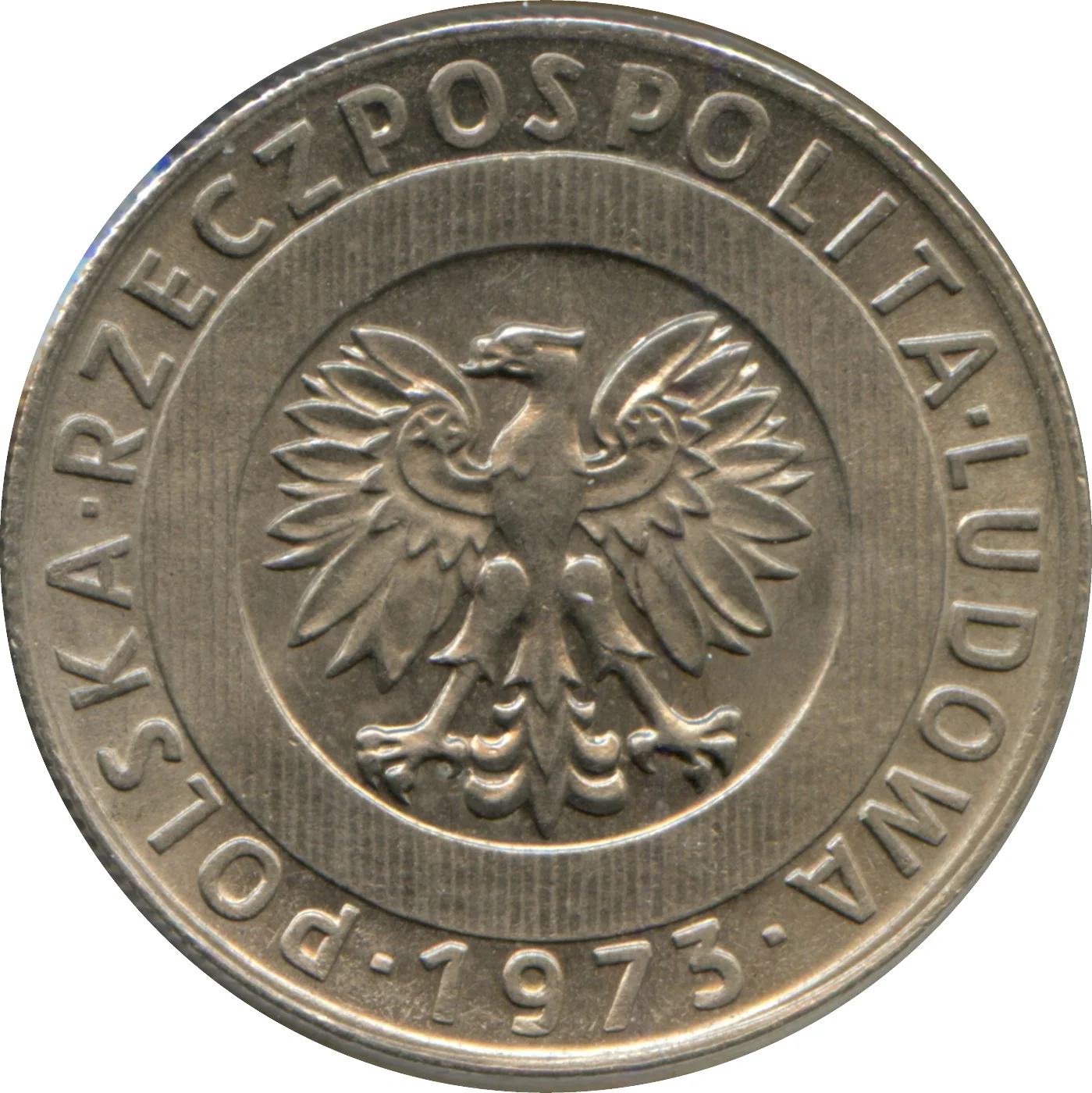
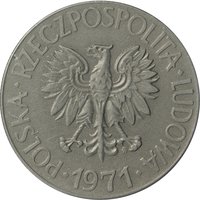
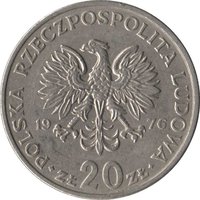
The Polish national coat of arms.
Inscription:
POLSKA·RZECZPOSPOLITA·LUDOWA
·1973·
·1973·
Translation:
Polish People's Republic
·1973·
·1973·
Script: Latin
Language: Polish
Engraver: Anna Jarnuszkiewicz
Reverse
Description:
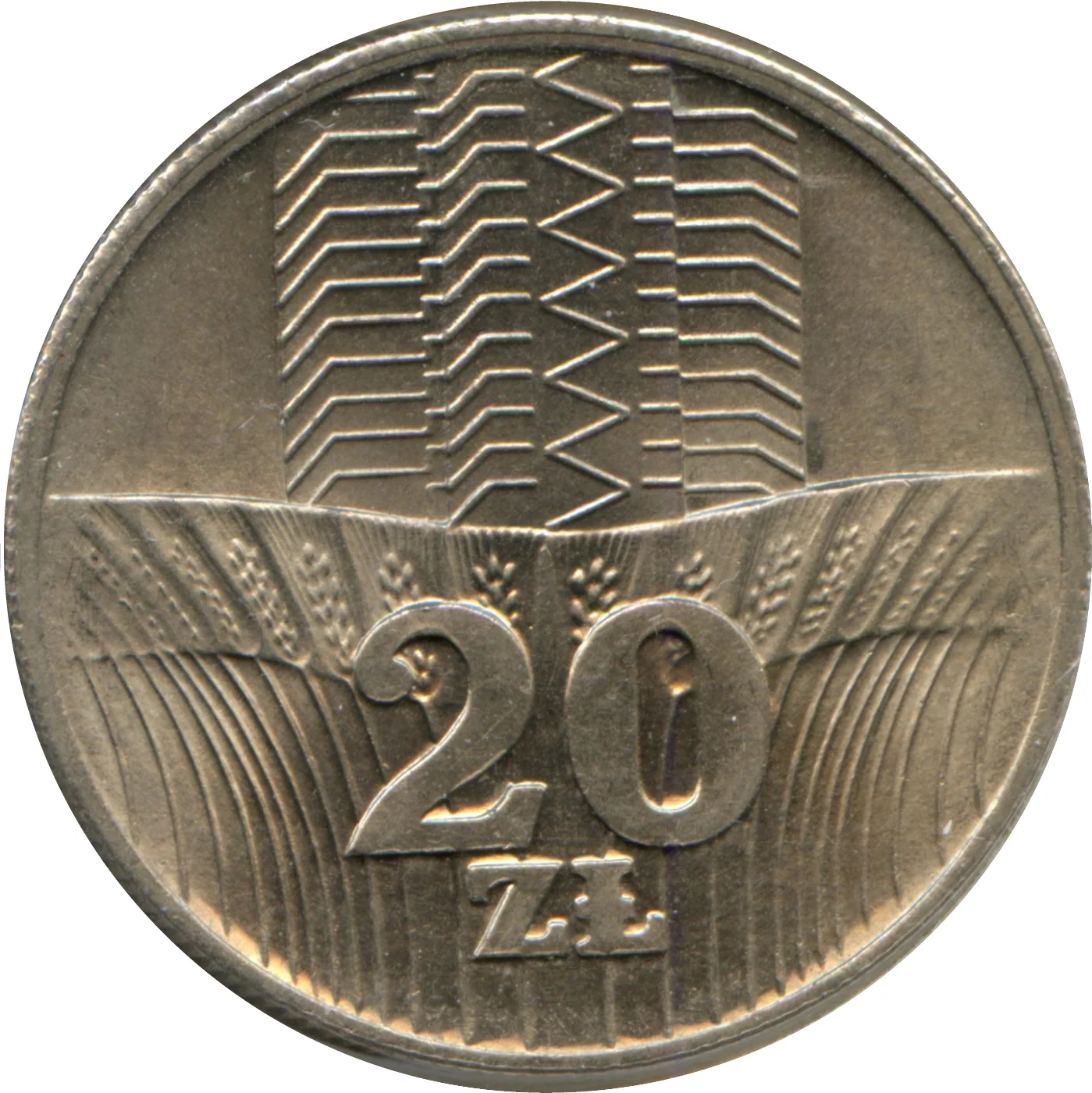
A skyscraper overlooking a grain field.
Inscription:
20
ZŁ
ZŁ
Translation:
20 ZŁOTYCH
Script: Latin
Language: Polish
Engraver: Anna Jarnuszkiewicz
Edge
Reeded
Mints
| Name | Mark |
|---|---|
| Kremnica | — |
| Mint of Poland | — |
Mintings
| Year | Mint Mark | Mintage | Quality | Collection |
|---|---|---|---|---|
| 1973 | — | 25,000,000 | ||
| 1974 | — | 12,000,000 | ||
| 1976 | — | 20,000,000 |
Historical background
In 1973, Poland's currency situation was characterized by the complexities of a centrally planned economy operating within the Soviet bloc's Council for Mutual Economic Assistance (COMECON). The official currency, the złoty, was non-convertible on international markets and its exchange rate was set by government decree, bearing little relation to its actual purchasing power or market value. Internally, this system created a distorted economy with chronic shortages of consumer goods, leading to a thriving black market where hard currencies like the US dollar commanded a premium many times higher than the official rate.
The year fell within the period of economic policy under First Secretary Edward Gierek, who had launched a high-risk strategy of massive borrowing from Western nations to finance imports of technology and consumer goods. This was intended to modernize industry and placate social unrest after the 1970 protests. While this influx temporarily improved the availability of goods, it dramatically increased Poland's hard currency debt without generating sufficient export revenue to service it, as Polish goods were largely uncompetitive in Western markets. The economy remained dependent on soft-currency trade within COMECON.
Consequently, Poland operated a dual monetary system. For ordinary citizens, the złoty was used for daily transactions in a supply-constrained economy. Simultaneously, the state maintained a separate network of Pewex and Baltona hard-currency shops, where coveted Western imports and luxury goods were available exclusively for US dollars, Deutschmarks, or British pounds. This created a visible and socially resented privilege for those with access to foreign remittances from abroad or black-market dealings, undermining the official ideology of socialism and highlighting the growing economic disparities within the system.
The year fell within the period of economic policy under First Secretary Edward Gierek, who had launched a high-risk strategy of massive borrowing from Western nations to finance imports of technology and consumer goods. This was intended to modernize industry and placate social unrest after the 1970 protests. While this influx temporarily improved the availability of goods, it dramatically increased Poland's hard currency debt without generating sufficient export revenue to service it, as Polish goods were largely uncompetitive in Western markets. The economy remained dependent on soft-currency trade within COMECON.
Consequently, Poland operated a dual monetary system. For ordinary citizens, the złoty was used for daily transactions in a supply-constrained economy. Simultaneously, the state maintained a separate network of Pewex and Baltona hard-currency shops, where coveted Western imports and luxury goods were available exclusively for US dollars, Deutschmarks, or British pounds. This created a visible and socially resented privilege for those with access to foreign remittances from abroad or black-market dealings, undermining the official ideology of socialism and highlighting the growing economic disparities within the system.
🌱 Very Common