

10 lei (State flag adoption) – Moldova
Add to wishlist
Circulating commemorative coins
Commemoration: 30 years since the adoption of the State flag
Moldova
Context
Material
Diameter: 25.3 mm
Weight: 7.65 g
Thickness: 2.3 mm
Shape: Round
Standard: Silver quarter ounce
Techniques: Latent image, Milled
Alignment: Medal alignment

flip
References
KM: #
Numista: #206077
Value
Exchange value: 10 MDL
Obverse
Description:
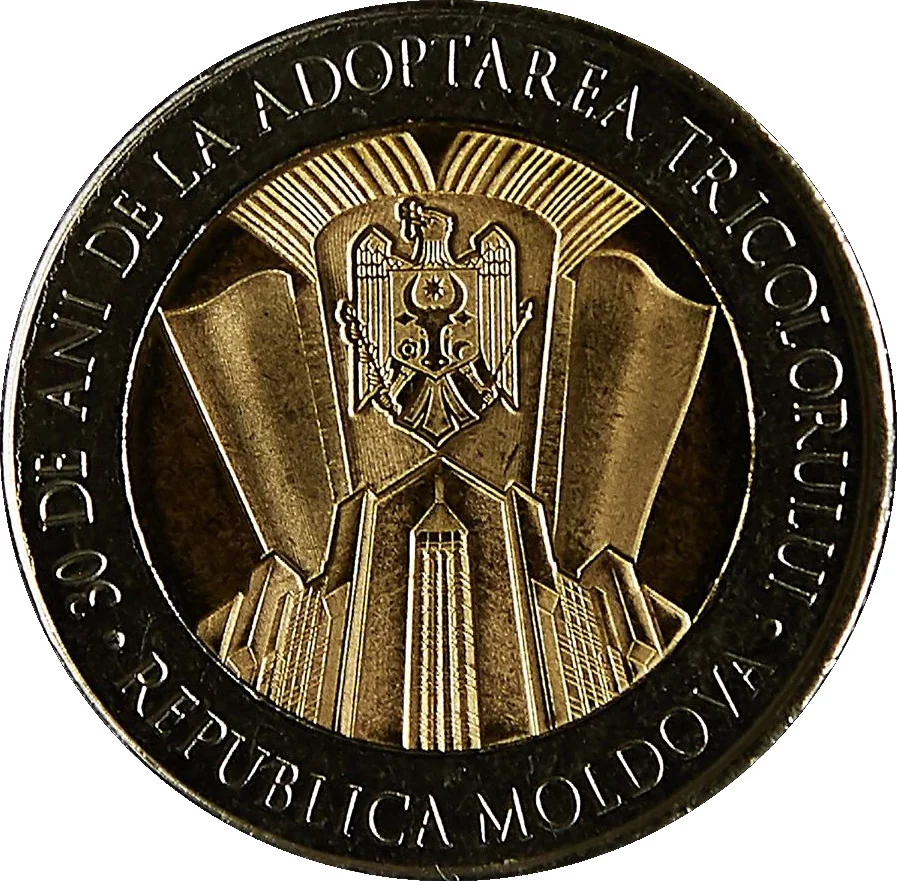
A stylized tricolor flag bearing the Moldovan coat of arms is in the foreground. Around the coin's circumference, the inscription reads: "30 DE ANI DE LA ADOPTAREA TRICOLORULUI REPUBLICA MOLDOVA".
Inscription:
30 DE ANI DE LA ADOPTAREA TRICOLORULUI REPUBLICA MOLDOVA
Translation:
30 Years Since the Adoption of the Tricolor Republic of Moldova
Script: Latin
Language: Romanian
Reverse
Description:
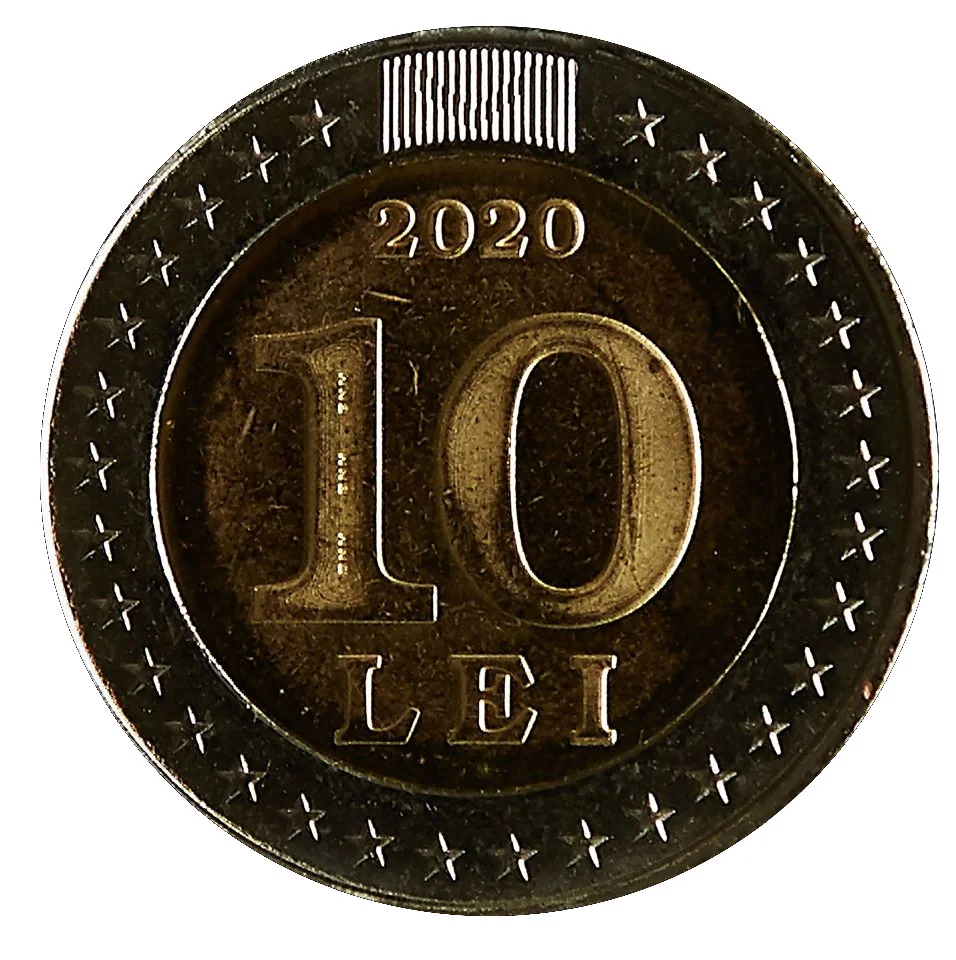
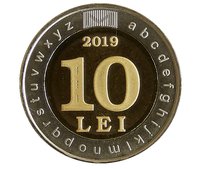
The foreground shows "10 LEI" and the year "2020." Around the circumference are 30 engraved stars. At the top, the exergue features a latent image monogram "RM" for Republica Moldova. The digit "1" includes the micro-engraved legend "BNM."
Inscription:
R/M
2020
10
LEI
BNM BNM BNM
2020
10
LEI
BNM BNM BNM
Script: Latin
Edge
Milled with a customized shape and lettering „*MOLDOVA*MOLDOVA”
Legend:
*MOLDOVA*MOLDOVA*
Mintings
| Year | Mint Mark | Mintage | Quality | Collection |
|---|---|---|---|---|
| 2020 | — | 250,000 |
Historical background
In 2020, Moldova's currency situation was characterized by significant volatility and depreciation pressure on the Moldovan Leu (MDL), driven primarily by the dual shocks of the COVID-19 pandemic and a severe political crisis. The year began with a fragile government following the inconclusive 2019 parliamentary elections, and by March, the pandemic triggered a state of emergency, causing a sharp economic contraction. Key sources of foreign currency, such as remittances from Moldovans working abroad (which typically constitute over 15% of GDP), dropped sharply as global lockdowns disrupted employment, while exports and tourism revenue also declined. This created a classic balance-of-payments strain, weakening the Leu.
The National Bank of Moldova (NBM) played a critical stabilizing role, actively intervening in the foreign exchange market to smooth out excessive fluctuations and prevent a disorderly devaluation. Throughout the year, the NBM sold substantial reserves, with net foreign assets falling by approximately 13%, to support the currency. Despite these efforts, the MDL depreciated by about 11% against the US dollar over the course of 2020. This depreciation was further fueled by domestic uncertainty, including the contentious presidential election in November, which saw the pro-Western Maia Sandu defeat the incumbent Igor Dodon, creating expectations of a foreign policy reorientation.
Ultimately, the currency's weakness in 2020 reflected underlying economic vulnerabilities exacerbated by external and internal crises. The depreciation, while increasing the cost of imports and potential inflation, also made Moldovan exports slightly more competitive—a small silver lining for an economy in recession. The situation underscored the Leu's sensitivity to remittance flows and political sentiment, setting the stage for the challenges of economic recovery and the NBM's continued focus on maintaining financial stability in the years to follow.
The National Bank of Moldova (NBM) played a critical stabilizing role, actively intervening in the foreign exchange market to smooth out excessive fluctuations and prevent a disorderly devaluation. Throughout the year, the NBM sold substantial reserves, with net foreign assets falling by approximately 13%, to support the currency. Despite these efforts, the MDL depreciated by about 11% against the US dollar over the course of 2020. This depreciation was further fueled by domestic uncertainty, including the contentious presidential election in November, which saw the pro-Western Maia Sandu defeat the incumbent Igor Dodon, creating expectations of a foreign policy reorientation.
Ultimately, the currency's weakness in 2020 reflected underlying economic vulnerabilities exacerbated by external and internal crises. The depreciation, while increasing the cost of imports and potential inflation, also made Moldovan exports slightly more competitive—a small silver lining for an economy in recession. The situation underscored the Leu's sensitivity to remittance flows and political sentiment, setting the stage for the challenges of economic recovery and the NBM's continued focus on maintaining financial stability in the years to follow.

🌱 Common