

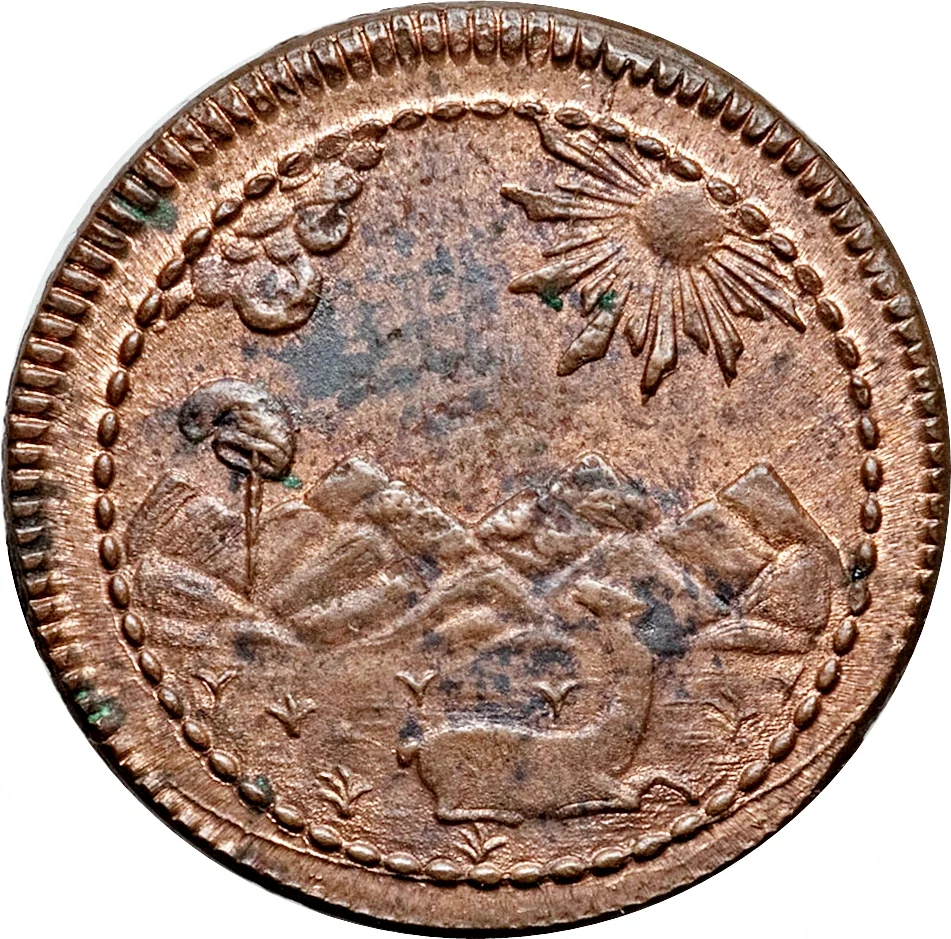
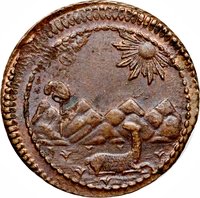
Obverse
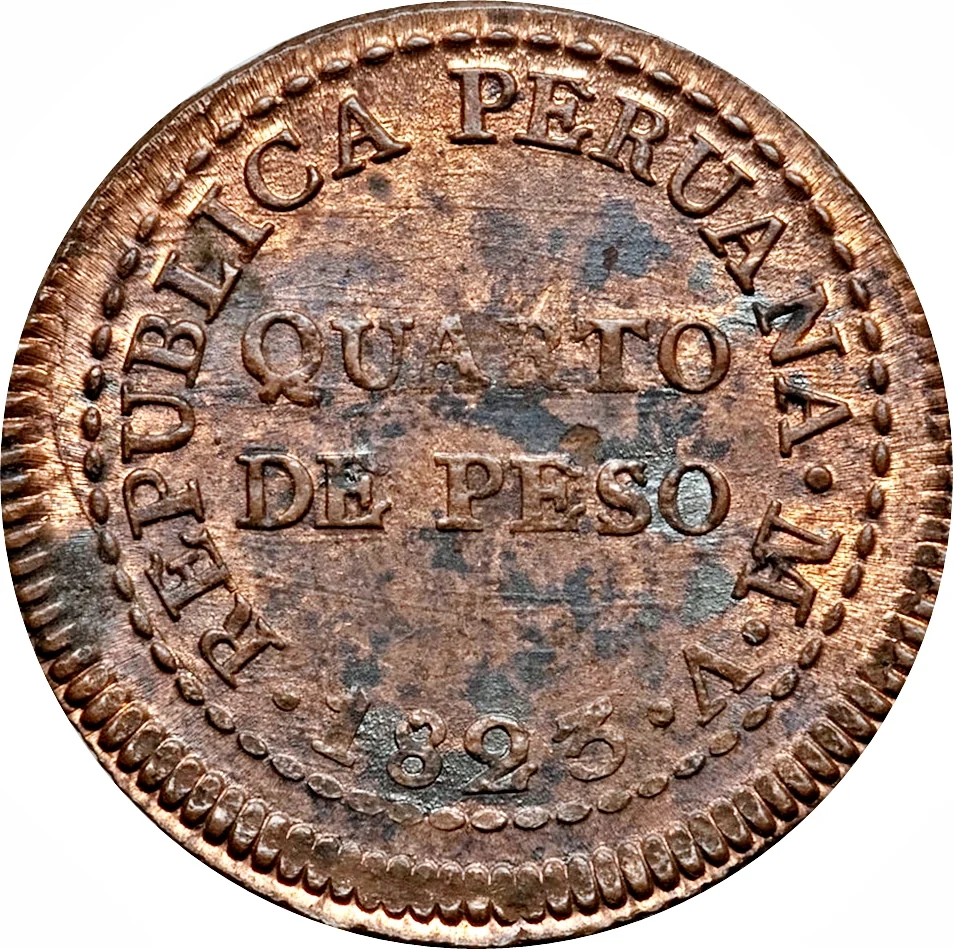
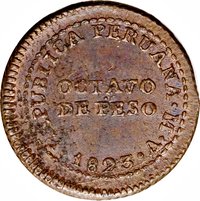
Reverse
Edge
Reeded
Mintings
| Year | Mint Mark | Mintage | Quality | Collection |
|---|---|---|---|---|
| 1823 | LIMA | — |
Historical background
In 1823, Peru's currency situation was one of profound instability and crisis, a direct consequence of the costly War of Independence (1821-1824). The fledgling republic, led by President José de la Riva-Agüero, inherited an empty treasury and a fragmented monetary system. The Spanish colonial silver peso, or "real de a ocho," remained in circulation alongside a chaotic mix of coins from other nations and locally minted emergency issues. To finance the ongoing military campaigns against royalist forces, the government resorted to printing paper money without metallic backing, a novel and ultimately disastrous experiment for the Peruvian economy.
This new paper currency, known as the "billete" or "papel moneda," was declared legal tender and forced into circulation. However, public confidence was nonexistent, as people deeply distrusted the government's ability to ever redeem these notes for silver. The result was rapid and severe depreciation; the paper peso lost most of its value within months, leading to rampant inflation and a effective rejection in daily transactions. This created a dual economy where goods had two prices—one in devalued paper and a much higher, but stable, price in coveted silver coins.
The crisis of 1823 set a precedent for monetary turmoil that would plague Peru for much of the 19th century. The failed paper money experiment eroded state credibility, exacerbated social divisions, and crippled economic recovery. It starkly illustrated the immense challenge of building a unified national fiscal system amidst political fragility and the pressing financial demands of securing independence, leaving a legacy of monetary distrust that would take decades to overcome.
This new paper currency, known as the "billete" or "papel moneda," was declared legal tender and forced into circulation. However, public confidence was nonexistent, as people deeply distrusted the government's ability to ever redeem these notes for silver. The result was rapid and severe depreciation; the paper peso lost most of its value within months, leading to rampant inflation and a effective rejection in daily transactions. This created a dual economy where goods had two prices—one in devalued paper and a much higher, but stable, price in coveted silver coins.
The crisis of 1823 set a precedent for monetary turmoil that would plague Peru for much of the 19th century. The failed paper money experiment eroded state credibility, exacerbated social divisions, and crippled economic recovery. It starkly illustrated the immense challenge of building a unified national fiscal system amidst political fragility and the pressing financial demands of securing independence, leaving a legacy of monetary distrust that would take decades to overcome.
⭐ Rare