

15 Cents – The Bahamas
Bahamas
Context
Years: 1971–1973
Country: Bahamas 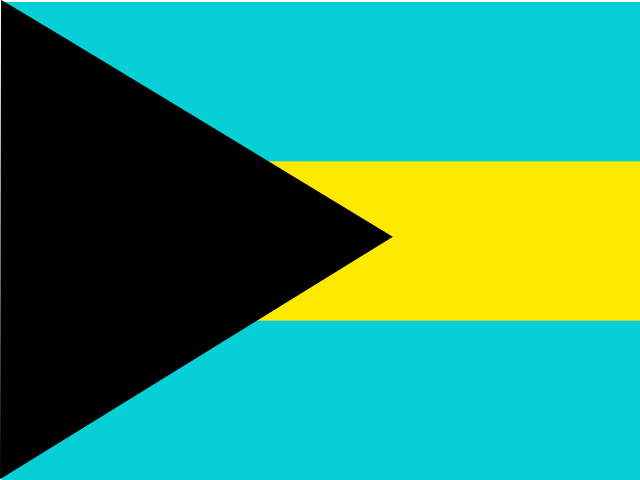
Issuer: The Bahamas
Ruler: Elizabeth II
Currency:
(since 1966)
Total mintage: 139,000
Material
Weight: 6.48 g
Thickness: 2.06 mm
Shape: Square with rounded corners
Technique: Milled
Alignment: Medal alignment
flip
References
KM: #Click to copy to clipboard19
Numista: #20543
Value
Exchange value: 0.15 BSD
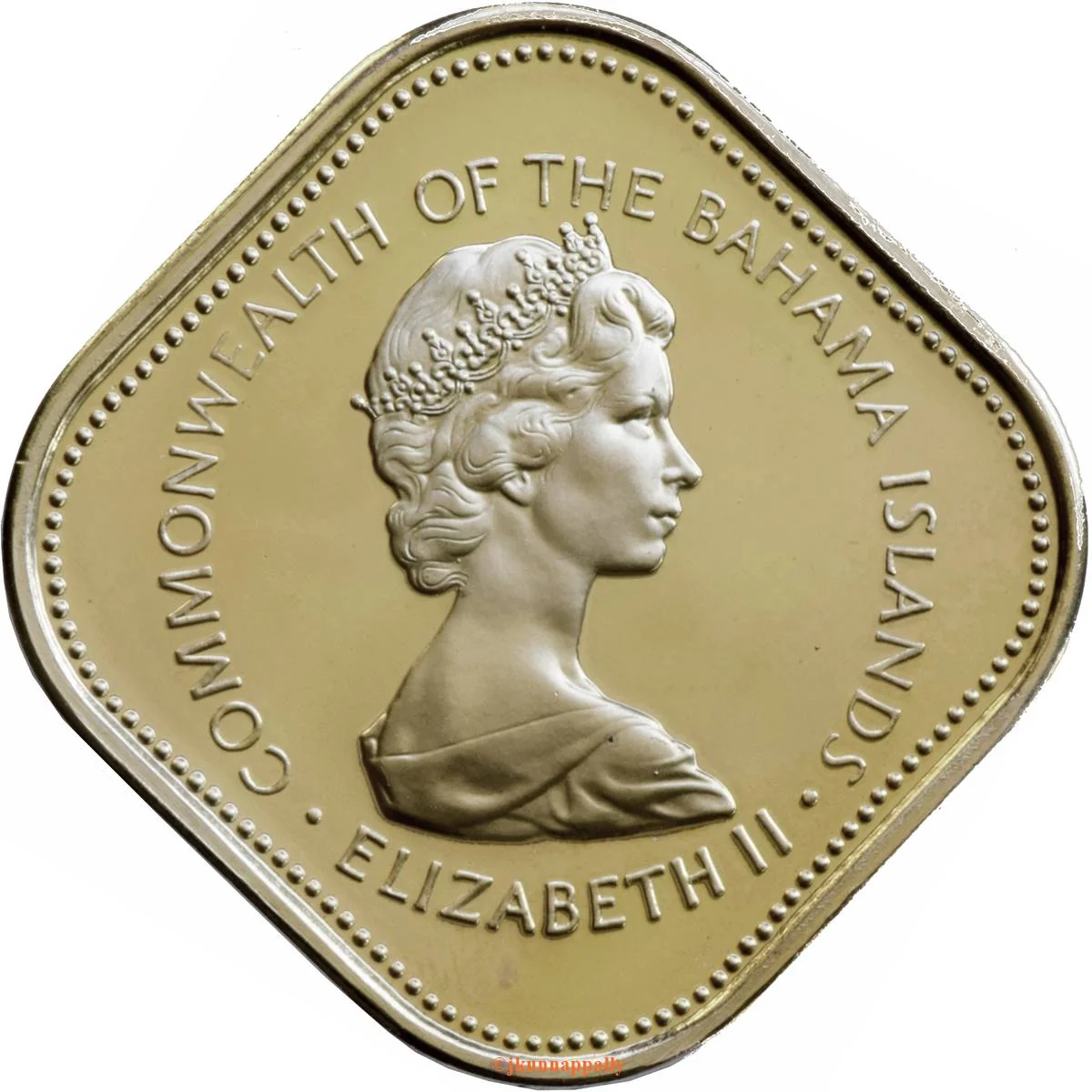
Obverse
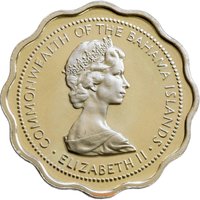
Description:
Bust of Queen Elizabeth II in right profile.
Inscription:
COMMONWEALTH OF THE BAHAMA ISLANDS
· ELIZABETH II ·
· ELIZABETH II ·
Translation:
COMMONWEALTH OF THE BAHAMA ISLANDS
· ELIZABETH II ·
· ELIZABETH II ·
Script: Latin
Language: English
Engraver: Arnold Machin
Reverse
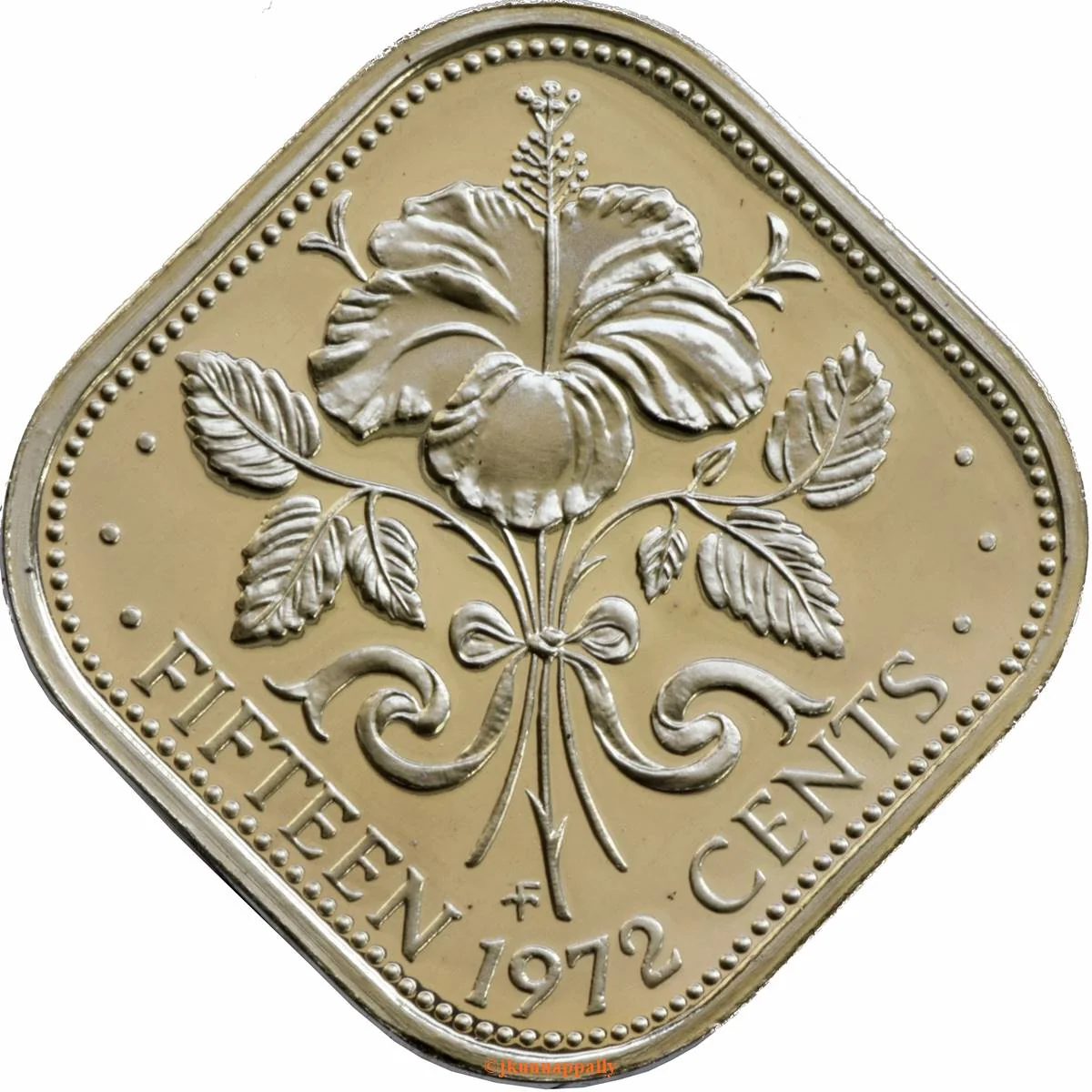
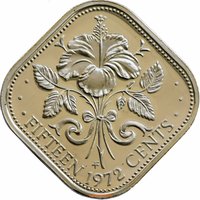
Description:
Hibiscus rosa-sinensis.
Inscription:
· · · FIFTEEN 1972 CENTS · · ·
Script: Latin
Engraver: Arnold Machin
Edge
Plain
Mints
| Name | Mark |
|---|---|
| Franklin Mint | FM |
Mintings
Historical background
In 1971, The Bahamas was navigating a pivotal transition in its monetary system, closely tied to its political evolution towards independence. At the time, the official currency was the Bahamian dollar (BSD), which had been introduced in 1966 to replace the British pound sterling. However, this new currency remained pegged at par to the US dollar, a critical linkage reflecting the nation's deep economic and tourism ties with the United States. This peg provided stability but also meant Bahamian monetary policy was largely dictated by external factors, particularly the actions of the US Federal Reserve.
The year 1971 was significant internationally due to the Nixon Shock—President Richard Nixon's unilateral decision to suspend the US dollar's convertibility into gold, which ended the Bretton Woods system of fixed exchange rates. This global monetary tremor directly impacted The Bahamas because of its dollar peg. While many currencies began to float, The Bahamas chose to maintain its fixed 1:1 parity with the US dollar, a decision underscoring a commitment to economic stability and confidence for its burgeoning tourism and financial sectors during a period of global uncertainty.
Domestically, the currency situation was managed by the Bahamas Monetary Authority (BMA), established in 1968. The BMA operated as the precursor to a central bank, issuing currency and managing reserves, but it did not have full control over interest rates or money supply. The stability of the Bahamian dollar in 1971, amidst international turmoil, reinforced the government's path toward establishing a more independent monetary institution. This would culminate just two years later, in 1973, with the creation of the Central Bank of The Bahamas, coinciding with the nation achieving full political independence from the United Kingdom.
The year 1971 was significant internationally due to the Nixon Shock—President Richard Nixon's unilateral decision to suspend the US dollar's convertibility into gold, which ended the Bretton Woods system of fixed exchange rates. This global monetary tremor directly impacted The Bahamas because of its dollar peg. While many currencies began to float, The Bahamas chose to maintain its fixed 1:1 parity with the US dollar, a decision underscoring a commitment to economic stability and confidence for its burgeoning tourism and financial sectors during a period of global uncertainty.
Domestically, the currency situation was managed by the Bahamas Monetary Authority (BMA), established in 1968. The BMA operated as the precursor to a central bank, issuing currency and managing reserves, but it did not have full control over interest rates or money supply. The stability of the Bahamian dollar in 1971, amidst international turmoil, reinforced the government's path toward establishing a more independent monetary institution. This would culminate just two years later, in 1973, with the creation of the Central Bank of The Bahamas, coinciding with the nation achieving full political independence from the United Kingdom.
🌱 Common