

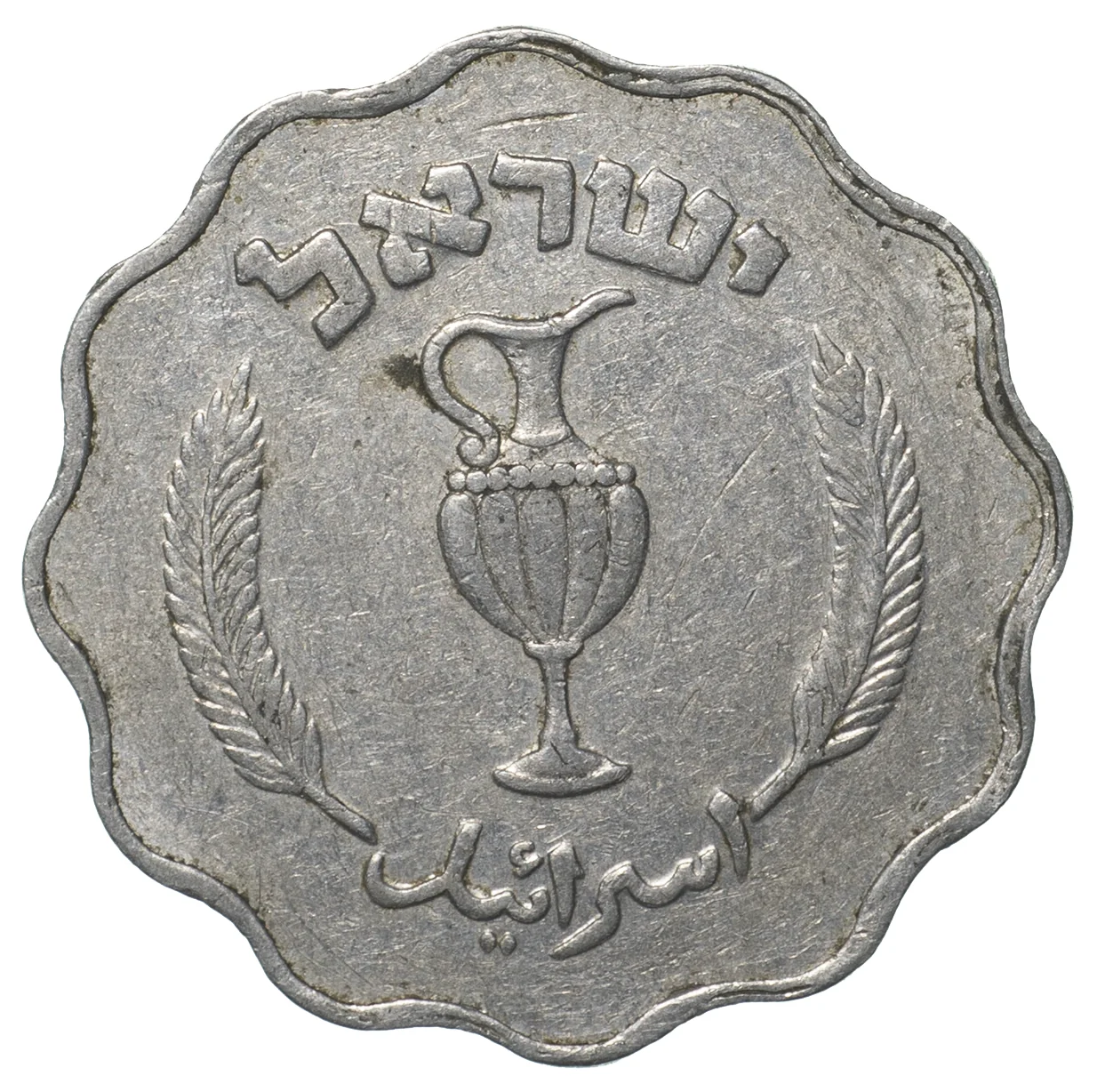


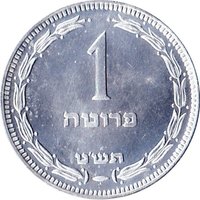
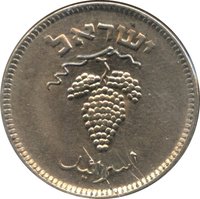
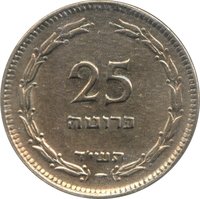
Obverse
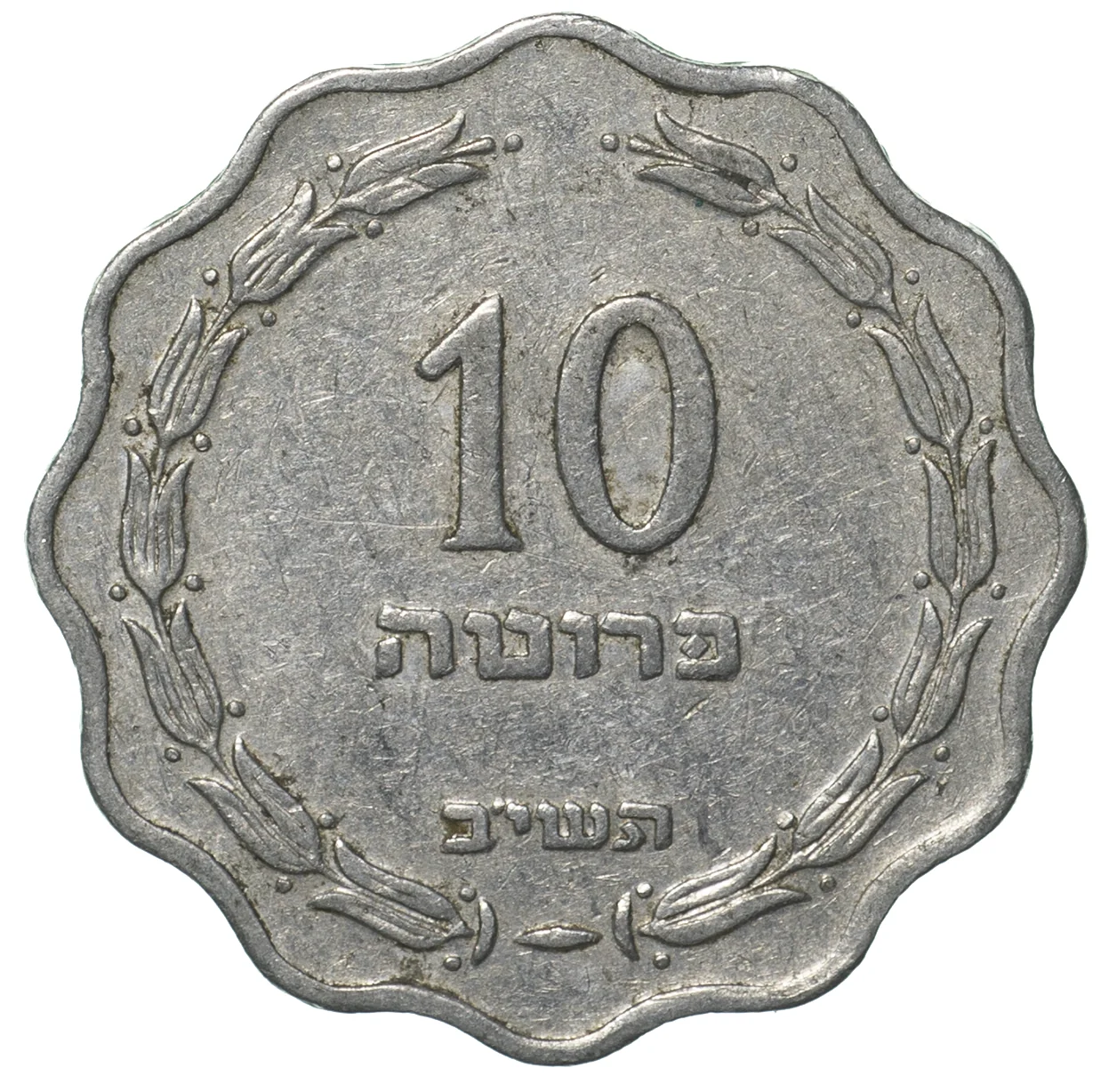
Reverse
Edge
Plain
Categories
| Object> Container or tableware |
| Symbol> Wreath |
Mints
| Name | Mark |
|---|---|
| Kings Norton Metal Company | — |
Mintings
| Year | Mint Mark | Mintage | Quality | Collection |
|---|---|---|---|---|
| 1952 | — | 26,042,000 |
Historical background
In the early years of statehood, Israel faced severe economic strains, and by 1952 this culminated in a full-blown currency crisis. The government, led by Prime Minister David Ben-Gurion, had financed massive immigration absorption, defense expenditures, and rapid development through heavy borrowing and money creation, leading to rampant inflation. The Israeli lira (then the pound, or lira yisraelit) was drastically overvalued at the official exchange rate, creating a huge black market for foreign currency where the lira traded at less than half its official value. This disparity crippled exports, encouraged rampant smuggling, and drained the country's scarce foreign currency reserves.
Recognizing the unsustainable situation, the government enacted a sweeping New Economic Policy in February 1952, engineered by Finance Minister Eliezer Kaplan. Its centerpiece was a drastic devaluation, replacing the single, artificial exchange rate with a multi-tier system. The official rate was slashed, moving much closer to the black-market reality, while different rates were applied to essential imports, non-essential imports, and export sectors. This devaluation aimed to stabilize the currency, boost exports by making Israeli goods cheaper abroad, discourage unnecessary imports, and ultimately dismantle the black market by narrowing the gap between official and unofficial valuations.
The 1952 currency reform was a painful but necessary corrective shock. It succeeded in its primary goals of unifying the exchange rate structure over the following years and placing the economy on a more realistic footing. However, the immediate effect was a sharp rise in the cost of living, which fell heavily on the populace, and it required accompanying austerity measures. While not solving all of Israel's economic challenges overnight, the crisis and response marked a critical transition from the emergency, controlled economy of the state's first years toward a more market-oriented system, setting the stage for the economic growth of the later 1950s.
Recognizing the unsustainable situation, the government enacted a sweeping New Economic Policy in February 1952, engineered by Finance Minister Eliezer Kaplan. Its centerpiece was a drastic devaluation, replacing the single, artificial exchange rate with a multi-tier system. The official rate was slashed, moving much closer to the black-market reality, while different rates were applied to essential imports, non-essential imports, and export sectors. This devaluation aimed to stabilize the currency, boost exports by making Israeli goods cheaper abroad, discourage unnecessary imports, and ultimately dismantle the black market by narrowing the gap between official and unofficial valuations.
The 1952 currency reform was a painful but necessary corrective shock. It succeeded in its primary goals of unifying the exchange rate structure over the following years and placing the economy on a more realistic footing. However, the immediate effect was a sharp rise in the cost of living, which fell heavily on the populace, and it required accompanying austerity measures. While not solving all of Israel's economic challenges overnight, the crisis and response marked a critical transition from the emergency, controlled economy of the state's first years toward a more market-oriented system, setting the stage for the economic growth of the later 1950s.
🌱 Very Common