

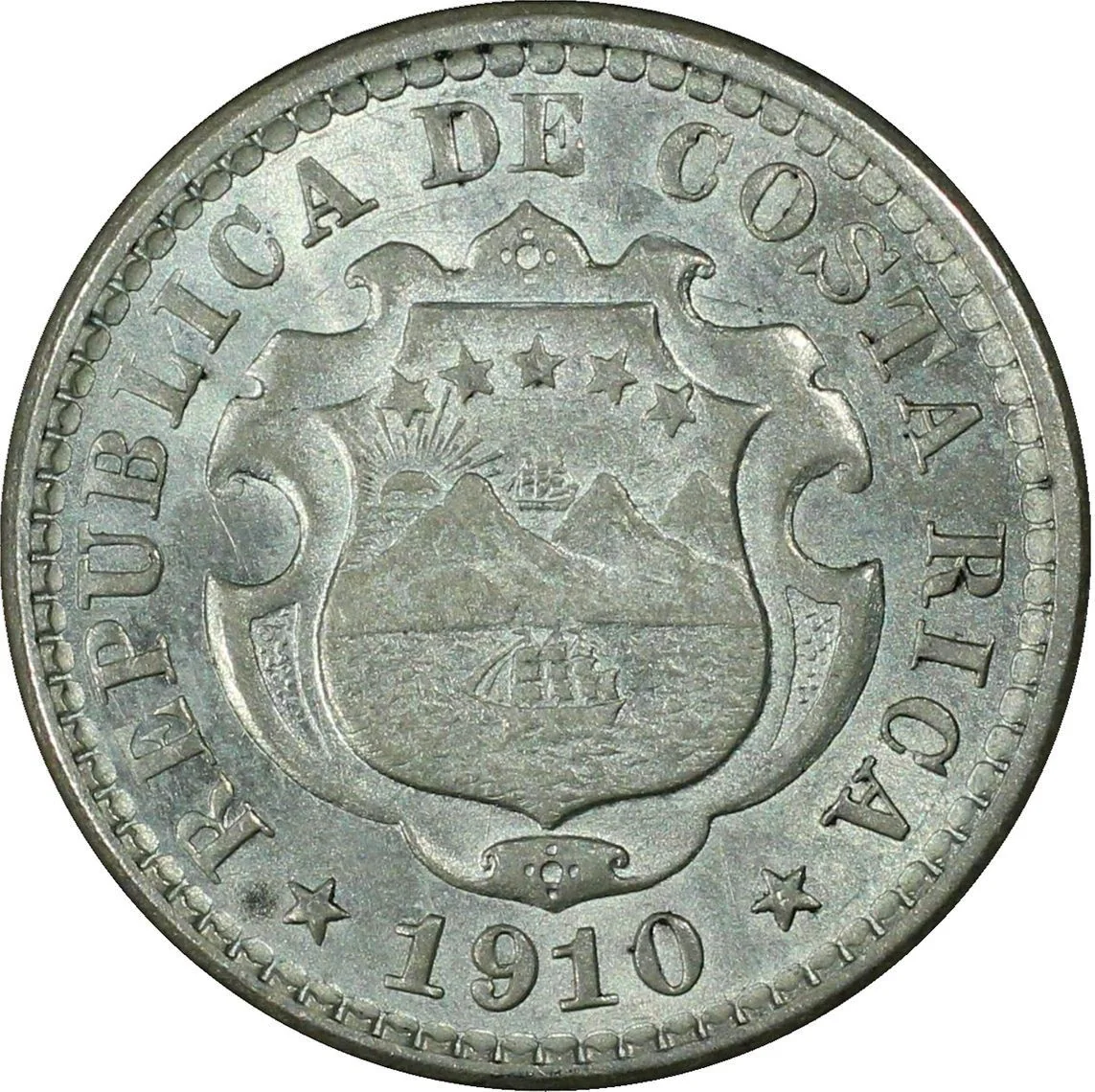
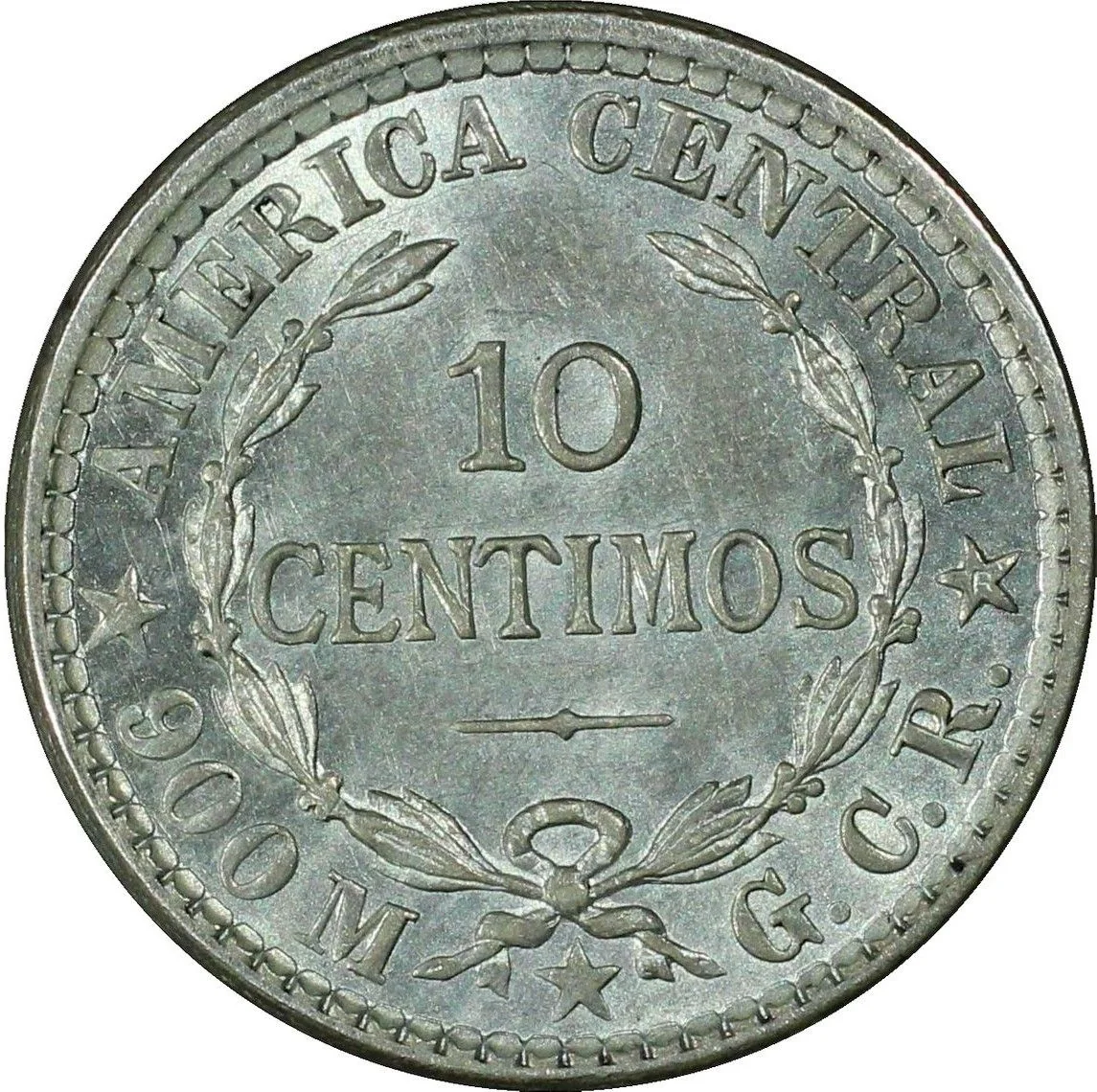
10 centimos – Costa Rica
Add to wishlist
Costa Rica
Context
Years: 1905–1914
Issuer: Costa Rica
Issuing organization: Government of Costa Rica
Period:
(1848—1948)
Currency:
(since 1896)
Demonetization: 19 January 1924
Total mintage: 1,217,783
Material
References
KM: #
Numista: #10898
Value
Exchange value: 0.10 CRC
Bullion value: $4.52
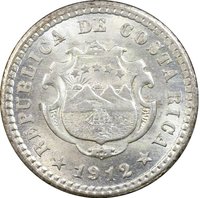
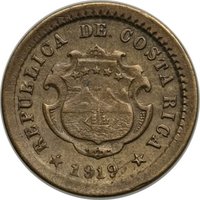
Obverse
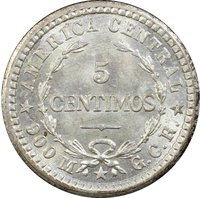
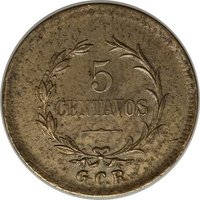
Reverse
Edge
Reeded
Categories
| Symbols> Coat of Arms |
| Symbol> Wreath |
Mints
| Name | Mark |
|---|---|
| United States Mint of Philadelphia | — |
Mintings
| Year | Mint Mark | Mintage | Quality | Collection |
|---|---|---|---|---|
| 1905 | — | 400,000 | ||
| 1910 | — | 400,000 | ||
| 1912 | — | 267,783 | ||
| 1914 | — | 150,000 |
Historical background
In 1905, Costa Rica's currency situation was characterized by a complex and unstable system of competing monies, a legacy of the 19th century. The official currency was the silver Colón, established in 1896 and named after Christopher Columbus (Cristóbal Colón), which was pegged to the British pound. However, this new system had not yet fully displaced the older, widely trusted Costa Rican Peso and the even more influential British Gold Sovereign. Furthermore, Chilean and Peruvian silver coins also circulated freely, leading to a chaotic marketplace where merchants and citizens had to constantly calculate exchange rates between multiple metallic currencies.
This monetary fragmentation created significant practical problems for commerce and government finance. The simultaneous circulation of gold and silver coins exposed Costa Rica to the fluctuations of the international bimetal market, leading to episodes of Gresham's Law, where "bad" (undervalued) money drove "good" (overvalued) money out of circulation. The government struggled to enforce the Colón as the sole legal tender, and public debt, much of which was held abroad in pounds sterling, was sensitive to exchange rate volatility. This instability hindered economic planning and investment.
Consequently, the period around 1905 was one of transition and reform aimed at achieving monetary uniformity and stability. The government, under President Cleto González Víquez (1906-1910), would soon take decisive steps to centralize the system. These efforts culminated in the creation of the International Bank of Costa Rica in 1914 and, ultimately, the founding of the Central Bank of Costa Rica in 1950, which finally established a managed and exclusive national currency. Thus, 1905 represents a point late in the prolonged process of moving from a disorderly, commodity-based currency system toward a modern, state-controlled monetary regime.
This monetary fragmentation created significant practical problems for commerce and government finance. The simultaneous circulation of gold and silver coins exposed Costa Rica to the fluctuations of the international bimetal market, leading to episodes of Gresham's Law, where "bad" (undervalued) money drove "good" (overvalued) money out of circulation. The government struggled to enforce the Colón as the sole legal tender, and public debt, much of which was held abroad in pounds sterling, was sensitive to exchange rate volatility. This instability hindered economic planning and investment.
Consequently, the period around 1905 was one of transition and reform aimed at achieving monetary uniformity and stability. The government, under President Cleto González Víquez (1906-1910), would soon take decisive steps to centralize the system. These efforts culminated in the creation of the International Bank of Costa Rica in 1914 and, ultimately, the founding of the Central Bank of Costa Rica in 1950, which finally established a managed and exclusive national currency. Thus, 1905 represents a point late in the prolonged process of moving from a disorderly, commodity-based currency system toward a modern, state-controlled monetary regime.
🌱 Fairly Common