

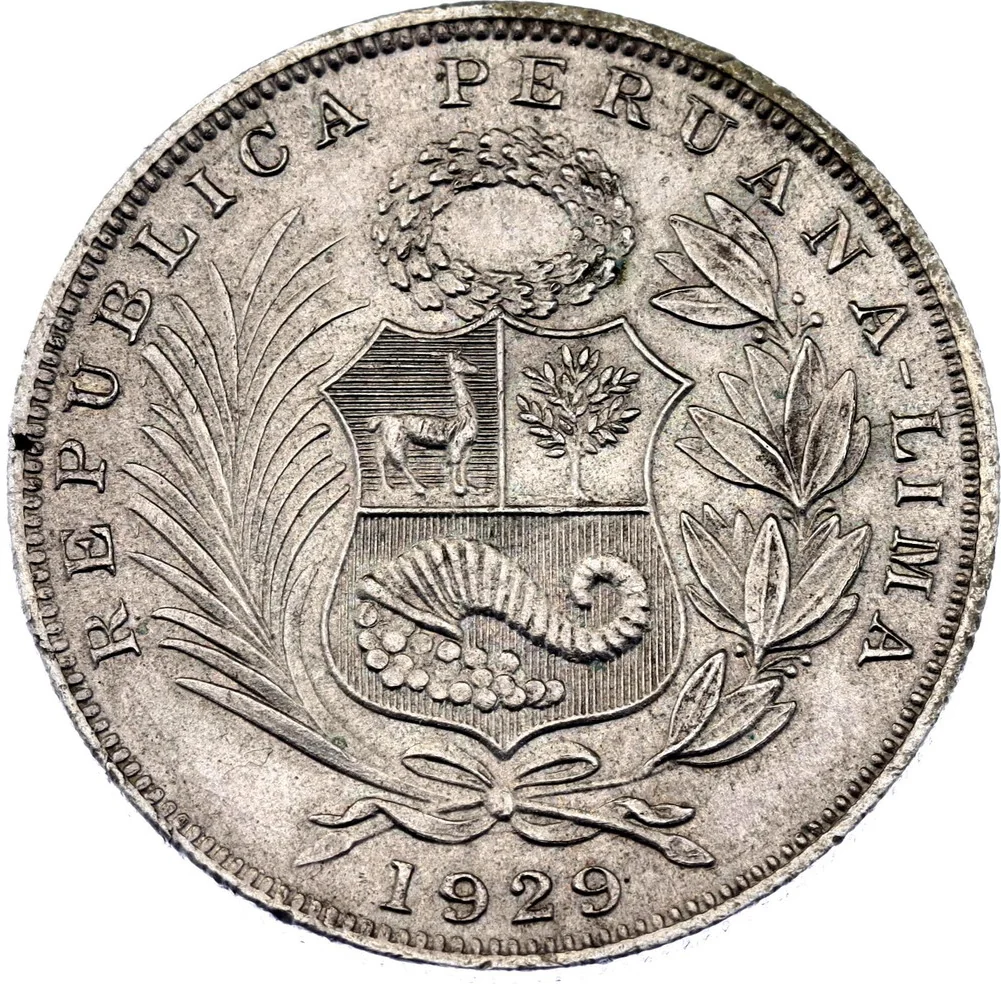

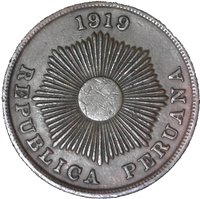
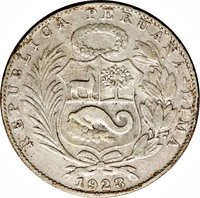
Obverse
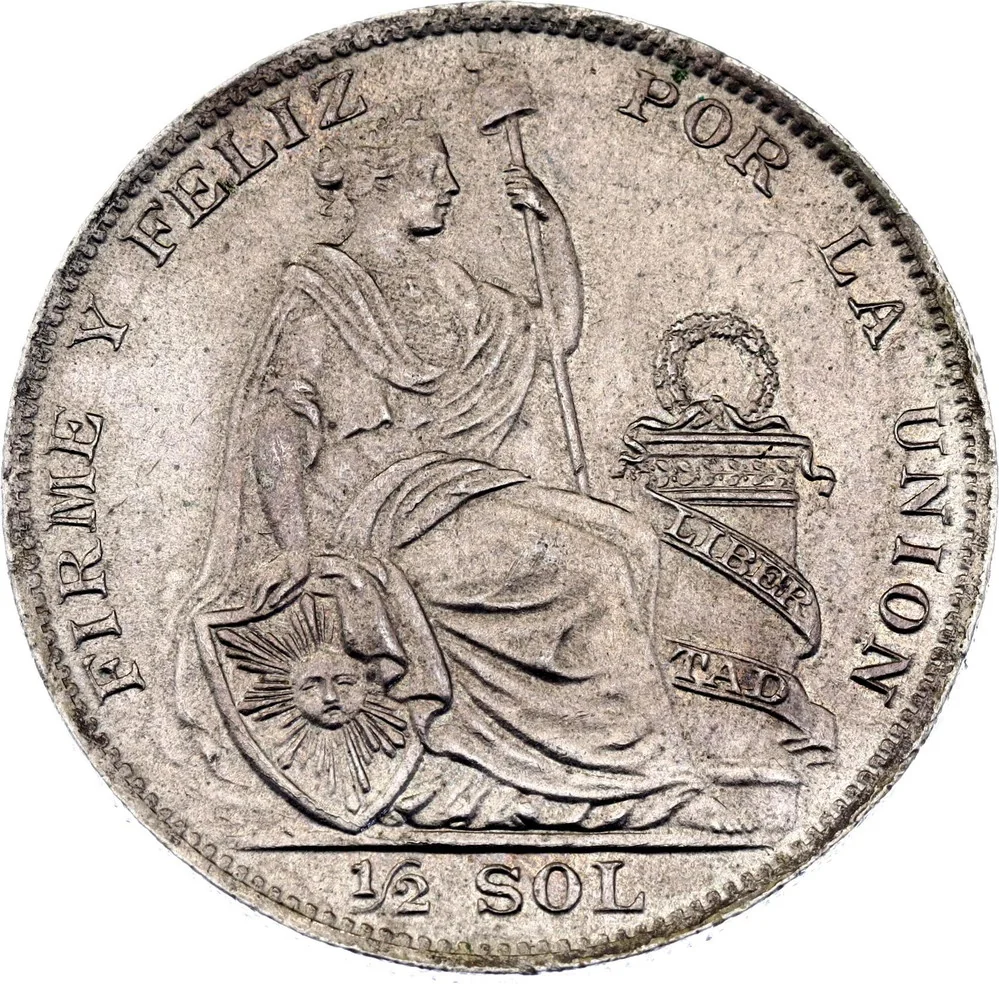
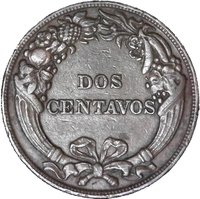
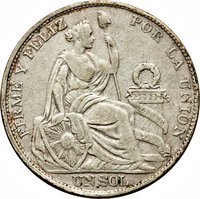
Reverse
Edge
Reeded
Mints
| Name | Mark |
|---|---|
| Lima | LIMA |
Mintings
Historical background
In 1922, Peru's currency situation was characterized by the instability of the Peruvian sol, which had entered a period of significant depreciation following the disruptions of World War I. The country operated on a de facto silver standard, but the global price of silver was volatile and generally declining. This, combined with a growing fiscal deficit financed by the Banco del Perú (the private bank then acting as the nation's issuer), led to an increasing supply of paper money not fully backed by metallic reserves. The result was a sharp decline in the sol's international value and rising inflation, which eroded public confidence in the currency and complicated both domestic commerce and foreign trade.
The root causes of this monetary crisis were deeply intertwined with Peru's fiscal policy. The government, facing budgetary shortfalls, relied heavily on advances from the Banco del Perú, effectively monetizing its debt. This expansion of the money supply without corresponding economic growth or sufficient hard currency reserves fueled inflationary pressures. Furthermore, Peru's economy was heavily dependent on exports like cotton, sugar, and minerals; a post-war slump in commodity prices reduced vital foreign exchange earnings, making it harder to defend the currency's value and service external debts.
Recognizing the severity of the crisis, the Peruvian government took a pivotal step in 1922 by engaging the American financial expert Edwin W. Kemmerer. His mission, known as a "Money Doctor" mission, led to the creation of the Banco de Reserva del Perú (Central Reserve Bank of Peru) in March 1922, which began operations in 1923. This reform aimed to centralize and stabilize currency issuance, establish gold-exchange standards, and restore fiscal discipline. Thus, 1922 stands as a transitional year, marking the end of an era of unstructured monetary expansion and the beginning of a concerted, though challenging, effort to achieve financial stability through modern central banking.
The root causes of this monetary crisis were deeply intertwined with Peru's fiscal policy. The government, facing budgetary shortfalls, relied heavily on advances from the Banco del Perú, effectively monetizing its debt. This expansion of the money supply without corresponding economic growth or sufficient hard currency reserves fueled inflationary pressures. Furthermore, Peru's economy was heavily dependent on exports like cotton, sugar, and minerals; a post-war slump in commodity prices reduced vital foreign exchange earnings, making it harder to defend the currency's value and service external debts.
Recognizing the severity of the crisis, the Peruvian government took a pivotal step in 1922 by engaging the American financial expert Edwin W. Kemmerer. His mission, known as a "Money Doctor" mission, led to the creation of the Banco de Reserva del Perú (Central Reserve Bank of Peru) in March 1922, which began operations in 1923. This reform aimed to centralize and stabilize currency issuance, establish gold-exchange standards, and restore fiscal discipline. Thus, 1922 stands as a transitional year, marking the end of an era of unstructured monetary expansion and the beginning of a concerted, though challenging, effort to achieve financial stability through modern central banking.
🌱 Common