

100 korun (Jan Kupecký) – Czechoslovakia
Add to wishlist
Non-circulating coins
Commemoration: 250 years - death of Jan Kupecký
Context
Year: 1990
Issuer: Czechoslovakia
Period:
(1960—1990)
Currency:
(1953—1992)
Demonetization: 30 September 2000
Total mintage: 60,000
Material
References
KM: #
Numista: #20234
Value
Exchange value: 100 CSK
Bullion value: $16.32
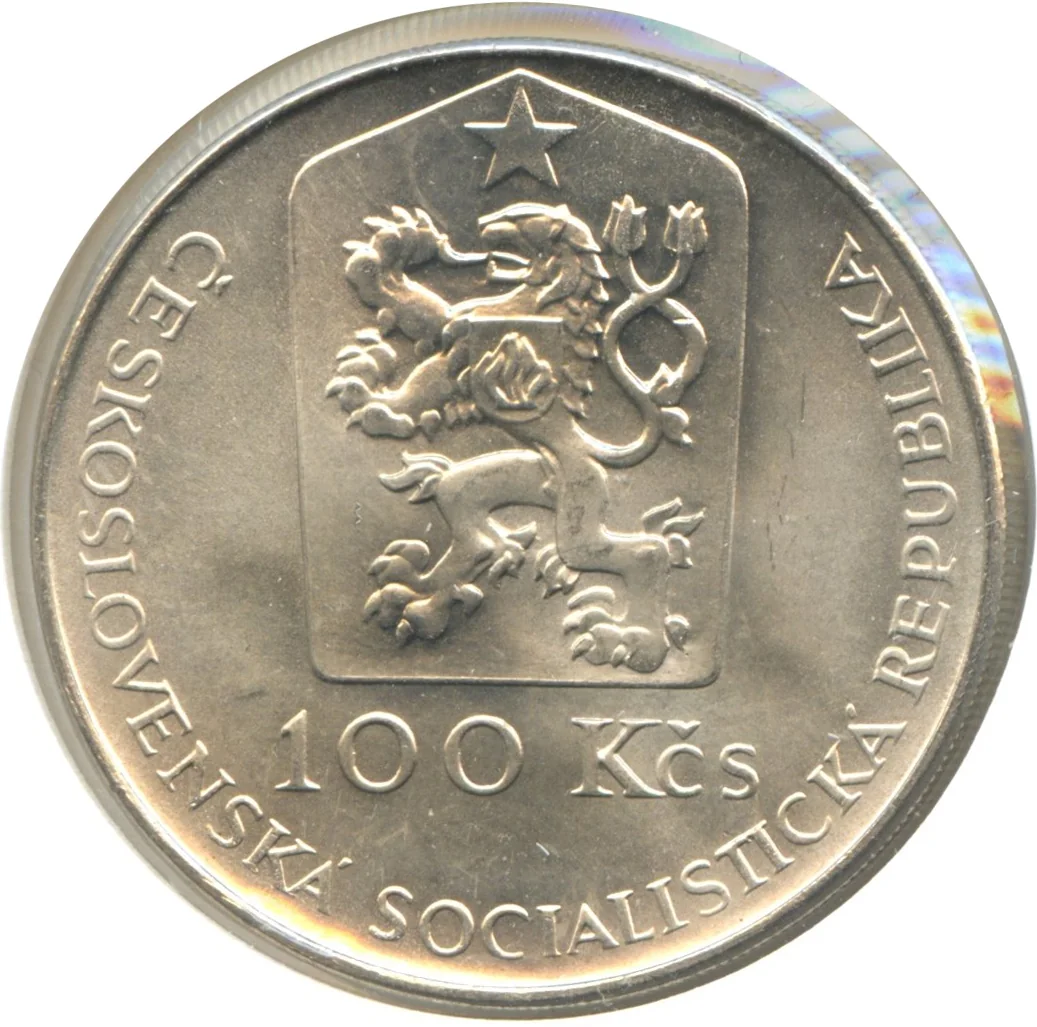
Obverse
Description:
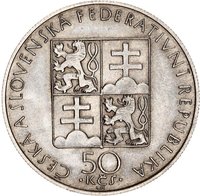
Czechoslovak Socialist emblem.
Inscription:
ČESKOSLOVENSKÁ SOCIALISTICKÁ REPUBLIKA
100 KČS
100 KČS
Translation:
Czechoslovak Socialist Republic
100 Kčs
100 Kčs
Script: Latin
Engraver: Jarmila Truhlíková - Spěváková
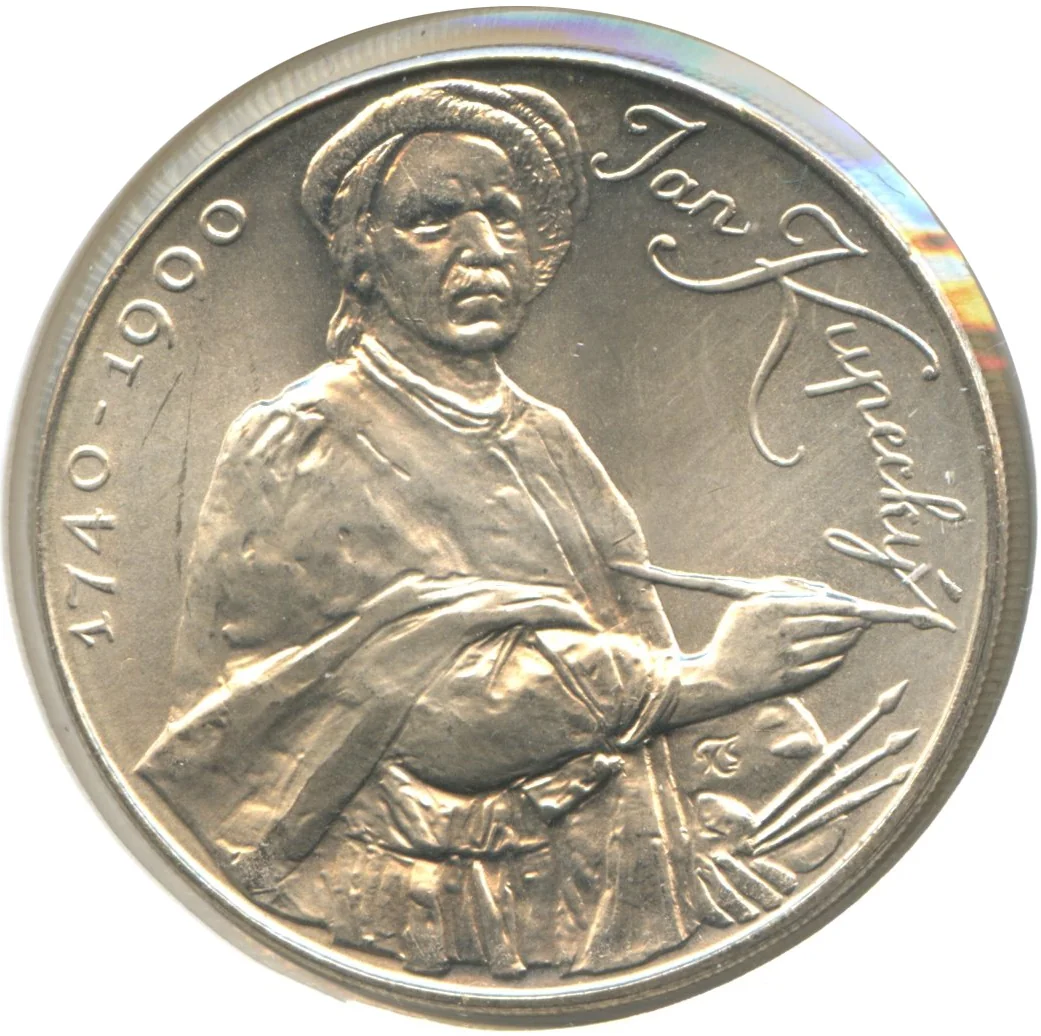
Reverse
Description:
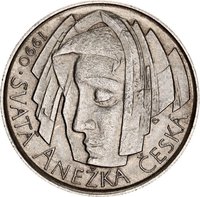
Portrait of painter Jan Kupecký.
Inscription:
1740-1990 JAN KUPECKÝ
Translation:
1740-1990 Jan Kupecký
Scripts: Latin, Latin (cursive)
Language: Slovak
Engraver: Jarmila Truhlíková - Spěváková
Edge
Reeded
Mintings
| Year | Mint Mark | Mintage | Quality | Collection |
|---|---|---|---|---|
| 1990 | — | 57,500 | ||
| 1990 | — | 2,500 | Proof |
Historical background
In 1990, Czechoslovakia found itself navigating a complex and urgent currency situation following the peaceful Velvet Revolution of late 1989. The country was in transition from a centrally planned economy to a market system, still using the Czechoslovak koruna (Kčs), which was officially non-convertible and artificially overvalued. A critical immediate problem was the existence of two distinct economies within one currency: a vast monetary overhang, where citizens held large savings with few goods to purchase, and a burgeoning black market where the koruna traded for a fraction of its official rate. This created intense pressure for devaluation and convertibility to reflect the currency's true, weaker value.
The federal government, led by Finance Minister Václav Klaus, faced the monumental task of stabilizing the currency as a prerequisite for economic reform. A pivotal and controversial step was the currency reform (or exchange) enacted in January 1991, though planned throughout 1990. This involved a partial demonetization, where a significant portion of cash savings over a certain limit was blocked or exchanged at a punitive rate, effectively confiscating a large share of household savings to absorb the monetary overhang. Simultaneously, plans were laid to devalue the koruna drastically and introduce internal convertibility for businesses, a move that would expose Czechoslovak enterprises to international competition almost overnight.
These harsh measures, debated intensely throughout 1990, were seen by reformers as a necessary "shock therapy" to restore macroeconomic balance, crush inflationary pressures, and create a stable foundation for privatization and foreign investment. However, they came at a high social cost, eroding public trust and disproportionately impacting ordinary citizens' life savings. The 1990 currency crisis and its resolution set the stage for the country's rapid economic transformation, but also sowed political and social tensions that would later intertwine with the national questions leading to the dissolution of Czechoslovakia in 1993.
The federal government, led by Finance Minister Václav Klaus, faced the monumental task of stabilizing the currency as a prerequisite for economic reform. A pivotal and controversial step was the currency reform (or exchange) enacted in January 1991, though planned throughout 1990. This involved a partial demonetization, where a significant portion of cash savings over a certain limit was blocked or exchanged at a punitive rate, effectively confiscating a large share of household savings to absorb the monetary overhang. Simultaneously, plans were laid to devalue the koruna drastically and introduce internal convertibility for businesses, a move that would expose Czechoslovak enterprises to international competition almost overnight.
These harsh measures, debated intensely throughout 1990, were seen by reformers as a necessary "shock therapy" to restore macroeconomic balance, crush inflationary pressures, and create a stable foundation for privatization and foreign investment. However, they came at a high social cost, eroding public trust and disproportionately impacting ordinary citizens' life savings. The 1990 currency crisis and its resolution set the stage for the country's rapid economic transformation, but also sowed political and social tensions that would later intertwine with the national questions leading to the dissolution of Czechoslovakia in 1993.
🌟 Limited